
Blogs

Localization in Healthcare Direct Mail: Reaching Diverse Member Populations
Despite the digital transformation of healthcare communication, physical mail remains one of the most trusted and effective member touchpoints. From enrollment packets to compliance notices, printed mail continues to play a vital role in ensuring equitable access to information. But here’s the challenge: too often, healthcare organizations translate their mailings without localizing them. And when language is treated as an afterthought, key messages can be lost in translation. The result? Missed appointments, compliance risks, and disengaged members. Localization changes that. When healthcare direct mail is culturally adapted, linguistically precise, and contextually relevant, it doesn’t just deliver a message; it builds trust. This article explores why localization is crucial to effective healthcare direct mail, how it drives engagement and compliance, and what best practices providers and payers can follow to reach every member meaningfully. Table of Contents - Why Direct Mail Still Matters in Healthcare - Translation vs. Localization in Member Mailings - The Risks of “Translation Only” in Direct Mail - The Benefits of Localized Direct Mail - Best Practices for Healthcare Direct Mail Localization - End-to-End Fulfillment: Turning Localization into Scalable Action - Making the Case for Localized Direct Mail in Healthcare - Frequently Asked Questions About Healthcare Direct Mail - Localized Direct Mail: A Smarter Approach to Healthcare Outreach Healthcare organizations increasingly rely on digital engagement, yet direct mail remains indispensable, especially for underserved and multilingual populations. It also works. According to the USPS, most healthcare businesses report direct mail response rates between 11% and 15%, and health companies are the most likely of any industry to see response rates above 25%. Even in a digital world, print remains the backbone of compliance-driven communication, making its clarity and cultural resonance more critical than ever. Before diving deeper, it’s essential to distinguish between translation and localization. For example, a nutrition benefits mailer translated word-for-word might mention “low-fat cottage cheese.” But localized for Hispanic members, it might reference familiar alternatives or culturally relevant dietary examples that connect more naturally. Localization bridges linguistic accuracy with cultural empathy, ensuring messages are not just understood, but felt. Healthcare communication is high-stakes. A word misunderstood or a tone misplaced can have real-world consequences: In contrast, localization humanizes compliance, it makes regulatory communication accessible, accurate, and actionable. When healthcare organizations invest in localized mail campaigns, they see measurable results. Localized materials reflect a member’s language, imagery, and values, strengthening connection and loyalty. Studies show culturally adapted interventions increase patient retention by 40%. Localization ensures that health literacy, tone, and terminology meet members where they are, reducing confusion and rework. Localized mail supports compliance with federal and state regulations for Limited English Proficient (LEP) populations, a group that includes over 26 million people in the U.S. (8%). Localized campaigns consistently outperform generic ones, boosting open rates, responses, and satisfaction scores, while reducing grievances and costly follow-ups. Identify top LEP languages within your member base using U.S. Census or internal demographic data. See more in Reducing Language Barriers in Healthcare. Use professional translation services and community reviewers who understand local norms, idioms, and sensitivities. Leverage data to personalize mailings, automating language, name, plan, and benefit details without compromising compliance. Reinforce printed mail with digital reminders or accessible QR codes that link to localized resources online. Hybrid communication ensures continuity for all members. Engage small community panels to test clarity and tone before sending to a large audience. Member feedback ensures materials resonate authentically. Localization is only as effective as the system behind it. Even when organizations understand what to communicate, they often face bottlenecks in how to get multilingual mail out the door: accurately, securely, and on time. That’s where end-to-end communication solutions make the difference. A complete fulfillment platform allows healthcare organizations to manage translation, localization, printing, and mailing in one seamless workflow. Instead of coordinating multiple vendors or risking inconsistencies, everything, from content creation to final delivery, is centralized and automated. This approach ensures: With an end-to-end system, healthcare organizations move from reactive translation to proactive, data-driven communication, building member trust while saving time and cost. Real-world examples show the tangible benefits of culturally adaptive print fulfillment: - A health plan achieved full CMS compliance by translating and localizing member letters into multiple languages while maintaining design consistency and turnaround time.
- A state agency reduced turnaround times and increased response rates after centralizing translation, printing, and mailing through a single, compliant partner. Localized fulfillment isn’t just a translation add-on; it’s an operational and strategic advantage that strengthens outreach and equity simultaneously. Printed communication sent by providers, payers, or agencies to inform, educate, or engage members about benefits, renewals, or preventive care. By aligning language, tone, and design to the member’s cultural and linguistic background, it is possible to improve comprehension and action rates. Yes, when produced under secure fulfillment processes that protect PHI/PII and meet HIPAA and CMS standards. Enrollment packets, benefit change notices, appointment reminders, screening invitations, and health education campaigns. By tracking response rates, renewal completions, grievance reduction, and engagement improvements across language segments. Localization isn’t a trend; it’s a requirement for equitable, compliant, and effective member communication. As healthcare organizations face growing linguistic diversity, culturally adapted print fulfillment ensures every member receives information they can trust, understand, and act upon. The future of healthcare engagement is hybrid, print plus digital, personalized, and multilingual. And with the right partner and platform, localized fulfillment can be not just compliant, but transformational. Ready to build more inclusive and effective healthcare communication? Get a Free Quote to start designing your next localized direct mail campaign.
How Many Languages Are There & What it Means for Healthcare Providers
Our planet is home to more than 7,000 different languages. Thanks to a long history of immigration, experts estimate that anywhere from around 300 to over 800 of those languages are spoken in the United States, making it one of the most linguistically diverse countries in the world. And when it comes to the nation’s healthcare system, just over 50 languages are commonly used between patients and their healthcare providers across the nation, according to data from AMN Healthcare. While most of the country’s multilingual individuals do speak English, about 8% of people living in the United States have limited English proficiency (LEP), meaning they’re unable to effectively communicate with their healthcare providers—or anyone else, for that matter—in English. Because of this, healthcare providers need to be adequately prepared to interact with speakers of other languages in their preferred tongue, as miscommunication between patients and their doctors can lead to serious, even life-threatening, errors. In this blog post, we’ll take a broad look at the global linguistic landscape before narrowing in more closely on factors that healthcare providers need to be aware of to provide equitable language access to their patients with LEP. Table of Contents How Many Languages Are There? A Look at the Linguistic Landscape The Distinction Between Language vs. Dialect The Growing List of Endangered Languages The Geography of Language Why the Number of Languages in the World Matters in Healthcare Healthcare Needs to Be Accessible to All Populations Miscommunication Leads to Misdiagnosis Language Gaps Disrupt Operations Non-Compliance Puts Your Operation at Risk Strategies & Best Practices for Healthcare Providers Needs Assessment and Prioritization Interpretation and Translation Modalities Technology Staff Training and Cultural Competency Policy, Governance, and Sustainability Challenges and Future Outlook Frequently Asked Questions About How Many Languages Are There & Healthcare Literacy Conclusion Estimates vary on just how many languages are spoken across the world, but most experts seem to agree that the number is somewhere in the ballpark of 7,000 languages. However, there are other factors that contribute to the use and extinction of language. Data from Ethnologue says there are 7,159 languages in use today. However, this kind of data is tricky to pin down cleanly—the distinction between a language and a dialect can be very subtle. What one source classifies as two separate languages might be identified as two dialects of the same language elsewhere. But what’s the difference between a language and a dialect? What’s more, languages and their speakers are constantly changing—a language today might eventually split into several different languages later on, just like Latin evolved into modern Spanish, French, Italian, and Portuguese (among others). Likewise, languages regularly vanish from everyday use. A language is endangered when it is at risk of falling out of use because it has very few speakers, especially if younger generations are no longer learning it. According to Ethnologue, 44% of the world’s languages are endangered. On the flip side, just 20 languages (less than 1% of the world’s languages by Ethnologue’s count) are spoken natively by about half the world population. Linguistic diversity isn’t necessarily spread out evenly. Linguistic diversity in the United States is heavily tied to patterns of immigration. Within the United States, urban centers like New York City, Los Angeles, and Chicago are home to native speakers of hundreds of different languages. And while other regions may not have quite as many different languages represented, it’s not uncommon to hear languages like Navajo, Mandarin, Spanish, or Hmong spoken in various rural and suburban communities. The table below shows data based on U.S. Census Bureau statistics and other sources like the American Community Survey. But what does all of this mean for healthcare providers in the United States? How do language demographics affect patient care? Linguistic diversity has real, measurable impacts in clinical settings, and every healthcare provider needs to pay close attention to the linguistic landscape of their particular locale. By understanding linguistic patterns in their area, providers can offer better care to patients with LEP, empowering these patients to advocate for themselves. Ultimately, the number of languages in use worldwide underscores the importance of designing systems that can meet patients where they are linguistically. Here’s how: LEP individuals make up a fairly significant portion of the United States population, at about 8%. While that may not seem like a staggering percentage, in reality, that’s nearly 26.9 million people who are limited in their ability to effectively communicate with English-speaking healthcare providers. And while you may serve a predominantly English-speaking population, all you need is one deaf or hard-of-hearing or LEP patient needing critical care to highlight the importance of accessible communication. Having the right resources in place ensures healthcare providers can deliver quality care to anyone, anywhere, at any time. Nothing good comes from miscommunication and misunderstanding. When patients and providers fail to understand one another, the likelihood of negative health outcomes increases significantly. Miscommunication has been linked to misdiagnosis, medication errors, delayed treatment, and lower adherence to care plans. Research shows that language barriers increase the likelihood of preventable adverse events in clinical settings. Failing to account for language diversity can also create operational challenges. Staff may spend extra time trying to work around communication gaps, which slows workflows and increases stress. Hospitals and clinics that neglect proper language services also face compliance risks. The United States, Title VI of the Civil Rights Act requires federally funded healthcare providers to offer language access services. Non-compliance can result in legal penalties, reputational damage, and costly corrective action plans. Here are a few strategies for healthcare providers to take the linguistic diversity of their particular locale into account and improve the quality of their care for LEP patients: Not every healthcare provider will have the same exact language access needs. A hospital in Seattle is much more likely to encounter patients who speak Coast Salish than a provider in Oklahoma City is—and that provider in Oklahoma City is equally more likely to encounter patients who speak Cherokee or Choctaw. Use a data-based approach to determine which languages to prioritize in your language access strategy—you can draw on data from the US Census to see what languages are most commonly spoken around you, and use patient intake surveys to see what languages are most common among your patients. Once you’ve identified the languages that have the highest demand, you can work with a language service provider to identify interpreting and translation solutions that meet your needs. Find a language service provider that specializes in medical interpreting and translation and offers services in the languages you need most. Your provider will help you identify the specific services you need most, whether it’s in-person interpreting or on-demand remote interpretation via video or phone call. You’ll also want to identify important documents that need translating—things like consent forms and administrative paperwork should be translated promptly. Many providers may be tempted to use tools like artificial intelligence and machine translation to speed up the translation and interpreting processes. However, it’s not recommended to use without expert supervision, particularly in the healthcare system, where communication is often high-stakes and there’s little room for error. Consult with your language service provider about these technologies and be sure there’s always a human in the loop to verify the quality and accuracy of the software’s output. Even the best language services fall short without staff who know how to use them effectively. Training clinicians to work with interpreters, whether in person or remotely, helps ensure accurate communication. Techniques like “teach-back,” where patients repeat instructions in their own words, can confirm understanding and reduce errors. Cultural competency training also equips providers to recognize language bias, avoid assumptions, and build trust across diverse patient populations. Be sure to establish clear institutional guidelines for interpreter use, translation standards, and staff training expectations. Building partnerships with community interpreters or trusted language service providers can expand capacity for rare languages. Regulatory and accreditation requirements provide a framework, but should also be backed by strong governance. By treating language access as a core part of health equity strategy, providers can ensure long-term impact and accountability. The strategies above can certainly be challenging to implement, but a trusted language service provider like Avantpage can help you with much of the legwork of developing and implementing a strong language access plan. Healthcare providers often find that language access measures are costly to implement. And indeed, interpretation and translation services can certainly be expensive. There are some ways to lower costs without significantly reducing the overall quality of your language access services, such as making use of remote interpreting services, rather than in-person interpretation. You can also consider implementing a technology-driven translation process with human linguists carefully reviewing machine translation output for accuracy and cultural sensitivity. Although it can be costly, keep in mind that the cost of not having a strong language access plan is often greater than the cost of the language services themselves. Without these services, healthcare providers run the risk of extremely expensive (not to mention time-consuming and reputation-damaging) legal fees and fines for noncompliance with local and federal regulations. Another common challenge is finding interpreters and translators who support rare or endangered languages. In these cases, your language service provider can help you find the right person for the job. Additionally, community-based organizations can also help connect you with possible interpreters and language experts. As artificial intelligence and machine translation technologies improve, it’s likely that these tools will be used more and more in the healthcare system. However, it’s important to note that these tools still are not at a point where healthcare providers can safely use them without a human reviewer to make sure that translations and interpretations are accurate. This largely depends on local demand. Healthcare providers in a place like New York City, where more than 800 different languages are spoken, will need to be prepared to support more languages than a provider in a small town with less linguistic diversity. This is why organizations should conduct thorough, data-driven needs assessments and plan their language access services around these needs. Among other risks, poor language access can result in regulatory noncompliance, poor health outcomes for patients with LEP, decreased trust, and lowered reputation. Healthcare providers should work closely with a language service provider to identify the tools they need to address gaps in language access. These may include, but are not limited to, remote interpreting software and machine translation technology. Learn about AvantInterpret and AvantSend. A dialect is a specific variety of a language—think North American English versus British English. The borders between a dialect and a language are often hard to identify—for example, Mandarin and Cantonese are not mutually intelligible, but are often classified under the Chinese language (and on the other hand, languages like Arabic and Maltese have an extremely high degree of mutual intelligibility, but are still considered distinct languages). In healthcare, it’s important to identify the specific dialect that an LEP patient speaks to find an interpreter who is best suited to provide services. Providers can measure the impact of language access programs by tracking patient outcomes, satisfaction surveys, and readmission or error rates among LEP patients. Monitoring interpreter utilization, turnaround times for translated materials, and compliance with legal requirements also provide useful insights. Comparing these metrics before and after program implementation helps quantify improvements in safety, equity, and efficiency. With more than 7,000 languages spoken worldwide, considering linguistic diversity is an important factor in planning out language access services in the healthcare system. Providers who invest in strong language access strategies not only reduce clinical risk but also ease operational burdens and strengthen trust with their communities. From staff training to governance and sustainable partnerships, every step toward better communication is a step toward better health outcomes. To recap, here are some key strategies to keep in mind as you plan out your language access services: As languages continue to evolve and populations shift, healthcare systems must adapt accordingly. The future of equitable care depends on recognizing language as a key determinant of health. If you’re looking to improve your organization’s language access services, contact Avantpage, use one of our online forms to reach out, email us at [email protected], or call (530) 750-2040. We offer interpreting and translation solutions to clinics, hospitals, and health insurance providers, empowering them to provide patients with the highest quality care possible, regardless of the language they speak.

The Secret to Saving Time and Money: Translation Memory
Technology is transforming the way organizations approach translation and localization. At Avantpage, we carefully select and integrate translation technologies that add real value, helping our clients achieve greater accuracy, consistency, and efficiency in every project. One of the most impactful of these is translation memory (TM), which makes past translations work more efficiently for your organization. In this article, we’ll dive into what translation memory is, explore the key benefits of this technology-driven approach, and show how it can streamline workflows, improve translation quality, and add value to future projects. Table of Contents What Is Translation Memory? How Translation Memory Works Leveraging Translation Memory What Are the Benefits of Translation Memory? How Translation Memory Reduces Costs Frequently Asked Questions About Translation Memory Build Better Workflows with Translation Memory Translation Memory reuses past translations to increase translation efficiency. When your translation project is completed, the language from the original (or source) document is stored along with the language from its translated counterpart in a secure database. This occurs with every project as you begin to build a translation memory. The information from the database is then used for any new translation projects you request. The new source document is run against the database to see if any words, phrases, or sentences match past source documents’ language. If a match is found, the linguist working on your translation can choose to use the match outright, or they can choose to adjust the translation based on the language match. In essence, translation memory allows our linguists to choose text they’ve previously translated if it suits the new document. Learn about machine translation vs. translation memory. Translation memory software stores previously translated text segments in a database. When a translator works on new content, the software automatically compares it against this database and suggests matches. If a partial or perfect match is found, the translator can reuse or adapt the existing translation instead of starting from scratch. Over time, this process improves both speed and consistency, especially for projects with repeated terminology or recurring content like product manuals, legal documents, or marketing materials. At Avantpage, translation memory is available as an optional add-on to our translation services. While not every project requires it, this translation process can provide advantages for clients whose content involves repeated language or specific terminology. Our professional translators use translation memory to build a secure database of translation units that can be referenced in future translations. Translation memory is especially beneficial for clients such as: - Contract lawyers and legal teams – for documents with repetitive terminology, clauses, or case numbers.
- Healthcare organizations – for patient forms, compliance materials, and instructions that need consistent language across future projects.
- Government agencies – for recurring public notices, policies, and forms in multiple language pairs.
- Corporations with technical manuals – for instructions and product documentation, where consistency and accuracy are critical.
By reusing previously approved translations, translation memory ensures consistency across large volumes of content while creating long-term value for future projects. See how XTM worked with Avantpage to streamline their translation projects. By comparing your text to previous translations, our linguists have the option to use previous translations in the new document (if they fit correctly). This not only reduces the amount of time that our linguists need to put into translating a file, but it also improves the consistency of your translations. If you have words, phrases, or sentences that show up consistently within your translated documents, they’ll be translated in the same manner every time they appear in a file you send us. This reduces the room for error and allows your documents to communicate a consistent message to your clients. In short, translation memory: While setting up a translation memory is not a free service, it will save you money over time. You may not see savings in your first few projects, but as matches become more frequent, you’ll see increased savings from the matches. This will provide you with long-term savings as your translation memory continues to build. Learn more about saving money on specific types of translation projects with translation memory. Yes. Avantpage’s proprietary platform, AvantShield, ensures that all translation memory data is stored securely and handled according to HIPAA regulations. Our professional translators follow strict confidentiality protocols, so any protected health information in source files is fully safeguarded throughout the translation and memory storage process. A translation memory system stores translation units in a database. During the localization process, the system automatically suggests matches when the same or similar text appears in future projects. This not only streamlines workflows but also improves translation quality and consistency across multiple language pairs. A dedicated translation memory database offers lasting value that generic automated translation or standalone AI translation tools can’t match. While automated translation provides quick results, it doesn’t guarantee consistency across future projects. A translation memory termbase, however, stores approved translation units that professional translators can reuse, ensuring accuracy and consistency in every target language. This functionality is powerful in workflows involving repeated segments of text, like product manuals, legal contracts, or website updates. Unlike one-off automation, a translation memory system builds a long-term asset that streamlines translation costs, improves translation quality, and delivers better results for both human translators and language service providers. Learn how to make translations easier for your healthcare organization. A context match occurs when the translation memory finds an identical source text segment in the same structural context, ensuring maximum accuracy. This goes beyond simple word matching, supporting better quality assurance and more natural-sounding translations. Professional translators ensure that the translation memory system is populated with accurate, high-quality translations. While AI-powered and automated translation features can speed up certain tasks, human translators are essential for refining context, ensuring cultural appropriateness, and delivering the best user experience. A CAT tool is a professional translator’s workspace that integrates multiple functionalities, including translation memory, terminology glossary access, terminology management, and quality assurance checks. Unlike automated translation or AI translation, CAT tools rely on human translators who use stored translation units to ensure context match and accuracy. Most modern CAT tools and translation management systems support a wide range of file formats, including source files from Microsoft Office, Adobe, XML, HTML, and content management platforms. This functionality allows translators to work directly with the source file while maintaining formatting integrity in the target language. Absolutely! Each completed project enriches the database with new translation units, which can then be leveraged in future projects. This creates a cumulative benefit as future translations become faster and more consistent, which also reduces translation costs. Learn how to get the most out of your translation budget. While you may be concerned about how a Translation Memory will affect the quality of your translated text, there’s no need to worry. Your document will still go through the Translation, Editing, Proofreading (TEP) process, and all of our quality check processes. Using Translation Memory doesn’t affect the quality or accuracy of your translated text. If you’re interested in building a translation memory or starting your next translation project, give us a call at 540-750-2040 or request a free quote today.
Legal Interpreters: How to Understand Their Qualifications
For individuals who are limited English proficient (LEP) or Deaf/hard-of-hearing and need to participate in a court hearing, they have the right to an interpreter in federal, state, and local courts. An interpreter is required to protect one’s basic constitutional rights by providing equal language access. A legal interpreter plays a critical role in the court process, serving as the bridge between non-English-speaking individuals and English-speaking participants. An interpreter must interpret the content without editing, summarizing, deleting, or otherwise modifying the content. They must be impartial and able to serve the judicial process as required. In this blog, we’ll look at some of the legal interpreter qualifications and requirements used in the legal system. Understanding a legal interpreter’s qualifications is crucial for ensuring accurate communication in court, protecting constitutional rights, and avoiding errors that could affect case outcomes. Table of Contents Federal Legal Interpreter Qualifications Federally Certified Legal Interpreter Professionally Qualified Legal Interpreter Language Skilled / Ad Hoc Legal Interpreters State Legal Interpreters Local and National Organizations and Agencies American Sign Language (ASL) Interpreters Communication Access Real-Time Translation (CART) Organizations that Support Interpreters and Translators Legal Implications of Interpreter Qualifications Frequently Asked Questions About Legal Interpreters Avantpage Legal Interpreters: Bridging Language Gaps in the Legal System The federal government recognizes three types of legal interpreters. A federally certified interpreter has passed the Administrative Office certification exam. These exams are only available for Spanish, Navajo, and Haitian Creole interpreters. The local federal court will determine if an interpreter is professionally qualified or has the language skills for other languages. This designation is for all languages except Spanish, Navajo, and Haitian Creole. A professionally qualified interpreter meets the criteria for this designation. The criteria consider areas like tests and assessments, memberships, and other certifications. A language-skilled / ad hoc interpreter demonstrates the ability to interpret court proceedings to the court’s satisfaction, but isn’t a professionally qualified interpreter. While using a language-skilled / ad hoc interpreter is not always appropriate, it may be acceptable in some cases. Each state has its own legal interpreter requirements. As an example, the state of California recognizes two types of interpreters: Review language access programs by state. Local and national organizations, such as the National Association of Judiciary Interpreters and Translators (NAJIT), may provide other labels for legal interpreters, such as “conditionally approved” or “qualified.” These terms can vary a bit, but they essentially mean individuals pre-vetted by organizations, agencies, departments, or otherwise based on references, skills assessments, previous work history, an association with industry organizations, and more. While hundreds of sign languages exist, American Sign Language (ASL) is one of the most common types in the U.S. Currently, there’s a shortage of ASL interpreters, and some certifications can’t be tested for anymore. Nationally recognized certifications include: CART, also known as real-time captioning, is a method of transcribing spoken language and sounds. The transcription is displayed on computers, mobile devices or other screens. Those who are deaf or hard-of-hearing might prefer this method. LEP individuals may also choose this method over interpreting for various reasons. CART requires reading, and it’s often a one-way communication, although some versions can incorporate two-way communication. Specialists who provide CART services can hold certifications from the Association for Court Reporters and Captioners. Organizations that control assessments, codes of ethics, codes of professional conduct, and more to evaluate interpreter involvement include: The qualifications of a legal interpreter are more than just credentials—they can have real legal consequences. Courts rely on interpreters to provide accurate, impartial, and complete interpretations of proceedings, and errors or unqualified interpretations can impact case outcomes, fairness, and even appeals. By ensuring that interpreters meet federal, state, or professional standards, courts and legal professionals can protect the fairness, accuracy, and legality of proceedings, while maintaining confidence in the judicial process. A legal interpreter should have professional certification, strong knowledge of legal terminology, and proven experience in courtroom or legal settings. Unlike general interpreters, legal interpreters are trained to handle precise legal language, ensure accuracy, and maintain neutrality in court or legal proceedings. Certified interpreters help ensure fairness, accuracy, and compliance with legal standards, reducing the risk of appeals, challenges, or misinterpretation. Legal interpreters have a very important job communicating between LEP, deaf or hard-of-hearing individuals. Legal interpreting is a highly specialized form of interpreting that not just anyone can do. As such, courts may require certain qualifications or a judge may inquire about qualifications, and may come up when a court case is challenged due to the interpretation, such as appeals on verdicts called into question due to the provided interpretation. By partnering with Avantpage, you ensure your legal proceedings are supported by highly qualified interpreters who meet federal, state, and professional standards, protecting both the integrity of the case and the rights of all participants. We provide remote and in-person interpretation services for the legal industry. We partner with the Coalition of Concerned Legal Professionals, and we’ve worked with numerous state Superior Courts as well as Judicial Councils. To learn more, contact us with general inquiries, request a free quote, or call us at (530) 750-2040.

The Risks of Free Artificial Intelligence Interpreters in High-Stakes Environments
All across the world, people are using free artificial intelligence tools like ChatGPT and Google Translate to perform the role of an interpreter, allowing them to communicate seamlessly with people who don’t speak their primary language. For low-risk contexts—like a tourist trying to ask a shop clerk how much their souvenir costs, for example—these tools can be quite valuable. But in high-stakes environments like hospitals and courts, free artificial intelligence interpreters are simply not enough. Large language models and machine translation tools may be capable of interpreting simple, straightforward conversations, but they’re far from error-free: They struggle with nuanced or ambiguous language and lack the cultural knowledge and emotional complexity that human interpreters bring to the job. While Google Translate might be good enough to help you ask a passerby for directions to the nearest train station, it’s absolutely not good enough for a nurse trying to help a patient understand their discharge instructions. In this blog post, we’ll go over the different ways in which artificial intelligence interpreters are being used today, and why human interpreters are still an absolute must-have in high-stakes environments like legal proceedings, the healthcare system, and emergency services. We’ll explain some of the key limitations of artificial intelligence interpreters and the importance of intervention by human professionals in the interpretation process. Table of Contents What Are Free Artificial Intelligence Interpreters? High-Stakes Environments Where AI Interpreters Are Used Risks of Relying Solely on Free AI Interpreters in High-Stakes Environments Why Human Oversight is Essential Best Practices for Using AI Interpreters in Critical Environments Frequently Asked Questions About Free AI Interpreters Conclusion Artificial intelligence interpreters combine speech-to-text and machine translation technologies to provide real-time language assistance, much like a human interpreter would. The process works quite similarly to consecutive interpreting: One person speaks in their preferred language, while the artificial intelligence interpreter transcribes what they’re saying and then translates that into the other person’s preferred language. The translation can then be read aloud using text-to-speech technology, or the person can simply read a written translation of what the other person said. Here are a few examples of artificial intelligence interpreters that are available for free: Like a human interpreter, these platforms allow for fairly seamless conversation between two individuals. For low-risk settings—especially settings where you wouldn’t normally have an interpreter with you, like tourism or casual conversation—these can be very helpful tools. But they are also prone to errors that a human interpreter typically wouldn’t make. For example, if there’s an error in transcribing the speaker’s speech, the translation could be completely wrong. Additionally, machine translation tools are notoriously bad at translating language that is ambiguous, nuanced, or slang-heavy. In fact, recent research shows that medical translations done by ChatGPT and Google Translate yielded errors in spelling, grammar, and readability that caused significant misunderstandings. This means a human interpreter is still necessary when it comes to high-stakes environments where a person’s life could depend on the quality of the interpretation. In general, artificial intelligence interpreters are not being used for high-stakes interpretation—at least not on their own. There are some organizations testing out artificial intelligence tools to bridge language gaps in high-stakes settings like hospitals and legal proceedings, but it’s important to note that these organizations are also taking into account several ethical considerations as well, to ensure that they’re using the tools responsibly. Take the Seattle Children’s Hospital, for instance: They’re testing out artificial intelligence tools to help provide patients and their families with discharge instructions in their preferred language before they leave the hospital (a written translation is also mailed to families after the patient has left the hospital). However, they’re using an internally developed tool to keep patient information private and have created an AI ethics board to oversee the implementation of the technology. And perhaps most importantly, human translators will still be double-checking the translations to ensure that the information is translated appropriately. Artificial intelligence interpreters and translators can present all sorts of risks when such measures aren’t taken. Below, we’ll look at a few of the issues that can arise when you rely on free AI tools alone in high-stakes settings: 1. Accuracy Concerns: All kinds of inaccuracies can come up when using AI interpreters. If the speaker’s speech is mistranscribed, the machine translation will not be an accurate representation of what they meant to say (for example, the word “femur” might be mistranscribed as “lemur,” potentially leading to serious complications). Beyond mistranscription, machine translation tools struggle with accuracy, especially for languages for which less training data is available. 2. Regulatory and Compliance Risks: Using free artificial intelligence tools also raises concerns about potential violations of industry regulations, such as HIPAA in healthcare or legal misinterpretations in court. Take, for instance, the Utah lawyer who was sanctioned for using ChatGPT to help write a brief that cited hallucinated citations (i.e., citations that the model made up). 3. Lack of Contextual Understanding: AI's inability to fully grasp cultural, emotional, or situational nuances that human interpreters would understand. Human interpreters can take cultural and emotional cues and other factors into context, a skill that sets them apart from machine translation and AI. This allows them to better parse out ambiguous or unclear language, leading to more accurate communication between both parties. Using artificial intelligence interpreters without any human oversight can certainly speed things up—but it also lowers the overall quality. Instead of implementing artificial intelligence on its own, it’s important to have a human in the loop—humans can help vet translations and make sure that the final product is a high-quality translation. A hybrid approach—in which artificial intelligence is used as a tool for interpretation, rather than as an interpreter itself—maximizes efficiency and minimizes the risks we’ve outlined above. When it comes to high-stakes settings like emergency room visits or court proceedings, it’s important to have a human interpreter on hand—this is the best way to ensure high-quality language assistance for individuals with limited English proficiency. In these settings, inaccuracies caused by poor contextual understanding or grammatical errors can have grave consequences—a human must oversee these processes. By working with a trusted language service provider to contract interpreters, you can be sure that a human interpreter will always be available when you need one, whether by phone or video call. For low-risk contexts, like simple administrative tasks, AI interpreters can be a useful tool to boost efficiency, but it’s still a good idea to have a human reviewing the final product to make sure that everything is accurate and editing things accordingly. Not necessarily—artificial intelligence can be a powerful tool to boost efficiency. That said, AI output needs to be thoroughly reviewed by a human to ensure its accuracy. Free AI interpreters are typically not specialized to the unique needs of those working in high-stakes environments, like hospitals, law firms, and emergency response teams. Individuals working in these industries should look for AI tools that are trained on domain-specific data that reflects their specific needs. In general, no. In healthcare, sharing patient data with a third-party typically violates HIPAA, meaning that tools like ChatGPT and Google Translate are typically not compliant—AI interpreting tools need to store all patient data internally. In the legal field, it varies depending on how and what the tools are being used for. Attorneys, paralegals, and others working in the legal field should also review local regulations and confirm that their use of certain AI interpreters does not violate ethical guidelines. No. Human interpreters are especially important when it comes to high-stakes environments, as AI tools tend to make mistakes that humans wouldn’t. In settings where miscommunication can have a serious impact on an individual’s life, it’s absolutely critical to have a human interpreter. It may not always be possible to get a human interpreter on-site, especially in emergency settings. But language service providers like Avantpage offer on-demand virtual, remote, and over-the-phone interpreting services, which connect you with a qualified interpreter in mere seconds. Consult with a trusted language service provider to identify reliable alternatives to artificial intelligence interpreters. It may be tempting to use a free artificial intelligence interpreter when you don’t have a human interpreter available. But understand that this is a risky gambit. At best, it can lead to an awkward encounter; at worst, a patient could lose their life due to a simple miscommunication that a professional interpreter could have resolved. At Avantpage, we work with a team of professional, human interpreters to provide language assistance in high-stakes settings like emergency healthcare and legal proceedings. Through our in-house platform interpreting program, we can connect clients to human interpreters remotely in a matter of seconds. If you’re looking for human interpreters to enhance your language access measures, don’t hesitate to contact us today at (530) 750-2040 or [email protected].
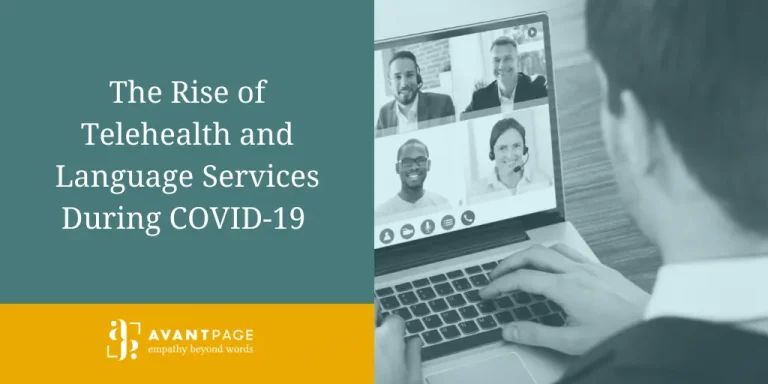
The Rise of Telehealth and Language Services After COVID-19
The COVID-19 pandemic has changed many aspects of healthcare. One of those aspects is routine doctor visits. While many health issues still need to be handled in person, others can be done online through telehealth services (also known as telemedicine). Telehealth lets you talk to your healthcare provider live over the phone or video chat, send and receive messages using a secure online system, and use remote monitoring for updates. But if patients can’t speak English and the provider isn’t bilingual, what happens then? Telehealth services have grown exponentially since the pandemic. A study by the Office of the Assistant Secretary for Planning and Evaluation (ASPE) found that the number of Medicare visits conducted through telehealth appointments increased 63-fold, from 840,000 in 2019 to 52.7 million in 2020. Also, the number of behavioral telehealth appointments increased 32-fold. Telehealth is here to stay. Telehealth remains an important part of the modern healthcare system, but how can providers navigate the complexities of offering patient care if they cannot understand the patient? Table of Contents Advantages and Disadvantages of Telehealth Services Offering Telehealth Interpretation: Compliant Support for Patients What Are the Different Types of Interpretation? Improve Healthcare Literacy Through Language Along the Patient Journey Determine the Best Solution for Your Patient's Need(s) Technology Considerations Appointment Types Language Considerations Frequently Asked Questions About Telehealth Interpretation The Importance of Language Access Needs for Telehealth Services Telehealth offers many advantages, but it also highlights the gaps in language access, digital literacy, and Wifi accessibility, and thus health disparities, that can impact the health of those with limited English proficiency (LEP). While healthcare organizations may not be able to address some technology issues, they can implement language access solutions in telehealth and the patient journey overall. Telehealth has advantages and disadvantages for healthcare organizations and patients. Advantages include: Disadvantages include:
Let’s look at one of these language barriers: digital accessibility for those with language needs. Unfortunately, this barrier can exacerbate disparities in the healthcare system. For example, one primary care clinic that usually had 14% non-English speaking patients noted that the numbers dropped to 7 percent when operating only as telehealth during the pandemic. Healthcare organizations won’t be able to make internet access more accessible, but they do have options for improving language services. So how can healthcare organizations close equity gaps when addressing barriers in telehealth and digital access? For healthcare appointments, providers need to meet language access laws. This includes telehealth, which poses some changes to the new landscape such as accessing remote interpreters, digital literacy, technology, and (Personal Health Information) PHI security. Providing interpretation services, whether they’re through video remote interpretation (VRI) or over-the-phone (OPI), is critical for improving language access. Healthcare providers should have established language agencies with the setup for appointments and last-minute needs. A language service provider (LSP) can help strategize your needs to efficiently meet video appointments and larger volume calls. Learn about OPI vs. VRI interpretation, and why you may need to provide both types of telehealth interpreting to patients. To improve healthcare literacy through language, consider patient touchpoints with your organization. The patient journey starts with searching for providers, having an initial appointment, and aftercare, including self-administration of care, and all the touchpoints in between. When you think about the patient experience, ask yourself these questions: If you identify areas that need improvement with language, consider strategizing with your LSP. For example, perhaps you should localize your website or create language voice options on your phone system, and your LSP can help you with that.
One language scenario may not be enough to fulfill your patients’ needs. Given the disadvantages that we described earlier, and as COVID-19 continues to challenge traditional healthcare solutions, healthcare organizations may have to more than one language strategy for given scenarios. For example, telehealth appointments may not be the best solution in some cases. With VRI, consider the following factors to have a successful meeting:
Consider other telehealth options where video conferencing technology won’t be as much of a challenge. For example, some LEP patients may be more comfortable over the phone than on video. The AHA 2022 Environmental Landscape showed that of the 27% of Medicare beneficiaries who participated in telehealth visits, 56% were over the phone, 28% were video, and 16% were both. Of course, some types of topics are better for telehealth than others. Here are some examples. Lastly, consider language factors, such as requests by the individual for a specific language and method, complexity of the meeting such as multiple participants which can be confusing on video or phone with interpretation, the digital literacy of all participants, limited hearing by participant(s), sign language users (meaning OPI isn’t a possibility), and more. Clinicians can determine the need for a healthcare interpreter by reviewing patient records in the EHR system, noting the patient’s preferred language, or asking patients directly when scheduling an appointment. On-demand interpreting solutions and medical interpretation services are available to ensure equal access and health equity, so clinicians can plan ahead and provide professional interpreters for both in-person and telehealth visits. Telehealth interpreters will join appointments via secure links hosted on the AvantInterpret on-demand interpreting platform. Professional interpreters are trained to provide real-time interpreting, supporting patients who are hard of hearing, speak a different language, or need ASL services, all while maintaining accuracy in medical terminology. Yes. All professional interpreters engaged through Avantpage’s medical interpretation services adhere to HIPAA standards, maintaining patient confidentiality at all times. Whether interpreting face-to-face, via video interpretation, or in real-time telehealth sessions, interpreters are trained in medical terminology and confidentiality protocols to protect sensitive health information. Absolutely. Our interpreting platform integrates seamlessly with EHR systems, allowing clinicians to schedule appointments, track patient data, and request medical interpreters directly within the platform. This integration supports real-time, on-demand interpreting solutions and helps ensure that patients receive care in their preferred language without workflow disruption. Yes. ASL interpreters are available for telehealth appointments to provide equal access and support health equity for patients who are deaf or hard of hearing. Interpreters join in real-time via video interpretation, ensuring clear communication and seamless integration with clinicians’ telehealth workflows.Learn how to work with a sign language interpreter for better health outcomes for patients. Telehealth services are going to continue to grow. To reduce health disparities in language, healthcare companies can provide interpreters, address language needs along the patient journey, and evaluate the best solutions for their patients. We provide VRI and OPI services for healthcare organizations and other industries. To learn more about how we can help you, get a free quote, contact us with a general inquiry, or call (530) 750-2040.

Don’t Wait for Churn: How to Build a Multilingual Medicaid Redetermination Strategy That Works
The post-pandemic Medicaid unwinding has created one of the largest coverage shifts in recent history. For Medicaid Managed Care Organizations (MCOs), the stakes are high: millions of members risk losing coverage, not because they’re no longer eligible, but because of procedural disenrollment. According to the KFF Medicaid Enrollment and Unwinding Tracker, 70% of Medicaid disenrollments in early 2024 were due to missed paperwork or incomplete renewals, not actual eligibility loss. Many of these members face a common and solvable barrier: language access. When renewal notices, forms, and instructions aren’t available in a member’s preferred language, deadlines are missed, documents are misunderstood, and coverage slips away. The result? Avoidable churn that disrupts care continuity and drives up costs for plans. The good news: this is a fixable problem. The solution: a proactive, multilingual Medicaid redetermination strategy. Table of Contents What Is Medicaid Redetermination? What is a Multilingual Medicaid Redetermination Strategy? Why a Proactive Approach Matters The Core of a Multilingual Redetermination Strategy - Start Early - Deliver Culturally and Linguistically Appropriate Communications - Leverage Multiple Outreach Channels - Train Staff and Partners on Language Access Measure, Learn, and Adjust - Renewal Rates Among LEP Populations - Call Center Volume and Language Line Usage - Reduction in Procedural Terminations - Member Feedback and Retention ROI Marketing Redetermination Effectively Common Pitfalls to Avoid Frequently Asked Questions About Building a Redetermination Strategy The Bottom Line Medicaid redetermination is the process by which the state reviews beneficiary information to ensure they still qualify for Medicaid benefits. This typically involves verifying details such as income, household size, and place of residence. It’s a routine step that helps ensure Medicaid is providing coverage to people who meet the program’s rules. Ensuring that communication is clear and accessible in multiple languages is essential to help all beneficiaries maintain their benefits. Learn more about LEP patients and what it means to be limited English proficient. A multilingual redetermination strategy is a proactive, structured approach designed to help Medicaid enrollees renew their coverage, regardless of their language proficiency. It’s about more than just translating a few forms. It means ensuring that every touchpoint in the renewal process, communications, support channels, and workflows, is designed to work seamlessly across languages and cultural contexts. With the right approach, members who are eligible won’t fall through the cracks simply because they couldn’t access renewal instructions in a language they understand. Too often, plans address disenrollment reactively; contacting members only after their coverage lapses. At that point, re-engagement becomes an uphill climb, requiring additional outreach, administrative effort, and resources. Members may also have already gone without needed care or medications, compounding health risks. A proactive approach flips the script: For MCOs and health plan marketers, the renewal cycle isn’t just an operational requirement; it’s an opportunity to strengthen relationships and close health equity gaps. Learn more about how improved language access can make healthcare better. A strong multilingual redetermination strategy weaves together language access, cultural relevance, and well-timed outreach. Here are the essential components: Redetermination should begin months before a member’s renewal date. This means: Early contact gives you time to: Translation is only the starting point. True effectiveness comes from cultural adaptation - ensuring messages are understandable, relatable, and trustworthy.Work with healthcare translation experts to ensure every message: Why this matters: Some populations may distrust official-looking documents or may be unfamiliar with how public benefits work. Tailoring the tone and framing can make the difference between a member opening a letter versus ignoring it. Different communities have different communication preferences. A multi-channel approach ensures your message is seen and understood: Tip: Make each communication channel reinforce the others to create a seamless and consolidated experience for members. For example, a mailed renewal reminder can direct members to a multilingual hotline where language resources are centralized and available on demand, providing real-time support without the higher costs of last-minute interpretation. Meanwhile, a follow-up text can link directly to the renewal form, guiding members smoothly through the process. This strategic coordination helps reduce confusion, saves resources, and ensures consistent language access across touchpoints. Even the most perfectly translated materials will fall short if frontline staff don’t know how to connect members to language assistance. Training should cover: Language access consulting can help build a sustainable plan that ensures every frontline staff member, from call center agents to community health workers, not only knows how to support LEP (Limited English Proficient) members effectively, but also understands the process to accurately identify the required language before connecting to an interpreter. Tools like “I Speak” cards or call-routing systems can prevent wasted time and expense from reaching the wrong interpreter. Proper training on using phone systems is also crucial; many staff unintentionally hang up or fail to connect due to a lack of familiarity, which can be uncovered through methods like mystery calls. A multilingual redetermination strategy is only as strong as its measurable impact. Tracking the right indicators ensures that your efforts are driving meaningful retention, improving member experience, and meeting compliance requirements. Pro tip: Segment results by language and region to identify high- and low-performing areas for more targeted follow-up. Pro tip: Use this metric together with renewal rates to gain a fuller understanding. Some members might reach out for help but still fail to complete the process without extra support. Additionally, analyze drop-off points to identify where language barriers may be causing friction for Limited English Proficiency (LEP) members, and conduct quality assurance to uncover gaps in language coverage. Pro tip: Use this metric alongside renewal rates to get a complete picture. Some members may call for help but still not complete the process without additional support. Pro tip: Translate surveys and use trusted messengers to boost response rates from LEP members for more accurate sentiment analysis. When it comes to helping members renew their coverage, especially those with limited English proficiency, the way you market matters. Meet people where they already are. Run targeted ads on social media, place spots on local radio stations, share print flyers, and partner with community media outlets, all in the languages your members speak. Avoid spreading your resources too thin. Instead, concentrate your outreach efforts on neighborhoods and regions where your target language communities reside and work. This strategic focus ensures that your message reaches those who need it most. To identify these areas, you can utilize the U.S. Census Bureau's interactive mapping tools, which provide detailed demographic data by location. Skip the technical terms and bureaucratic tone. Use clear, friendly language that makes renewal feel simple, urgent, and worthwhile. The goal is to make the process less intimidating and more empowering. By combining these strategies, you can ensure your multilingual redetermination efforts truly connect and help more members keep their coverage. Medicaid redetermination is the process of reviewing a member’s eligibility for coverage. This involves confirming household size and income, among other factors such as residency and disability status. While some states may renew based on this information, beneficiaries may also need to complete a form, provide documentation, or attend an interview. Medicaid redetermination is crucial because missing deadlines or paperwork can cause members to lose health benefits. Members with limited English proficiency are more likely to miss renewal notices if they’re not in their preferred language. Multilingual materials ensure everyone understands how and when to renew. Clear communication in the right language helps members take timely action, reducing the risk of losing coverage due to misunderstandings or missed deadlines. It should include translated notices, culturally relevant outreach, geo-targeted campaigns, and partnerships with trusted community channels. Yes. Retaining members through better communication reduces churn, improves health outcomes, and strengthens long-term plan revenue. The Medicaid unwinding period is both a challenge and an opportunity. By embedding multilingual and culturally competent communication into your redetermination process, you can: Don’t wait until members disappear from your rolls. Start building your multilingual redetermination strategy today. Ready to take action? Explore our expertise in healthcare translations and language access consulting services. You can also learn more about multilingual outreach strategies or request a free quote to start designing your plan.
By acting early and leading with equity, your organization can turn renewal season from a compliance headache into a member engagement success story.

How to Work with Sign Language Interpreters
A sign language interpreter communicates between people who are deaf or hard-of-hearing and those who have hearing. A sign language interpreter may be useful or required in many different settings, including healthcare, education, court, an office or other situations. The best way to find a qualified interpreter is to work with a professional interpreting service that meets regulatory compliance. But, how do you work with a sign language interpreter once you secure their help? If you’re going to learn how to work with a sign language interpreter for the first time, or if it’s been a while since you’ve worked with an interpreter, you may not know what to expect. We’ve put together the following list of tips so you can become familiar with the process and be prepared before and during the interaction. Table of Contents How to Prepare for the Session How to Work with an Interpreter During the Session How to Work with an In-Person Sign Language Interpreter in a Large Group Setting Frequently Asked Questions About Working with a Sign Language Interpreter After the Session Conclusion Before the interpretation session, here are some things to keep in mind: The interpreter’s role is to communicate between people who are deaf or hard-of-hearing and those with hearing. An interpreter will interpret everything, so don’t ask the interpreter to leave something out. Interpreters are bound by a strict Code of Professional Conduct, such as the code established by the Registry of Interpreters for the Deaf. This Code ensures confidentiality, professionalism, and impartiality. It’s not uncommon for a sign language interpreter to seek out the individual who is deaf or hard-of-hearing to casually talk to assess their sign language skills before the interpretation. This helps establish a trusted rapport as well as helps the interpreter provide more meaningful language access. Signing can be physically and mentally tiring. If there’s only one interpreter, that person may need breaks after 20-30 minutes, depending on the type of interpretation. If there are two interpreters, they can relieve each other during regular intervals. The one who isn’t interpreting can then monitor the conversation and watch for things that may have been missed. Another type of interpretation in which there’s more than one interpreter is when a Certified Deaf Interpreter (CDI) works with a hearing sign language interpreter. In this case, a CDI works with an interpreter to handle dialects, sign languages, home signs, or other cultural differences to make sure the interpretation is precise. If you have any written materials that you plan to use during the session, provide the interpreter with a copy ahead of time. This will allow the interpreter to become familiar with the content and ask questions about the material, such as terminology. Go beyond just written materials by sharing the meeting agenda, names and roles of participants, any specialized vocabulary or acronyms, and whether the session will involve audience participation. The more context the interpreter has, the smoother the communication will be. If you plan to show a video, check to see if it has closed captions. If the interpreter needs to interpret the video, understand this is a form of simultaneous interpretation and they would need to be aware in advance, as well as may need breaks. The connection between your interpreters and patients is just as important as the one between your router and your devices. If you’ll be working with Video Remote Interpreting, the internet connection must be high-quality for full visuals of signs. If you can use a hard-wired internet connection, this will facilitate the best quality connection. Before the day of the session, brief all speakers and staff on how to work with an interpreter, such as speaking at a steady pace, allowing only one person to speak at a time, and addressing the deaf participant directly rather than saying “tell them.” Here are some tips on how to work with an interpreter during a session. If at any point the deaf participant indicates that the interpretation style is not working for them, be open to making adjustments. Contact your LSP if a different interpreter is needed — feedback is part of ensuring quality communication access. Learn more about language preference in trauma-informed care settings. Here are some tips on working with an in-person sign language interpreter in a classroom or large group setting. Learn about using ASL interpreting services in government settings. Your job doesn’t end when the session or event is over. Take a few minutes to: Ideally, book as soon as you know the date and time of your event or appointment. Qualified interpreters, especially those with technical, medical, or legal expertise, can be booked out weeks in advance. Early booking ensures you find the right professional for your needs and allows time to provide them with prep materials. An ASL interpreter is typically a hearing person who interprets between spoken English and American Sign Language. A CDI is a deaf professional who works alongside an ASL interpreter to provide greater clarity in complex situations, such as interpreting for individuals with unique signing styles, multiple dialects, or limited language skills. Interpreters do not add personal opinions or “explain” in their own words. They interpret exactly what is signed or spoken, maintaining neutrality. If you need clarification, address the deaf participant directly and allow the interpreter to convey your question. Look at and speak directly to the deaf participant, not the interpreter. Use your normal voice and pace, and allow time for interpretation. Engage with them as you would with any other participant. Yes. Share any materials, agendas, terminology lists, and participant names as early as possible. This preparation allows the interpreter to become familiar with the subject matter and ensures more accurate communication. If the deaf participant indicates the interpreter’s style or skills aren’t meeting their needs, contact the language service provider immediately. It’s important to make changes quickly to maintain effective communication. Not without breaks or support. Interpreting is mentally and physically demanding. For events longer than 1–2 hours, plan for multiple interpreters who can rotate and stay fresh. Knowing how to work with a sign language interpreter should lead to a successful outcome for everyone. Booking early, choosing the right interpreter for your setting, and sharing context well in advance will make the biggest difference in the quality of your session. At Avantpage, we provide interpretation services for all types of industries, and we’d be happy to answer any questions you might have about how the process work. To learn more, get a free, no-obligation quote or call us at (530) 750-2040.
How to Host Webinars Using Remote Simultaneous Interpreting
Hosting a webinar for a global audience can be challenging when participants speak multiple languages. How do you make sure everyone follows along? Remote simultaneous interpreting (RSI) delivers real-time translation, keeping all attendees engaged, informed, and able to participate fully.
In this article, we’ll dive into how you can host a webinar using simultaneous interpreting services. If you’re not sure where to begin, a trusted language service provider can help you figure out all the right tools and techniques you’ll need to make your event a success. Before you host your webinar, you’ll need to partner with a language service provider who offers remote simultaneous interpreting (RSI) services. Two key components to RSI set it apart from other types of interpreting: As the name implies, it’s both remote (i.e., the interpreter is not physically present at the event) and simultaneous, meaning it takes place at the same time the main speaker presents in the original language. Simultaneous interpretation is a particularly specialized style of interpreting. The cognitive effort of listening to the speaker while translating their speech into another language at the same time can be quite strenuous. As a result, simultaneous interpreters often work in teams and they can be a bit pricier than consecutive interpreters, who wait for a speaker to complete any given utterance before translating their message. This method of interpreting is typically used for events like conferences and webinars, as they allow people to understand the content of these events in real-time, without having to slow the pace of the presentation. RSI services allow interpreters to conduct their work remotely, making it easier to schedule an interpreter who can do the job from any location in the world — as long as they have a good internet connection.
If you’re planning to host a multilingual webinar and want to provide remote interpreting services, here’s what you need to know to get started. And for more general information on planning a multilingual event, check out our best practices for organizing a multilingual event, which includes tips that work for both remote and on-site events. RSI services are a great way to provide seamless multilingual experiences for attendees of your virtual event, but it’s important to keep the following factors in mind when commissioning an interpreting service for your event: Providing yourself with ample time to organize all aspects of an event is critical to making sure your event runs smoothly. Just as you’ll want to set a date and coordinate marketing early on, you’ll also want to plan ahead for having an interpreter.
We recommend booking an interpreter at least two weeks in advance, but the more time you have, the better. This is especially true for underrepresented languages, which may have fewer interpreters available.
Learn about remote simultaneous interpreting for high-stakes communication. Like translators, many interpreters will specialize in certain niches, meaning an interpreter who specializes in medical interpretation may not be the best choice for your webinar on public policy.
When booking an interpreter for an event, you’ll want to be sure to know exactly what topics you plan to cover and provide that information to the LSP and any interpreters you’re working with.
If available, you can even provide the interpreters with any context surrounding the event or materials that will be presented at the event, such as:
Allowing the simultaneous interpreters access to these materials in advance will help increase the quality of the interpretation for the participants. This information will allow interpreters to prepare for the event and conduct any research that’s necessary beforehand. We highly recommend conducting a dry test run of the webinar beforehand. You can coordinate this with your LSP, which will ensure that all parties involved in the webinar — the speakers, interpreters, and other organizers — will be familiar with the technology and equipment necessary to run the webinar smoothly. A dry test run also allows you to check audio channels, speaker volume, participant connections, and video quality, preventing technical issues during the live event. Working with an interpreter can expand your audience and broaden your horizons, but there are a few key things to consider when working with an interpreter during your virtual event. To ensure smooth interpretation during your webinar: If you’re working with a sign language interpreter, you must have proper lighting so the interpreter can see your facial expressions. Check out these tips on how to work with a sign language interpreter. Remote simultaneous interpreting allows participants from around the world to join your webinar without language barriers. By offering real-time interpretation in multiple languages, you can reach a broader audience, increase attendance, and engage participants who might otherwise be excluded. RSI not only enhances understanding for multilingual audiences but also ensures your event is inclusive for people with diverse language needs. When paired with captioning, interpreters make content fully accessible for attendees with hearing impairments or those who prefer to read along, creating a more engaging and equitable experience. Providing professional interpretation can help organizations meet legal or regulatory requirements for language access, particularly in healthcare, government, or educational settings. Offering RSI demonstrates a commitment to accessibility and inclusivity, which can enhance your organization’s reputation and trust with your audience. Interpreted webinars enable attendees to ask questions, participate in polls, and interact with speakers confidently in their preferred language. This leads to higher engagement, better feedback, and a more dynamic event overall. RSI allows you to connect with international audiences without the need for physical travel or on-site interpreters in every location. This reduces logistical challenges and expenses while still delivering a professional, multilingual experience. Most professional interpreters can work remotely, but availability may vary for less common languages. Early booking is essential. Simultaneous interpreting is demanding; interpreters typically rotate every 20–30 minutes for optimal accuracy. If your webinar or virtual event is longer than 30 minutes, ask your LSP whether you’ll need to hire multiple interpreters. Always have backup connections, test all technology in advance, and coordinate with your LSP for contingency plans. To maintain accuracy, provide interpreters with all relevant materials in advance, including slides, scripts, glossaries, or industry-specific terminology. Brief your interpreters on the webinar’s objectives, key points, and any technical or specialized content. Conducting a dry run or rehearsal also helps identify potential challenges, ensuring that your message is conveyed clearly and consistently in every language. It depends. If you’re planning to provide slides, PDFs, or any written materials to participants as part of your presentation, it’s highly recommended to prepare translated versions. Keep in mind that document translation services are separate from interpretation. Providing written materials in participants’ native language enhances accessibility and ensures your message is clearly understood by all attendees. Learn about the difference between translators and interpreters. Preparing for a remote multilingual event doesn’t need to be difficult. Here are the key things you’ll want to keep in mind when booking RSI services to ensure that everything moves smoothly at your multilingual webinar: By following these best practices, you can make sure that your multilingual webinar is accessible to folks from all sorts of linguistic backgrounds. If you’re hosting a remote event and need webinar translation services or remote interpreting services, Avantpage is happy to offer RSI services and further consultation for your unique situation. Get a free, no-obligation quote online or call us at (530) 750-2040 to learn more about our RSI offerings.
Language Access Policy as a Strategic Advantage
Miscommunication in healthcare, especially for patients with limited English proficiency (LEP), can lead to serious health risks, lower patient satisfaction, and poor outcomes. A comprehensive language access policy isn’t just a compliance requirement—it’s a powerful strategy for improving care, performance scores, and equity. That’s why every healthcare provider needs some sort of language access policy. And while there are federal regulations that outline the basic obligations—such as requiring hospitals and clinics to offer interpretation to patients with LEP—mere compliance with these laws isn’t quite enough. Measures like the Health Equity Index (HEI) or Healthcare Effectiveness Data and Information Set (HEDIS) heavily emphasize equity of care. These measures can seriously affect a provider’s reputation and funding. This means providers need to go above and beyond the bare minimum requirements to make sure patients with LEP can access their services just as easily as native English speakers. In this blog post, we’ll explain the strategic importance of having a thorough language access policy that goes the extra mile. We’ll also discuss how language access policies can lead to better health outcomes and improve performance on measures the HEI and HEDIS. Table of Contents What Is a Language Access Policy—and Why It Matters Now Turning Compliance Into Competitive Advantage How to Build an Effective Language Access Policy Measuring ROI: Health Equity, Financials, and Retention Getting Started: Key Actions for Health Plans and Providers Frequently Asked Questions About Creating a Strategic Language Access Policy Final Takeaways A language access policy acts as a blueprint for organizations to address the cultural and linguistic needs of individuals with LEP. It outlines needs specific to the organization, such as how many patients need language access services and what languages are most common among this group. In a healthcare setting, a language access plan may also consider health equity—i.e., how healthcare outcomes for patients with LEP compare to those who speak English fluently—and social determinants of health. Then, the plan outlines strategies for addressing these needs, be it interpreting services, translation services, or other language access services. Typically, a language access policy will cover interpreter access, written translation, accessibility services, staff training, technology integration, and vendor partnerships. Historically, language access plans were tied primarily to compliance with federal and local regulations, but it can also be a strategic investment. Performance metrics like HEDIS, HEI, and CAHPS factor in communication and patient experience—this means that a provider that does well in other areas but falls short in language access will not perform as well on these metrics as one that does offer high-quality language services. These metrics can impact reputation and funding, so investing in thorough language access measures can pay off, both in terms of improved health outcomes and an organization’s finances. Meeting basic language access requirements is important, but it’s just the beginning. Top-performing health plans go beyond simply offering interpreting and translation services. They make sure that patients with LEP receive the same level of care, communication, and support as English-speaking patients. That means thinking about ways to make things like patient intake forms, patient portals, and care instructions accessible and easy to understand for people from different linguistic and cultural backgrounds. This proactive approach improves outcomes, strengthens trust, and boosts performance on key metrics like HEDIS, CAHPS, and the Health Equity Index (HEI). By operationalizing things like the Culturally and Linguistically Appropriate Services (CLAS) standards and investing in better workflows, training, and vendor partnerships, providers can: For a language access policy to have a meaningful impact on performance, it should begin with a data-driven needs assessment. Health insurance providers and hospitals alike can look to the following sources for high-quality data on the needs of LEP patients: Organizations should use these resources to identify the size and demographics of the local LEP population and which languages are commonly spoken among LEP locals. Once an organization understands patient needs, they can seek out language service providers who can offer translation, interpretation, and website localization in these languages. Partnering with a qualified vendor who can offer certified medical interpreting that complies with regulations like HIPAA is key to developing a strong language access plan. After a language services vendor has been selected, it’s important to train relevant staff on when and how to access language services, as they may need to use special technology or language identification cards to properly access language services. Make sure your staff members understand the importance of language access and are prepared for successful, culturally sensitive interactions with LEP patients. While language access may seem expensive at first, organizations that implement thorough language access measures can expect that investment to pay off in the long run. For example, health plans that invest in language access often see stronger performance in areas directly tied to reimbursement and public reporting. The Centers for Medicare & Medicaid Services (CMS)’s HEI now rewards Medicare Advantage plans that reduce disparities for underserved populations, including patients with LEP. That means strong language access can directly boost HEI score. Likewise, better communication supports higher HEDIS and CAHPS scores, which influence quality bonuses and member enrollment. When patients understand their care plans, they’re more likely to follow through with screenings, medications, and follow-up visits. And that’s not to mention the impact these measures actually have on LEP patients—clear communication in a patient’s preferred language empowers patients to advocate for and express themselves. This in turn leads to better patient satisfaction and health outcomes, reducing gaps in health equity. If you’re looking to improve your language access plan for your organization, here are a few steps to help you get started: A language access policy in healthcare is a document that outlines the measures a healthcare or insurance provider will take to ensure equitable access for patients with LEP. This outlines high-demand target languages for interpreting, vendors of language services, documents that need to be translated, etc. Poor communication and patient satisfaction can negatively impact HEDIS scores and CAHPS ratings—that means if a provider does not have strong language access measures in place, they may score poorly on these performance metrics. By offering language services to patients and members, providers can improve health outcomes for patients with LEP, in turn leading to higher scores on these metrics. If LEP members can’t understand basic information about their health plan, they’re liable to find a new health insurance provider that has a better reputation. Having a strong language access policy in place allows you to build trust with members who have LEP, in turn making them less likely to leave your plan. An effective policy includes a language needs assessment, clear procedures for interpreter and translation services, staff training, qualified vendor partnerships, and ongoing evaluation to ensure services meet member needs. Health plan providers can track improvements in HEI, HEDIS and CAHPS scores, member retention by language group, and the number of language access-related complaints, among other metrics. While compliance is one key aspect of any language access policy, it’s important to understand that it’s not all about compliance. If done right, it can also be a key market differentiator. Having strong language access measures can set you apart from the competition and help you retain members by improving health outcomes, member and patient satisfaction and performance metrics like HEI and HEDIS. While developing a language access policy may seem like a challenging task, know that you don’t have to do it alone. Avantpage offers language access consulting services on top of medical interpreting and translation services to help healthcare organizations build a policy that aligns with their unique needs. Ready to turn your language access policy into a strategic advantage? Contact us today at [email protected] or (530) 750-2040 to learn more, or fill out this form for a free quote.
Communication Services for the Deaf or Hard-of-Hearing
Based on standard hearing exams, one in eight people in the US aged 12 years or older has hearing loss in both ears. This number equals 13 percent of the population or 30 million people. The Americans with Disabilities Act (ADA) requires Title II (state and local governments) and Title III entities (businesses and non-profit organizations that serve the public) to communicate with people who are deaf or hard-of-hearing. That said, it’s crucial to provide certain communication services for the deaf or hard-of-hearing for your organization to be legally compliant and accessible to all. In this article, we’ll explore the types of communication services, how to make accommodations for D/HoH populations, and considerations when looking for an interpreter. Table of Contents What Are Language Accessibility and Communication Services? Communication Services For Deaf Populations Communication Services For Hard-of-Hearing Populations How to Make Accommodations for the Deaf or Hard-of-Hearing 1. Provide the Preferred Sign Language 2. Provide the Preferred Delivery Method Considerations for Finding an Interpreter Considerations for Scheduling an Interpreter Conclusion Ensuring effective communication for deaf and hard-of-hearing individuals goes beyond simply providing interpreters or hearing aids. Language accessibility services are designed to remove barriers, support meaningful participation, and provide equal access to information and services. These services take into account different communication needs, preferred languages, and technologies, helping individuals engage fully in education, healthcare, work, and everyday life. Let’s explore the various communication services for the deaf or hard-of-hearing. Language accessibility for deaf individuals goes beyond just providing a sign language interpreter. It involves creating meaningful access to information, interpreting services, and nuanced communication, which can include: Communication services for deaf populations are designed to ensure full participation in education, government, healthcare services, and everyday life, respecting both linguistic and cultural identity. For individuals who are hard-of-hearing, language accessibility focuses on amplifying, clarifying, and visually supplementing spoken communication. Services may include: Unlike deaf populations who may primarily rely on signed languages, hard-of-hearing individuals often benefit from a combination of spoken language support and visual communication tools. The goal is to ensure that these individuals can engage effectively in conversations, access government and public services, and participate fully in education, employment, and social activities, including elections. For those who schedule services for people who are deaf or hard-of-hearing, consider the following. Although ASL is the most common sign language in the US, not all individuals who are deaf or hard-of-hearing use ASL. That’s why it’s important to find out a person’s preferred language—if someone doesn’t use ASL, then providing an ASL interpreter won’t be helpful. Some examples include: No two patients are the same. To ensure your communication services are fully accessible, you must offer options for how you interpret and interact with patients. In-person interpreting provides face-to-face language support, allowing interpreters to capture tone, body language, and facial expressions that are essential to clear communication. This option is ideal for: Over-the-phone interpreting (OPI) connects you to a qualified interpreter within seconds, making it one of the fastest and most convenient interpreting solutions. OPI is available in hundreds of languages and can be used for both planned and on-demand conversations.
This service is ideal for situations where visual cues aren’t essential, such as: Video Remote Interpreting (VRI) combines the speed of over-the-phone interpreting with the added benefit of visual communication. Using a secure video platform, interpreters can facilitate conversations in American Sign Language (ASL) and spoken languages, helping participants see facial expressions and body language for greater understanding. VRI is ideal for: Simultaneous interpreting allows the interpreter to translate spoken words in real time, with little to no delay. This service is commonly used in: CART, also known as real-time captioning, allows a provider to transcribe spoken words into text and then display them on computers, mobile devices, or screens. CART can be used in a variety of ways, such as: Not only does it help individuals who are deaf or hard-of-hearing, but it also helps those who may struggle to hear in loud places and Limited English Proficient individuals. Remote CART can also be streamed to an internet browser for remote communication needs. C-Print is similar to CART, but it uses a QWERTY keyboard. The service provider uses software to type full and abbreviated words, and the software finds full words for the abbreviations. C-Print allows individuals to type responses, making the communication two-way. When seeking out an interpreter, consider these scenarios and preferences. Depending on certifications and skills paired with an individual’s preferences, these interpreters work with a person who is deaf and the organization to facilitate communication, most often using ASL. These interpreters are specially trained with personal knowledge of the deaf community, added resources, and more to work with a hearing interpreter as a team. They have firsthand knowledge of the deaf culture and can work with individuals who are children, use home signs, use sign languages from other countries, and more. CODA interpreters have grown up using sign languages, typically in tandem or even before using spoken English. They have a nuclear family awareness of deaf culture and language. These technologies can be leveraged when individuals understand written English but do not have a way to communicate through signs. The Registry of Interpreters for the Deaf, Inc. (RID) is the national organization that issues certifications for sign language interpreters. However, in 2016, they placed a moratorium on certifications as a way to address systemic issues with testing, and that moratorium is still in place today. Currently, the only nationally issued certification through RID is the National Interpreter Certification (NIC). There are already too few sign language interpreters, and the RID moratorium presented another issue. Since 2016, not many interpreters have been added. This can make scheduling last-minute sign language interpreters difficult, so plan ahead when you have a need for an ASL interpreter. Learn about AvantInterpret, our sign language interpreter scheduling software: Before you schedule an interpreter, talk to your patient population to determine the best ways to communicate with them. Remember to schedule as far out as possible to ensure you can meet the needs. We provide in-person and remote interpretation services for all kinds of industries and environments. For more information, get a free, no-obligation quote online or call us at (530) 750-2040. Let us help you provide the best language services.
How Simultaneous Interpreting Supports High-Stakes Communication
Simultaneous interpreting has been a keystone of high-stakes multilingual communication since it was first employed at the Nuremberg Trials in 1945. Sometimes called the “trial of six million words” due to the sheer volume of words in the transcripts, the main trial was completed in just 10 months, largely thanks to the interpreters who tested the then-new method of interpreting. Unlike consecutive interpreting, in which the interpreter waits for the speaker to finish speaking before providing an interpretation into the target language, simultaneous interpreting requires the interpreter to listen carefully to the speaker in the source language and provide a target language interpretation at the same time. In turn, it’s much faster-paced than consecutive interpreting, lending itself well to high-stakes, time-sensitive settings like medical emergencies and trials. In this blog post, we’ll take a look at simultaneous interpreting, exploring how it enhances clarity and speed across various fields, including law, healthcare, business, and more. Table of Contents What Is Simultaneous Interpreting? Why Simultaneous Interpreting Is Essential for High-Stakes Communication Benefits of Simultaneous Interpreting Challenges and Best Practices How to Choose a Simultaneous Interpreting Service Future Trends in Simultaneous Interpreting Frequently Asked Questions About Simultaneous Interpreting Conclusion Simultaneous interpreting is a method of interpreting wherein the speaker and the interpreter speak more or less at the same exact time—as the speaker talks in the source language, the interpreter listens carefully and speaks in the target language. There’s typically a small lag between the two parties, as the interpreter usually waits a few short seconds to jump in and begin interpreting, also known as the “ear-voice gap.” Interpreters have to be careful with how long they wait to jump in—too soon and they’re likely to use unnatural structure and vocabulary that mimics the source language. But if they wait too long, they’re liable to forget too much of what was said earlier on. This skill requires a finely tuned working memory, and unlike consecutive interpreting, the interpreter does not know how a given sentence is going to end when they start interpreting. You’ll commonly see simultaneous interpreting in healthcare settings, especially in time-sensitive emergencies, as well as in the courts and other legal settings. Multilingual conferences also commonly employ simultaneous interpreting as well. Due to its challenging nature and the fact that it’s often used in high-stakes settings, simultaneous interpreting requires a lot of practice—it’s not enough to be proficient in two languages. Formal graduate training in interpretation is often required to work as a simultaneous interpreter. When it comes to high-stakes communication like medical emergencies, delays, even small ones, can lead to negative outcomes. Miscommunication in medical emergencies has been shown to increase the risk of harm by 30% or more. By quickly reducing the risk of miscommunication, simultaneous interpreting can help save lives. By eliminating delays in critical moments, simultaneous interpreting allows you to deliver your message much quicker than you could with consecutive interpreting, which effectively doubles the length of any conversation. Whether you’re dealing with a medical emergency or conducting international diplomacy, simultaneous interpreting is generally your best bet for accurate and speedy delivery of interpreting services. Here are a few industries and scenarios where simultaneous interpreting is typically used: Here are a few of the advantages of using simultaneous interpreting in high-stakes settings: Although simultaneous interpreting has many benefits, there are some challenges in its implementation. Because of the high cognitive load of this task, interpreters often experience significant burnout. To reduce the risk of burnout, it’s a good idea to work with a team of two or more interpreters who can switch out with one another, allowing the other team members to take breaks. Interpreters can also reduce the risk of burnout by preparing beforehand. It’s a good idea to provide your interpreter with basic notes or a run-of-show in advance so they can prepare themselves and brush up on the terminology they’ll need to use on the day of. Additionally, interpreters need to have the right technology and preparation for the job. Simultaneous interpreting often requires specialized audio equipment, such as a pair of high-quality headphones and a microphone. Remote simultaneous interpreting usually requires additional technology, such as interpreting software. If you need interpreting services, the best way to get connected with an interpreter is through a language service provider like Avantpage. A language service provider will handle all the heavy lifting of matching you with an interpreter who suits your needs and making sure they have the proper equipment. When shopping around for a language service provider, here are a few things to consider: Demand for interpreters is growing—the U.S. Bureau of Labor Statistics predicts that demand for interpreters will grow by at least 4% by 2032. Remote simultaneous interpreting has been on the rise for quite a while now, with the COVID-19 pandemic leading to a boom in demand for interpreting services delivered remotely, either by video or phone call. While there’s certainly still demand for in-person services, it’s likely that remote services will continue to grow. Likewise, the recent rise of artificial intelligence technology has also made waves in the fields of translation and interpreting. But it’s important to note that human interpreters aren’t going anywhere just yet, as human reviewers still have to review automatically translated documents to verify their accuracy. Likely, there will always be some level of human-in-the-loop oversight in the interpretation process. Simultaneous interpreting is a form of interpreting in which the interpreter speaks at the same time as the target-language speaker. The interpreter does not wait for the speaker to finish their utterance before interpreting; both parties speak at the same time. Simultaneous interpreting is most effective in high-stakes settings that require quick and accurate delivery of information. This includes courtrooms, medical emergencies, diplomatic settings, and multilingual conferences, to name a few settings. Simultaneous interpreting can improve outcomes in high-stakes situations in several ways. First, it reduces delays, allowing each party to maintain a more fluid, natural conversation. Simultaneous interpreting also requires a high level of training and skill. When you work with a vetted simultaneous interpreter, you can rest assured that you’re working with one of the most qualified individuals available. With simultaneous interpreting, the interpreter and speaker both speak at the same time. With consecutive interpreting, the interpreter waits for the speaker to finish speaking before speaking. Consecutive interpreting is a slower process, as the interpreter must take turns with each speaker. When seeking out simultaneous interpreting services, it’s important to find a language service provider you can trust. Ask them about their vetting process for their interpreters, what industries they have experience in, and how their interpreters prepare for a session. The answers to these questions will help you find the right interpreting service for your needs. When you’ve got high-stakes communication needs, simultaneous interpreting is the way to go. From medical emergencies to diplomatic missions, simultaneous interpreting enables people to communicate freely and fluidly without having to take long breaks between speakers. You never know when a time-sensitive emergency is going to come up, which is why organizations must prepare in advance by partnering with a trusted language service provider who can offer on-demand simultaneous interpreting services.
At Avantpage, we offer in-person and remote simultaneous interpreting services, with on-demand interpreters in more than 150 languages. With AvantInterpret, you can get connected to an accredited, specialized interpreter in as little as 30 seconds to ensure timely communication in high-stakes settings. If you’re looking for simultaneous interpreting services, contact us today at (530) 750-2040 or [email protected]. Or, request a free quote now.