
Blogs
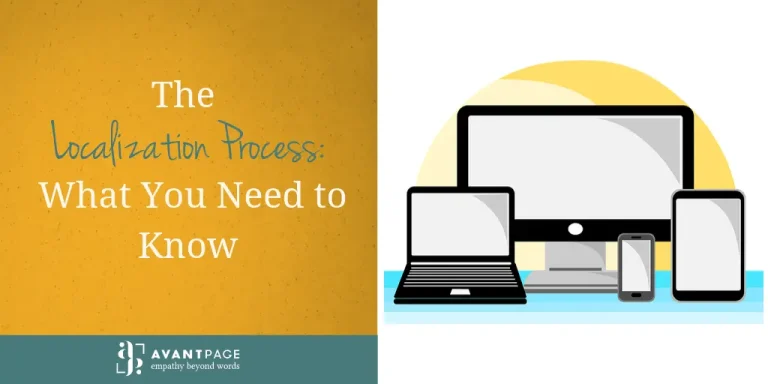
The Localization Process: What You Need to Know
Targeting a new audience with your content isn’t as simple as it may seem. Not only does your message need to be translated, but you also need to ensure the graphics, colors, fonts, and other elements of your content effectively communicate your brand. This is where the localization process comes in. An effective localization process bridges the gap between globalization and personalized communication. It requires a skilled localization team, the right localization tools, and a deep understanding of different languages, cultural differences, and market expectations. Done right, it helps you deliver a localized product that engages your audience, supports brand growth, and ensures long-term success in global markets. Table of Contents What Is Localization? 7 Steps in the Localization Process Step 1: Research & Goal-Setting Step 2: Translation and Cultural Adaptation Step 3: Localizing Graphics and Visuals Step 4: Design, Formatting, and Functionality Step 5: Converting to Local Units and Formats Step 6: Quality Assurance and Testing Step 7: Compliance with Legal Requirements Why the Localization Process Matters Frequently Asked Questions About the Localization Process Streamline Your Localization Process with an Expert LSP By definition, “Localization is the process of adapting a product or content to a specific locale or market.” This process addresses all aspects of your content, ensuring the elements involved will be clearly understandable to your new target audience. When you’re ready to penetrate a new market, here are the steps of the localization process that your content needs to follow. Localization can be applied to different company resources, including: 4 Painless Steps to Website Localization 14 Common Mistakes Companies Make in Website Localization Expanding into global markets means more than simply translating your message into a different language. To connect with a local market in a meaningful way, you need an effective localization strategy that adapts your content, design, and user interface to fit your audience’s culture, expectations, and legal requirements. The localization and translation process, often referred to as a localization workflow, ensures your localized product delivers a high-quality user experience that feels as if it were originally created for your audience’s native language and cultural nuances. Follow these essential steps to create your localization process: Before beginning your localization project, your organization and your Language Service Provider (LSP) will work together to identify your target audience and their needs. This will include detailed research into the culture of your new target audience and any information that will help you to effectively reach them. The proper formatting for dates, times, graphics, fonts, and more will be determined as well. Your strategy should identify: Thorough cultural research will help you adapt not only your language but also your visuals, layouts, and functionality so that your content fits naturally within the target culture. Your content will then undergo translation into the new target language. But translation is only one part of the localization workflow, and it’s much more than word-for-word substitution. Your translators must convey your brand’s voice, tone, and intent while respecting cultural differences and cultural sensitivity. To prepare for this step, be sure that you know what language and dialect your target audience speaks. If you want your content to be clearly understood, these two pieces of information are vital, as many languages have nuances that are important to specific immigrant groups – e.g. Traditional vs. Simplified Chinese. Your LSP will translate your content into the target language, give you the opportunity to review it and make edits, and then move on to the next steps of the localization process. To streamline this part of the localization process, your LSP may use a combination of professional human translators and technology, such as machine translation, AI translation, and localization tools. Supported by translation memory and automation, this approach helps maintain consistency, speed up production, and reduce costs while ensuring high-quality translated text. Learn more about the benefits of human-in-the-loop translations. Your graphics also need to be localized as you continue through the process. This step includes changing the text, colors, images, and other elements of your graphics as necessary. If your logo includes text in the source language, you’ll want to consider changing that text into the target language to better be able to reach your target market. Once your content is translated, it’s time to integrate it into the design. In this stage, your team ensures the user interface works seamlessly in the target language. This may include adjusting for text expansion or contraction, changing reading direction, and fixing spacing or alignment issues. Testing the functionality of forms, navigation menus, and other interactive elements is key to providing a smooth customer experience. Learn more about desktop publishing services and why they’re important. An often-overlooked but important step is adapting measurements, dates, times, currency, and other units to local standards. These details may seem small, but they help your localized content feel truly tailored to the local market and reinforce cultural sensitivity. Before launch, a thorough quality assurance review ensures that your translated text is accurate, culturally appropriate, and free of errors. This process typically includes: By testing the product or content in real-world conditions, you can confirm that it meets high-quality standards and supports a positive customer experience. Your localization team should also verify that your content meets all local laws and regulations. This could include privacy policies, labeling standards, or accessibility requirements, especially important when expanding into highly regulated international markets. An effective localization process bridges the gap between globalization and personalized communication. It requires a skilled localization team, the right localization tools, and a deep understanding of different languages, cultural differences, and market expectations. Done right, it helps you deliver a localized product that engages your audience, supports brand growth, and ensures long-term success in global markets. Learn about a recent medical website localization project. A successful localization project typically involves multiple stakeholders:
- Project managers to oversee timelines and budgets.
- Translators and localization specialists for language accuracy.
- Subject matter experts to ensure content is factually correct.
- Marketing or brand teams to maintain tone and style.
- Developers and designers to adapt layouts, interfaces, and technical elements for the target market. Choose tools based on your project’s scale, file formats, and workflow needs. Look for:
- Translation management systems (TMS) for organizing and tracking work.
- Computer-assisted translation (CAT) tools to improve consistency.
- Glossary and terminology databases to standardize language.
- Collaboration platforms that allow translators, editors, and developers to work together seamlessly.
Work with an experienced language service provider (LSP) like Avantpage, which will streamline the localization process. Any customer-facing or market-specific content may need localization, including:
- Websites, landing pages, and blogs
- Marketing materials, ads, and social media posts
- Software and mobile app interfaces
- Product documentation and user manuals
- Legal agreements and compliance documents
Learn about how the best website localization services enhance accessibility. Work with native speakers who understand both the source and target cultures. Provide them with:
- Brand and style guidelines
- Context for the content’s purpose and audience
- Examples of culturally sensitive scenarios
Also, review content for imagery, colors, and idioms that may not translate well or could be misinterpreted. - Translation: Converting text from one language to another while preserving meaning.
- Localization: Adapting content to suit the language, culture, and preferences of a specific audience.
- Internationalization: Designing products, software, or content in a way that makes localization easier for multiple markets.
Learn more about the differences between translation and localization. If you’re ready to expand your reach with high-quality localized content, Avantpage can help. Our localization services combine expert translators, advanced technology, and proven localization workflows to help you succeed in any international market. Call us at 530-750-2040 or request a free quote today.
Benefits of Human-In-The-Loop vs. Fully Automated Translation
Up until relatively recently, free machine translation tools were notoriously low quality—you’ve probably seen your fair share of posts poking fun at machine translation “fails” on social media. However, machine translation has improved significantly over the last decade, and it has become a part of many translators’ repertoires. That said, machine translation is merely a tool to help translators move the process along faster—machine translation is still far from perfect on its own. These tools can produce deceptively fluent and easy-to-read text, but when you look closely at their output, you’ll begin to find errors and inaccuracies that human translators typically won’t make: They struggle with ambiguous language, fail to take into account the cultural context of the content, and it can be challenging to get them to stick to a consistent style guide. That’s why it’s critical to have a human in the loop. Translation technology enables rapid-fire translation of long texts—in 2022, Google Translate processed 146 billion words a day, more than most human translators will translate for their entire career. But it still makes mistakes that humans need to fix. “Human-in-the-loop” translation refers to the process of combining the efficiency of machine translation with the accuracy and cultural awareness of human translators. It’s an important approach to translation in an age where machine translation tools are as commonplace as they are today. In this blog post, we’ll take a look at the benefits of human-in-the-loop translation and why organizations in healthcare, government, and law need to make sure there’s a human in the loop, rather than utilizing fully automated translation services. Table of Contents What is Fully Automated Translation? What is Human-in-the-Loop Translation? Benefits of Human-in-the-Loop Translation How to Choose Between Human-in-the-Loop vs. AI Translations When Fully Automated Translations Work Best When Human Oversight is Non-Negotiable Building a Translation Strategy That Scales Frequently Asked Questions About Human-in-the-Loop vs. AI Translations Conclusion As the name suggests, fully automated translation is any translation process conducted solely using translation technology, with little to no human oversight. With fully automated translation, a user simply inputs text in one language, selects the target language, and receives an automatically generated translation in a matter of seconds. Using translation technology cuts costs and speeds up the translation process significantly—instead of paying somebody and waiting for them to translate a document in a matter of days, organizations can get a final translation in the blink of an eye, without having to pay much. But raw, unedited machine translation output is often rife with errors, especially for more complex documents. Because of this, fully automated translation tends to be best suited for repetitive texts that use relatively simple, unambiguous language. The quality of machine translations also varies by language. In a recent study, researchers found that Google Translate had a 94% accuracy rate on English to Spanish translations of emergency discharge instructions, but 55% for translations into Armenian. Still, when it comes to translating important medical documents, even a minor error can have serious consequences. That’s why it’s important to have a human in the loop to review automated translations and make sure they’re accurate. Like fully automated translation, human-in-the-loop approaches begin with a machine translation—but they don’t end there. After first running the document through a machine translation tool, human translators and editors review the content to make sure it’s accurate. These individuals review the translation and the original document, editing it to make sure that the final product is accurate and reads smoothly. They typically use other tools like translation memory and quality assurance tests to make sure that the translation is as accurate as possible. Human-in-the-loop workflows benefit from the speed and efficiency of machine translation, but they also cut out any errors introduced by the machine translation tool. This makes human-in-the-loop workflows particularly well-suited for important documents that need to be translated on a tight deadline without sacrificing quality, such as in healthcare and government settings. Human-in-the-loop translation has several advantages over fully automated translation. Here are a few key benefits to keep in mind: Human-in-the-loop and fully automated translation workflows can be used in different situations. While it’s good to have a human in the loop, it’s not always 100% necessary. Below, we’ll outline specific scenarios where one process works better than another. While human oversight is always a good safety net, it’s not always 100% necessary. That’s why it’s important to work with a trusted language service provider that can guide you through carefully balancing automation with human quality assurance. A language service provider can help you integrate human reviewers into existing translation workflows so that you’re not starting from scratch. Many modern translation management systems support hybrid models, allowing organizations to kick off projects with machine translation and then route the content to qualified human linguists for post-editing and quality control. With a flexible workflow in place, low-risk, high-volume content like general outreach emails or web FAQs might move through a light-touch workflow, while sensitive legal notices or discharge instructions follow a stricter protocol with multiple human checks. This kind of scalable, tiered approach ensures you’re getting the best of both worlds: the speed and cost-efficiency of automation and the reliability and nuance that only human reviewers can provide. Human-in-the-loop translation is a translation flow in which human translators, editors, and/or proofreaders review machine-translated content to make sure that it is accurate and culturally appropriate for the target audience. No. While machine translation alone may be useful for simple, low-risk content, healthcare and legal documents typically require multiple human checks to make sure that no information has been mistranslated. Yes—human-in-the-loop workflows still incorporate translation technology like machine translation and translation memory into the translation process, making the translation process go by much faster than it would without the technology. This process also lowers costs as translators do not need to spend as much time and effort on producing the final, translated document. Yes, there are several regulations that require organizations to use a human-in-the-loop workflow, particularly when it comes to sensitive documents that include patient health information. Organizations providing healthcare, legal, and government services should be especially careful to follow regulations relevant to their line of work, such as HIPAA, the ADA, and Section 1557 of the Affordable Care Act. Fully automated translation is not always accurate. Depending on your target language, it may have a high error rate, and depending on how sensitive a given document is, these errors may have life-or-death consequences. For example, if patient discharge papers are not translated with the utmost accuracy, the patient may not take proper care of themselves after discharge, leading to higher readmission rates and even more severe medical outcomes. Yes. Language service providers and human translators alike use translation management systems and computer-assisted translation tools to review and edit machine-translated text in a process known as machine translation post-editing services. While machine translation tools can be speedy and cost-effective, they’re still far from perfect. Fully automated translation workflows sacrifice quality and accuracy in return for a quicker and cheaper final product. Human-in-the-loop translation balances this trade-off, effectively improving the overall quality of machine translations while still delivering a final product on a quick turnaround. Accuracy isn’t just a technical matter—it’s a civil rights issue. When translations are inaccurate and error-ridden, individuals with limited English proficiency are unable to access important medical, legal, or government services. That’s why human-in-the-loop translation is critical, especially in these industries. At Avantpage, we combine cutting-edge translation tools like AvantMemory with the knowledge of expert linguists to ensure every word resonates clearly and accurately. Whether you're navigating compliance requirements or simply aiming for better multilingual communication, we’re here to support your goals with services like machine translation post-editing. Reach out at [email protected] or (530) 750-2040—or request a free quote to get started.
How Braille Translation Software is Expanding Information Access
Equitable access for people who are blind or have low vision requires more than screen readers and alt text—it depends on receiving critical information in trusted, usable formats like Braille. From healthcare and social services to government updates and election materials, independence hinges on access to content in formats they can read and rely on. Braille is one such format, and Braille translation software helps institutions deliver these materials in both digital and print, supporting autonomy, equity, and inclusion. In this article, we’ll explore what Braille translation software is, how it works, what it does, and why it’s critical for healthcare organizations and government agencies striving for full accessibility and ADA compliance. Table of Contents What Is Braille Translation Software? Key Functions of Braille How Braille Translation Software Works Real-World Use Cases in Healthcare and Government Accessibility Compliance and Legal Considerations Benefits Beyond Compliance How to Choose a Braille Services Partner Frequently Asked Questions About Braille Translation Software Conclusion Braille translation software converts standard text into braille formats. It enables organizations to render documents like consent forms, patient education materials, appointment information, and public notices into formats that are readable using braille embossers or refreshable braille displays. Unlike screen readers that provide audio output, braille translation software enables tactile reading for those who rely on touch to process written information. These tools are indispensable for readers who are braille-literate, and they often support multiple file types and output into braille-ready files. At its core, Braille translation software interprets standard text files using linguistic rules, formatting logic, and increasingly, AI-powered tools. The goal is to produce accurate braille-ready files that can be read using refreshable braille displays or embossed onto physical pages. For organizations needing speed and scale, braille translation software can be part of a fully managed, end-to-end process. From braille formatting to printing and final delivery, everything can be handled in one seamless workflow. At Avantpage, we offer full-cycle solutions that convert to braille, print, and mail, within the same day or on your timeline, ensuring you meet urgent needs without sacrificing quality or compliance. Braille translation software is already making an impact in healthcare and government settings by ensuring blind and visually impaired individuals receive timely, understandable communication. For healthcare organizations, this might include translating health plan member letters, patient intake forms, health education brochures, consent forms, and even signage into braille. These materials help ensure patients can fully engage in their care, understand their rights, and navigate services independently. For government agencies, the use of braille spans voting guides and ballots, public notices, essential forms, signage, and health and social service information. Making this information available in braille supports civic participation, ensures ADA compliance, and enhances trust in public institutions by demonstrating a commitment to inclusive access. These applications address a vital need: An estimated 76,000 individuals in the U.S. are braille literate, yet access to braille remains inconsistent. By integrating braille translation software into daily workflows, institutions can address this gap in a scalable, consistent way, meeting ADA requirements while expanding equity for blind and low vision individuals. Compliance with accessibility laws is a critical factor driving the adoption of braille translation software. Federal regulations like the Americans with Disabilities Act (ADA), Section 508 of the Rehabilitation Act, and the Web Content Accessibility Guidelines (WCAG) require government agencies and healthcare organizations to provide equal access to information for individuals with disabilities. These standards ensure that communication is not only available but usable by blind and low-vision individuals. Failure to meet these legal obligations can lead to costly audits, lawsuits, and significant reputational damage. In recent years, the Department of Justice has increased enforcement efforts around digital accessibility, making proactive implementation of solutions like braille translation software essential for risk management and demonstrating a genuine commitment to inclusion. While legal requirements are a key motivator, the advantages of implementing Braille translation extend well beyond compliance. Offering materials in braille improves patient satisfaction by fostering independence, equity, and trust, especially for health plan members or patients navigating complex systems. For government agencies, it enhances public confidence and civic engagement by making vital information equally accessible to all. Braille translation software also helps organizations expand their service reach. By providing accessible formats, agencies and providers can better engage blind and low vision individuals, ensuring that critical documents such as public notices, ballots, or health communications don’t leave anyone behind.From an operational perspective, Braille translation software often proves more cost-effective than manual transcription or outsourcing each project individually. However, ensuring timely compliance with ADA requirements, maintaining linguistic quality, and managing the full workflow to end users can be complex and time-consuming. That’s why many organizations choose to partner with experienced vendors who streamline these processes, reducing turnaround times, eliminating bottlenecks, and helping keep pace with communication demands without compromising on quality or compliance. Ultimately, investing in these solutions is not just about accessibility—it’s about delivering better services for everyone. Selecting the right partner for your braille services is just as important as choosing the software itself. To ensure a successful collaboration that meets your organization’s accessibility goals, consider these key questions when evaluating potential vendors: Choosing the right braille services partner means finding an organization that acts as a strategic ally, someone who understands your mission, supports your accessibility goals, and helps you deliver truly inclusive communication to your community. You may also like... - A Quick Look at Braille
- ADA-Compliant Translation
- Understanding ADA Translation Many vendors provide HIPAA-compliant solutions, but it’s important to verify their data privacy protocols before partnering. At Avantpage, our AvantShield technology integrates PHI-masking to ensure full HIPAA compliance and safeguard sensitive information. Most solutions support DOCX, TXT, and PDF input; Braille Ready Format is a widely used output, while other digital, text, and print-ready formats are also supported. Yes, leading platforms provide API integrations to enable seamless document workflows. At Avantpage, we take pride in our proprietary technologies and dedicated in-house development team, ensuring robust connectors and APIs tailored to our clients’ needs. Yes, many tools support Spanish, Chinese, and other commonly spoken languages alongside English. Vendors and internal reviewers typically share responsibility. At Avantpage, we are ISO certified in Quality Management (9001) and have rigorous steps completed throughout the entire process to ensure the integrity and quality, as well as a dedicated Quality Assurance team. Look for tools aligned with Section 508, WCAG, and braille formatting standards such as UEB (Unified English Braille). Accessible communication isn’t just about compliance; it’s about inclusion. With braille translation software and a reliable partner, healthcare providers and public agencies can better meet the needs of blind and visually impaired individuals, expanding trust, improving engagement, and meeting legal obligations. Now is the time to assess your current accessibility practices and invest in scalable tools that deliver equity through innovation. Learn more about our accessibility services or request a free quote to get started today.
How to Choose On-Site Interpretation vs. Remote Services
As the United States’ foreign-born population grows, so too does the demand for interpretation services. According to Verified Market Research, the remote interpreting market alone (i.e., over-the-phone and video remote interpreting) is expected to reach $2.9 billion by 2028, highlighting increasing popularity. Although remote interpreting services are on the rise, on-site interpretation also plays an important role in any language access plan, and are often used in conjunction with remote services. These services are especially important in enabling individuals with limited English proficiency (LEP) to access critical services from government agencies, healthcare providers, and academic institutions. Interpreters allow for equitable delivery of critical services like medical care and legal representation to individuals with LEP—but when you’re working with a lot of LEP individuals, it can be a bit tricky to determine whether you need on-site interpretation or remote services. In this blog post, we’ll look at the key differences between on-site interpretation and remote interpretation services like over-the-phone and video remote interpreting (ORI and VRI, respectively). We’ll also walk you through the key steps to determining which one is right for your organization’s needs so that you know when to request which kind of service from your language service provider. Table of Contents - On-Site vs. Remote Interpretation - When to Choose On-Site Interpretation - When to Choose Remote Interpretation Services - Hybrid Approach: Best of Both Worlds - Questions to Ask When Deciding Between On-Site Interpretation vs. Remote Services - Conclusion Interpreters act as intermediaries that allow speakers of different languages to speak to one another in real time (unlike translators, who work with written documents and texts). For example, if an emergency room doctor only speaks English, they’ll typically work with a Spanish-English interpreter to help them speak directly to a patient who only speaks Spanish during a visit to the ER. When requesting an interpreter, the doctor can either choose on-site interpretation or remote interpretation. With on-site interpretation, the interpreter is physically present in the same location as the parties doing the speaking (i.e., in the example above, the interpreter would be in the emergency room). On the other hand, remote interpretation entails the use of communication technologies like telephones and video calling software to deliver the same services. With remote services, the interpreter can be located anywhere. Here’s a broad comparison of these two different kinds of interpreting services: Note that both on-site and remote interpreting services have their own set of complementary strengths and weaknesses. Because of this, it’s a good idea to utilize a hybrid approach, using on-site interpretation in some instances, and remote interpretation in others. Below, we’ll outline instances where you might prefer on-site services over remote services, and vice versa. On-site interpretation tends to be best for sensitive or particularly high-stakes scenarios for which body language cues are important—think settings like courtroom testimonies or mental health evaluations. Here are a few instances where it’s best to have an interpreter physically in the room with you: It’s also important to consider the preferences of the LEP individual—some people have a strong preference for an on-site interpreter. When possible, it’s a good idea to go with their preference, as this can build trust and improve satisfaction. The National Council on Interpreting in Health Care found that 63% of healthcare professionals believe on-site interpretation improves patient trust, especially during critical or sensitive care moments. Remote interpretation services are just as important as on-site services—both should be a part of your language access ecosystem. Remote services are particularly helpful when you can’t schedule an on-site interpreter to come in, such as in emergency situations. Here are a few other instances where you might choose a remote interpreter over an on-site interpreter: Oftentimes, it’s not a matter of one or the other: remote and on-site interpretation services can be used in conjunction with one another in a sort of hybrid approach. Chances are, your organization needs an interpreter for several different scenarios, not just one specific instance. When contracting interpreting services, you’ll want to have a conversation with your language service provider to determine all the cases you need to use interpretation in. For example, hospitals and other healthcare providers often take a hybrid approach to interpreting. During urgent, emergency care situations, they may use a video remote interpreting services, but for a consultation or appointment scheduled well in advance, the patient may request that an interpreter be present in person. A quality language service provider will walk you through the process of determining which services are right for you and when—if you’re not sure which service you need, be sure to seek out language service providers that offer both remote and on-site services. That way, you can consult with them to make an informed decision for your organization and clients’ unique needs. When determining whether your organization should use on-site interpretation or remote interpretation services, ask yourself the following questions: If it’s particularly sensitive, an on-site interpreter might be ideal. If it’s less sensitive, remote interpretation could be doable. If the interpreter does not need to observe body language or other nonverbal cues, remote interpretation could be a safe alternative to on-site interpretation. Sometimes you may not have much of a choice—if there are legal requirements for an interpreter to be physically present, you’ll need on-site interpreting services. If you don’t have access to reliable internet and the proper hardware and software for VRI or OPI, you’ll need to bring in an on-site interpreter. On-site and remote interpretation are not necessarily substitutes for one or the other: They’re both key parts of your language access toolkit. While remote interpretation is more tech-forward, on-site interpretation services are far from obsolete—oftentimes, they’re essential to providing equitable services to LEP community members. If you’re looking for a language service provider to help you devise the right approach to interpreting services, Avantpage can help. Fill out this form to get a free quote from us or reach out at [email protected] or (530) 750-2040.
Types of Sign Language Used in the United States
When it comes to sign languages, the most common one you’ll come across in the United States is American Sign Language (ASL), but it’s far from the only one. Depending on the audience you serve, you may need an interpreter for the different types of sign language used in a specific area. In this article, we’ll review some of the most commonly used sign languages in the U.S.. This information will give you a better understanding of the diversity of sign languages and help you make informed choices about the sign language interpreting services you may need. Table of Contents - The Evolution of American Sign Language - Different Types of Sign Language Commonly Used in the U.S. - ASL - Regional Varieties of ASL - Signed Exact English - Pidgin Signed English - Tactile Signed - Home Signs - Working with an ASL Interpreter - Frequently Asked Questions About the Different Types of Sign Language - Summary While various sign languages have existed for centuries, standardization came much later, especially in comparison to their spoken counterparts. As deaf and hard-of-hearing students began to engage in formal education here in the United States in the early 19th century, they adopted a modified variant of French Sign Language (though lip-reading served as the predominant mode of instruction until the 1960s, when deaf and hard-of-hearing individuals successfully advocated against this practice). Over time, this modified dialect of French Sign Language (LSF, or Langue des Signes Française) would eventually evolve into the modern ASL used commonly in English-speaking America. Today, the two languages are not mutually intelligible. In fact, there are more than 300 different signed languages, with as much variation as you would find among the world’s spoken languages. Given the fact that it was standardized fairly recently, there’s still a lot of regional variance across dialects of ASL, and many individuals who become deaf or hard-of-hearing late in life may not use it with native-level fluency, despite it being their primary mode of communication. As a result, it’s particularly important to be knowledgeable about the different kinds of sign languages used commonly among deaf and hard-of-hearing individuals in your locale. The United States is made up of a diverse population, and as such, uses a variety of sign language types based on region or disability. Here are some of the more common types of sign language used in the U.S.. This is the primary language of deaf and hard-of-hearing sign language users in the United States and English-speaking Canada. Derived from French Sign Language, ASL is estimated to draw a little more than half of its signs from Old French Sign Language. A common misconception among English speakers who aren’t familiar with the intricacies of sign language is that ASL speakers simply spell out English words and sentences in sign form; however, this is far from the case. ASL’s grammar is significantly different from English, so it’s important to make sure you’re working with an interpreter with a deep knowledge of ASL. Since ASL was standardized fairly recently, there are several regional dialects of the language used among deaf and hard-of-hearing communities throughout the United States. Just as somebody from New York City might speak English a bit differently from somebody born and raised in Milwaukee, there are differences in the ASL used by individuals from different parts of the country. Some regional differences may include variations in vocabulary, signing speed, or the influence of local spoken languages. These regionalisms can impact comprehension, especially when an interpreter and client are from different parts of the country. Likewise, dialects like Black American Sign Language utilize different slang, phrases, and accents that interpreters need to keep in mind when interpreting. While ASL and its regional varieties are all derived from French Sign Language, Signed Exact English is a one-for-one manner of rendering English into a signable format. Signed Exact English utilizes English words and grammar exactly, with signs as the primary medium. In Signed Exact English, speakers utilize ASL signs for words and fingerspelling, placing them in the same phrase order and sentence structure as English. This form of the language is not particularly common nowadays, thanks to the widespread acceptance of ASL in deaf education in the latter half of the 20th century. However, some individuals do indeed utilize it, so it’s important to be aware of its existence; some people who become deaf or hard-of-hearing later in life may prefer to use Signed Exact English instead of ASL, since they’re already accustomed to the grammar and spelling of English. SEE is sometimes used in educational settings where the goal is to reinforce written and spoken English comprehension alongside signed communication. Pidgin Signed English is a blend of ASL and English, used by individuals who may be transitioning from spoken English to ASL or by those who interact frequently with both hearing and deaf communities. Unlike ASL, which has its own distinct grammar and syntax, Pidgin Signed English incorporates elements of English grammar and word order, making it a more accessible form of communication for those familiar with English, such as those who lose their hearing later in life. PSE typically involves the use of ASL signs in English word order, and may also include more fingerspelling and mouthing of English words than traditional ASL. This mode of communication is particularly common among individuals who become deaf later in life and are more accustomed to English, as well as among hearing individuals who are learning ASL. PSE is not formally taught in most educational institutions but often develops organically in mixed communities of deaf and hearing individuals. Tactile signing is a communication method primarily used by individuals who are deafblind, and rely on touch to convey sign language. Deafblind individuals and interpreters must physically touch so that they can communicate, as the deafblind individual will be unable to see the interpreter’s signs. This approach includes several methods, such as hand-over-hand signing, where the receiver’s hands lightly touch the signer’s hands to read the signs through movement and touch. This method used often depends on the individual’s preferences and level of residual vision or hearing. Home sign systems are gestural communication methods often spontaneously created by deaf children who aren’t exposed to adequate amounts of ASL, or other standardized sign language. When deaf children are isolated from other deaf individuals, they may develop their own signs for certain concepts for which they don’t have the standardized lexicon to express adequately. Adult speakers may continue to use these signs to some extent as they grow up and are exposed to formal sign languages, or they may eventually drift away, so it’s important for interpreters to be aware of them. Home signs serve as crucial tools for communication in the absence of formal sign language education. In some cases, they may form the foundation for a child’s later learning of ASL or another sign language. When you’re requesting interpreting services from a language service provider, you may need to work with a sign language interpreter who is familiar with a sign language variant other than ASL, such as Signed Exact English (SEE) or a particular regional dialect of ASL. Because of the robust variety of sign languages used throughout the US, it’s common for sign language interpreters to engage in an informal conversation with the deaf or hard-of-hearing individual prior to beginning the formal interpretation. This allows them to gauge the individual’s unique speech style and ensure that they’re a good match for the individual as an interpreter. No, there is no universal sign language. Just as spoken languages differ by country and culture, so do signed languages. Each sign language develops organically within deaf communities, influenced by local customs, history, and education systems. However, an auxiliary system called International Sign is sometimes used in international settings, such as at global conferences or during international travel. While helpful in some contexts, International Sign is not a fully developed language but it serves as a tool for communication between users of different sign languages. Working with sign language interpreters ensures that deaf and hard-of-hearing people have equal access to communication, services, and opportunities. Interpreters help bridge the gap between spoken words and sign language, making it possible for everyone to participate fully, whether in government settings, schools, workplaces, or public events. Providing qualified interpreting services is not only a matter of compliance with accessibility laws, such as the Americans with Disabilities Act (ADA), but also a key step toward creating inclusive, respectful environments that recognize the value of Deaf culture and effective communication through hand gestures, facial expressions, and body language. There are over 300 documented sign languages worldwide, each with its own grammar, hand gestures, facial expressions, and body movements. Some of the most commonly used sign languages include:
- American Sign Language (ASL): widely used in the U.S. and parts of Canada.
- British Sign Language (BSL): the primary sign language in the United Kingdom.
- Chinese Sign Language (CSL): used throughout China, with regional variations.
- Spanish Sign Language (LSE, from the Spanish name Lengua de Signos Española): used in Spain and differs from Latin American sign languages.
- Japanese Sign Language (JSL): recognized as a natural language in Japan.
- New Zealand Sign Language (NZSL): one of New Zealand’s official languages.
Each belongs to its own sign language family, similar to how spoken languages can be grouped into families like Romance or Germanic languages.
No, deaf people across different countries—and even regions within the same country—often use their own sign language. For example, ASL and BSL are not mutually intelligible, despite both being used in English-speaking countries. Additionally, factors such as educational background, access to a school for the deaf, and exposure to deaf culture can influence which sign language or variation a person uses. Some hard-of-hearing people may rely more on spoken words, lip reading, or manual alphabets, while others prefer full immersion in their native sign language. In sign languages, facial expressions, body movements, and handshapes are essential parts of communication. They are not just emotional cues—they serve grammatical and syntactic purposes. For example, raising your eyebrows can turn a sentence into a question in ASL, and the tilt of your body can indicate the subject of a sentence. These non-manual markers are critical to conveying tone, intent, and grammatical structure in a way that spoken words alone cannot replicate. There are several different types of sign language used throughout the United States. While the primary sign language used in the country is ASL, there are several varieties of sign languages to keep in mind as you’re seeking out sign language interpreting. Understanding which type of sign language someone uses can help you enhance communication and avoid misunderstandings during critical conversations. If you’re looking to make your services more accessible, reach out to us for sign language interpreting services and language accessibility services. Avantpage has a network of specialized sign language interpreters who can help you connect with deaf and hard-of-hearing clients or constituents — contact us today at [email protected] or (530) 750-2040 to learn more about how we can connect you to a sign language interpreter in as little as four seconds.
Assessing English Language Learners & Creating Accommodations for ELLs
It’s not uncommon for students to struggle with subjects like math and science. But sometimes the problem isn’t the math that they’re actually struggling with: It’s the language they’re being taught in. All too often, English language learners (ELLs) at nearly every level of the United States education system fall behind in school due to language gaps that make it difficult for them to fully understand the topics being explained in the classroom, whether it’s basic arithmetic in an elementary school math class or cell division in a high school biology course. This ultimately makes assessing English language learners a significant challenge for teachers to overcome. While English language learners may perform well in subjects taught in their native languages, English-only instruction can delay their learning and lead to poor performance in subjects like math, science, history, and more. Because of this, it’s critical for educators to conduct thorough and accurate assessments of their English language skills and development, so that they can provide ELLs with the extra support they need to make the most out of their education. At the same time, it’s also important to conduct fair content assessments to gauge how much of the classroom material they actually understand. Fairly assessing English language learners is the key to providing an equitable education to students from diverse linguistic backgrounds. In this blog post, we’ll look at the basics of assessing English language learners’ mastery of classroom subject matter, covering the key challenges that might arise in grading the work of ELLs and the accommodations schools can make for ELLs in response to these assessments. Table of Contents - Who Are English Language Learners (ELLs)? - Changes in Assessing ELLs - Principles of Fair Assessments for ELLs - Legal and Policy Framework - Accommodations and Strategies for Assessing English Language Learners - Building a School-wide System for ELL Success - Summary According to the National Center for Education Statistics, about 10% of students in US public schools are considered English language learners—that’s more than five million students. These numbers vary from state to state, with about 20% of Texas public school students classified as ELLs and just under 1% of West Virginia public school students. But who exactly can be considered an English language learner? As the term suggests, an ELL is any student who is learning English as a second or other language. For example, a five-year-old who only speaks Spanish upon starting kindergarten in a US school would be classified as an ELL. In addition to these newcomers enrolling in school for the first time ever, ELLs make up a diverse community of learners, such as: The vast majority of ELLs speak Spanish as their primary language—according to Colorín Colorado, which offers resources for teachers of ELLs, upwards of 70% of ELLs speak Spanish as their native tongue. But as a group, there are more than 400 different languages spoken by ELLs nationwide, with Arabic, Chinese, and Vietnamese making up a significant portion. In short, ELLs make up a diverse group of students, from young learners enrolling in school for the first time to older students who have already taken classes in their native language in their home country. Assessing English language learners on their understanding of academic content presents unique challenges that often go beyond language proficiency. Limited proficiency in English can skew students’ results on tests and other classwork—for example, a student may have a strong understanding of the basic principles of mathematics, but if they aren’t able to read and understand instructions or word questions written in English, they’ll likely struggle to come up with the correct answer. When it comes to standardized testing, these skewed results can have an impact on their academic future, such as whether or not they are placed in remedial or advanced courses later on (or even whether or not they’re held back at a certain grade level). Likewise, poor test results can even lead to a misdiagnosis of certain learning disabilities—a significant portion of ELLs are misdiagnosed with learning disorders, further delaying them from receiving an education at the level that they’re really at. Additionally, teachers may not feel adequately prepared to support their ELLs in the classroom, and may struggle to determine which errors are a result of their linguistic abilities and which are a result of struggling with the actual material. Because the result of traditional assessments can be skewed by a student’s limited English proficiency, many ELLs find themselves at a disadvantage. That’s why it’s essential to design assessments that accurately reflect what students know and can do, independent of their English language development. Here are three principles of fair assessment for ELLs:
In addition to the principles outlined above for fairly assessing English language learners’ content mastery, there are several federal and state regulations that provide a framework for assessing English language learners: Additionally, parents of ELLs (or former ELLs) may have limited English proficiency themselves. Federal regulations require schools to provide parents with adequate information about their children’s academic performance in their primary language—this means schools may need to provide interpreting services during parent-teacher conferences or translations of relevant documents, such as Individualized Education Plans (IEPs) or translations of relevant documents. When it comes time to test students on material learned in the classroom, there are several accommodations teachers can make for assessing English language learners, such as: Teachers should also consider the needs of their ELLs when developing the assessments themselves. By using thoughtful, inclusive strategies, educators can create assessments that are both accessible and academically rigorous for ELLs. Here are a few examples of classroom strategies to help educators with assessing English language learners: A successful education isn’t just about the student-teacher relationship—the school system is a network of students, teachers, administrators, parents, and other parties who must all come together to help children learn to the best of their ability. It’s important to partner with parents of ELLs to ensure that they’re playing an active role in your child’s learning. Given that parents of ELLs often have limited English proficiency themselves, that means making accommodations to enable them to participate to the same extent as any other parent would, such as: These measures will help parents feel more involved in their child’s learning. But there are also measures administrators can take to make sure staff are able to provide thorough support to students: Together, faculty, staff, and parents can work to ensure that your school is assessing English language learners fairly and accurately. Assessing English language learners isn’t always easy—teachers have to make certain accommodations and modifications to assessments, which can be especially time-consuming on top of the other expectations of school teachers. But these adjustments are absolutely critical to ensuring fair and equitable access to education for all children. Accommodations in assessing English language learners aren’t just “special treatment.” They’re a matter of equity and inclusion. By adopting assessment strategies that accurately evaluate your students’ knowledge, you can make sure they’re getting the most out of their education. Looking to improve how your school supports ELLs? Start by rethinking your assessment and accommodation strategies with equity in mind. At Avantpage, we can provide consultation on language access and language services such as translations and interpretation to help you support the students who need it most. Fill out this form today for a free quote or contact us at [email protected] or (530) 750-2040 to learn more.
Desktop Publishing (DTP) Services in Translation: What They Are, Why They’re Important
Desktop Publishing (DTP) Services are an important component of both print and digital translation. DTP refers to the creation and layout of documents using a personal computer as opposed to a commercial design/printing setup. DTP translation services are integrated during the translation process, and use specialized software to generate layouts and produce printed and digital materials. In this article, we’ll explore how DTP services support translation and play a vital role in producing culturally accurate, professional-quality materials across industries. Table of Contents - What Are Desktop Publishing Services? - Industries and Use Cases for DTP Services - Why are DTP Services Important? - Translated Languages Pose Challenges to DTP Specialists - Graphic Design, Page Format and Fonts: Part of the Desktop Publishing Services Process - Why Use Professional Desktop Publishing Services? - Frequently Asked Questions About Desktop Publishing Services - Conclusion: Equitable Desktop Publishing Services Desktop publishing services involve using software tools to design documents such as brochures, flyers, reports, eBooks, and more. Professionals in DTP focus on layout consistency, typography, image placement, and design elements to produce polished, high-quality content that’s ready for print or digital distribution. DTP first appeared in the early eighties. When the Apple LaserWriter printer and Aldus’ Pagemaker software debuted in 1985, desktop publishing took off since anyone with the technology and the software could suddenly create professional-looking printed pages, complete with graphics and different fonts. Today, DTP is used across many industries, from healthcare marketing departments creating polished brochures to government entities designing internal reports and manuals. Through the use of DTP software, translation organizations can format and re-create foreign language page design/layouts both for print and Internet use, without compromising the message and feel of the original material. DTP specialists work carefully to ensure that a culturally accurate and appropriate message is reflected through the use of graphics, fonts and design elements. While translation remains a key application of DTP, many organizations use these services for: Desktop Publishing (DTP) services are essential for maintaining the visual integrity and cultural appropriateness of translated documents across languages and formats. Whether you're localizing marketing materials, catalogs, or healthcare forms, professional DTP layout and formatting ensure that text, graphics, and design elements remain clear, functional, and appropriately adapted to the language and reading expectations of the target market. By combining the expertise of linguists, designers, and project managers, multilingual desktop publishing delivers high-quality, print- and digital-ready content that enhances readability, preserves brand consistency, and meets industry standards across global platforms. Translating files into other languages can wreak all kinds of havoc on original layouts, graphics and formatting. Photo captions, graphs, forms or other illustrations may be inadvertently repositioned, truncated or even lost altogether. Because some languages take up more space than others when written, the ratio of text to white space can vary widely from language to language. Bulleted lists, hyphenation, paragraph breaks, spacing and other graphic design elements may all be negatively affected in the transition from one language to another. One other aspect of DTP services is the culturally appropriate use of color and imagery. What is perfectly acceptable in one culture may be inadvertently offensive or have negative connotations in another. For this reason, it’s important to take cultural norms into account when translating page layouts for print or digital materials. Professional translation organizations will provide multilingual DTP services to ensure that each client’s translated files are completely aligned with the target language’s visual layout and design requirements. Formatting, punctuation, hyphenation, captions, illustrations, graphic design elements – every detail must be reproduced accurately when presented in the target language. DTP services should accurately reflect local cultural norms, provide accurate text-to-white-space ratios, and ensure that order forms, feedback forms, client contact forms and hyperlinks are fully functioning in the new target language. DTP services are used to create digital media such as web pages, downloadable information sheets, brochures and other PDF documents. Printed pieces such as flyers, handouts, brochures, signage, forms and other hard-copy materials are also formatted for printing using DTP software, design and layout services. Formatting a document or design in a language you don’t know can be challenging. Hiring a professional service offers several advantages: While desktop publishing (DTP) focuses on the layout and formatting of documents, localization ensures the content is culturally appropriate for the target market. A professional DTP process can include localization to adapt translated documents to local norms, design preferences, and reading habits. Learn more about how the best website localization services improve accessibility. Professional desktop publishing services typically support a wide range of file formats, including Adobe InDesign, PowerPoint, Excel, Microsoft Publisher, PDF, Canva, and others. This flexibility ensures your content is compatible with the tools you use for digital and print design. Linguists ensure that the translated content is accurate and appropriate, while the desktop publishing team focuses on typesetting, design, and layout. Close collaboration between linguists and designers guarantees that the final product is both linguistically accurate and visually coherent. Typesetting ensures that text is aligned, spaced, and styled correctly to enhance readability. Poor typesetting can negatively impact how your translated document is perceived by your audience, especially in languages with complex scripts or right-to-left text orientation. Multilingual desktop publishing teams can format a variety of materials, including catalogs, marketing materials, manuals, product packaging, eBooks, and presentations. Brochure and document design services are among the most commonly requested types, and Avantpage can work in the service directly into the translation process for a seamless final delivery. Outsourcing DTP to a professional desktop publishing service provider ensures access to experienced designers, linguists, and QA specialists. This is especially beneficial for complex, multilingual projects where industry-standard tools and workflows are required. Yes, templates are often used to maintain brand consistency and speed up the design process. Your desktop publishing team can work with your existing templates or create new ones that are optimized for digital and print design. Quality assurance involves a detailed review of layout, formatting, images, text placement, hyperlinks, and fonts. This ensures your translated document looks as professional as the original and functions correctly in every format. Avantpage’s in-house review team carefully proofreads documents to ensure they meet the highest quality assurance standards. Absolutely. Healthcare organizations rely on high-quality materials like multilingual patient forms, educational brochures, and compliance documents. Ensuring readability, accuracy, and visual clarity is crucial in this industry. Look for a service provider with experience in your industry, access to professional desktop publishing services, and a structured workflow that includes language services, design, and quality assurance. Avantpage has experience with multilingual desktop publishing and uses industry-standard software like Adobe InDesign for complex layouts, PowerPoint for presentations, and Microsoft Publisher for simpler documents. Contact us for a free quote on professional DTP services. Image: Sean MacEntee Whether you're preparing multilingual marketing materials, designing internal documents, or creating ready-to-print flyers, desktop publishing services ensure your final product looks polished and professional. By combining design expertise with cultural and linguistic awareness, professional DTP services help businesses communicate clearly and effectively, no matter the language or medium.
How the Best Website Localization Services Enhance Accessibility
A truly accessible website does more than translate, it transforms. The best website localization services ensure every element of your digital experience, from navigation menus to multimedia files, is intuitive and inclusive for all users, regardless of their language or ability. Multilingual visitors shouldn’t have to navigate English-only dropdowns or broken links; the best localization services guarantee a seamless, welcoming experience from the first click. Table of Contents - Translation vs. Localization: A Quick Clarification - Why Full-Suite Website Localization Outperforms Simple Translation - Making WCAG Part of the Localization Process - What Are the Best Website Localization Services? - What Happens When You Get It Right? - Why Website Localization Matters and Common Mistakes to Avoid - How to Choose a Localization Service Partner - Inclusive Language. Inclusive Design. Inclusive Results. Translation converts words, but the best website translation and localization services adapt your entire website to feel natural and familiar for your target audience. This includes adjusting images, colors, measurements, and cultural references, so your site speaks their language in both words and experience. The best professional website localization services go beyond words to integrate language accessibility, cultural nuance, and scalability. They combine human expertise with technology to ensure your site meets language and WCAG standards, while evolving with your content needs, delivering an inclusive digital experience that respects all users. They do this by: The right provider combines automation with thoughtful human review, because while AI can speed up workflows, understanding requires empathy. Accessible localization means weaving accessibility into every step: navigation, media, formatting, and language. The best multilingual website localization services provide localized alt text, audio descriptions, keyboard-friendly navigation, bidirectional language support, and plain language design principles to ensure your website is usable by everyone. This isn’t about adding accessibility later. It’s about building it in from the start. At Avantpage, the best website localization services come from a careful balance of cutting-edge AI technology and dedicated human expertise. Our proprietary AI workflows and automations, developed in-house by our IT team, streamline processes to reduce overhead and speed up delivery, so your project stays on time and on budget. But technology alone isn’t enough. That’s why we have a team of on-staff native-language reviewers who bring empathy, cultural fluency, and deep accessibility knowledge to every project. This unique blend of advanced automation and human insight ensures your localization for websites isn’t simply translated, it’s thoughtfully localized and transformed into an inclusive, engaging digital experience. We don’t just convert words; we create seamless, culturally relevant, and accessible journeys that truly connect with every visitor, no matter their language or ability. In one case study, a government agency needed to make key online information accessible for Spanish-speaking users. By partnering with one of the best website localization companies, they didn’t just meet compliance, they improved engagement, trust, and overall satisfaction. Another project involved a healthcare provider reaching multilingual communities. Through culturally responsive localization, their digital outreach expanded dramatically, improving health literacy in underserved populations. Beyond anecdotal success, the numbers speak for themselves:
> 72.1% of consumers spend more time on websites in their native language
> 65% are more likely to take action, like filling out a form, when content is localized
> Accessibility also supports compliance with regulations like ADA and Section 508 Localization doesn’t just help users. It helps your brand grow with purpose. The best website localization services do more than translate, they build equity and trust by adapting content thoughtfully for diverse audiences. Common pitfalls include English-only selectors, hidden language options, ignoring cultural differences, and failing to localize metadata or member-only areas. Avoid these to maintain engagement and consistency. Unfortunately, many localization efforts fall short, from relying on tools like Google Translate to overlooking cultural nuances or key design elements. Done right, accessible website localization bridges the gap between language and equity. Done wrong, it can damage trust and drive people away. Key mistakes to avoid include using English-only language selectors, hiding language options, neglecting cultural differences in photos and formatting, and forgetting to localize metadata and member-only sections, all of which can disrupt user experience and reduce engagement. Regularly reviewing and updating your localized content ensures consistency and better connection with diverse audiences. For more on what to avoid, explore our full breakdown of 14 common website localization mistakes. Choosing the best website localization services means finding a partner who understands your CMS, workflows, accessibility needs, and cultural nuances. Ask about their ability to work with your content platforms, handle updates, use native-language reviewers, and incorporate WCAG standards across all languages. Some questions to ask your partner before kicking off the project include: Yes. Avantpage’s website localization services are designed with accessibility in mind. Our localization process ensures translated content remains compatible with screen readers, maintains proper heading structures, includes localized alt text, and preserves accessible navigation. This approach supports WCAG guidelines across all language versions of your website. Multilingual websites that lack proper localization can create barriers for users with disabilities or limited language proficiency. By prioritizing accessibility, we ensure your content is clear, usable, and inclusive for all visitors — regardless of language or ability. Avantpage enhances user experience by localizing more than just words. Our language services adapt content to cultural norms, regional expectations, and usability best practices. This results in intuitive navigation, readable layouts, and localized multimedia elements that make international users feel comfortable and confident engaging with your website. Yes. Avantpage accounts for accessibility across all website elements, including images, videos, and interactive media. Our localization services include adapting alt text, captions, transcripts, and on-screen content so users who rely on assistive technologies can fully access and understand your site. Avantpage combines linguistic expertise with a strong understanding of usability and accessibility best practices. Rather than treating localization and accessibility as separate efforts, Avantpage integrates them into a single, strategic process — helping organizations deliver inclusive, compliant, and user-friendly websites across global markets. The best website localization services help you make a strong, accessible first impression. By prioritizing accessibility and inclusivity, you extend your global reach while fostering trust and connection. Ready to improve your strategy? Start with an audit and contact Avantpage for a free quote to build a truly inclusive digital experience. Want to see how your current strategy stacks up? Start with a simple audit.Then, when you’re ready, get a free quote from Avantpage and let’s build a digital experience that’s multilingual, accessible, and truly inclusive—from the first click to the final conversion.
Medi-Cal Interpreter Services: Ensuring Accuracy in California Healthcare
California is one of the most linguistically diverse states in the country. As a major destination for immigrants to the United States, California is home to speakers of more than 200 different languages, many of whom have limited English proficiency (LEP). In fact, the state accounts for about a quarter of the nation’s LEP population, with seven million people reporting that they speak English “less than very well.” For healthcare providers in California, that means that interpreter services are absolutely critical. In particular, healthcare providers who work with patients on Medi-Cal, California’s implementation of the federal Medicaid program, must be prepared to provide thorough and extensive Medi-Cal interpreter services to their patients with LEP. In this blog post, we’ll take a look at the nuances of Medi-Cal interpreter services in California. We’ll explain what Medi-Cal is, how Medi-Cal interpreter services can improve health outcomes for your patients with LEP, and how to integrate interpreting services into your workflow. Table of Contents - The Landscape of California's Linguistic Diversity - What Is Medi-Cal? - Legal Requirements for Medi-Cal Interpreter Services - The Benefits of Professional Interpreting - Common Challenges Without and Interpreter - How to Implement Interpreter Services in Your Healthcare Practice - Options for Providing Medi-Cal Interpreter Services - Summary Whether you’re in a cosmopolitan megalopolis like Los Angeles or the rural farmlands of the Central Valley, you’re likely to hear of a wide range of different languages spoken throughout the state. That’s because about 40% of Californians speak a language other than English at home. The most widely spoken language in the state after English is—as in the rest of the country—Spanish, but there are more than 200 other languages and dialects spoken throughout California, making it one of the most linguistically diverse places in the country. To name just a few, other languages spoken widely throughout the state include: Many speakers of these languages are fluent in both English and their primary language. But not all of them are—as previously mentioned, about seven million people are classified as LEP. That’s around 17% of the state’s population. And although the state as a whole only makes up about 11% of the country’s population, its LEP residents make up a fairly significant portion of the country's entire LEP population: 19%. Additionally, individuals who speak a language other than English at home are particularly over-represented among Californians who depend on the state’s Medicaid program, Medi-Cal. More than 44% of the Medi-Cal beneficiaries speak a language other than English at home. This dynamic means Medi-Cal interpreter services are an absolute must-have for any healthcare provider working with Medi-Cal beneficiaries. Medi-Cal is California’s Medicaid program. Supported by both federal and state taxes, Medi-Cal covers healthcare services for individuals with limited income and resources, allowing them to access high-quality healthcare at low or no cost. Many Medi-Cal beneficiaries are able to receive healthcare without paying a premium, co-pay, or out-of-pocket costs. Since so many Medi-Cal beneficiaries speak a language other than English at home, it’s important for providers to be prepared to offer interpreting services to their patients. The presence of a medical interpreter can make or break a patient’s health outcome, as clear, seamless communication is key to making sure doctors are well-informed of their patients’ symptoms and that patients are able to advocate for themselves and understand their doctors’ instructions. By lowering the risk of miscommunication, research shows that medical interpreting services can help lower the risk of readmission for patients with LEP by 25%. And while many Medi-Cal beneficiaries do speak English, patients who speak another language at home may still prefer to receive healthcare in their primary language. By offering Medi-Cal interpreter services, you can build trust with your patients and ensure that they are comfortable receiving your care. Both federal and state laws require healthcare providers to offer language access services to patients with LEP. Title VI of the Civil Rights Act and Section 1557 of the Affordable Care Act mandate that providers receiving federal funding—like those serving Medi-Cal patients—must ensure meaningful access to care through qualified interpreters and translated materials, on the grounds that not doing so would qualify as discrimination against a patient on the basis of their national origin. In California, the Department of Health Care Services (DHCS) expands on these rules. Medi-Cal managed care plans must provide free interpretation, offer timely access to interpreters, translate essential documents like NOA/NAR letters, and more. Providers who fail to comply with these requirements risk legal penalties, funding loss, and lower patient satisfaction scores. Interpretation services aren’t optional—they’re essential and enforceable. Working with professional interpreters who specialize in medical interpreting will allow your doctors and other caretakers to worry less about communication struggles and focus on what actually matters: taking care of patients. Medi-Cal interpreter services ensure that care teams are able to seamlessly communicate with their patients in whatever language works for them. That means healthcare organizations and patients alike will experience the following benefits of interpreting services: Research shows that patients with LEP are more likely than their English-speaking counterparts to experience a severe medical error. Without an interpreter to help you communicate with your LEP patients, you run the risk of encountering the following obstacles, which could have serious consequences for you and your patients: It should be clear by now that Medi-Cal interpreter services are absolutely critical for any healthcare provider who works with Medi-Cal beneficiaries. Still, you may not be sure where to begin—let’s break it down step-by-step: When contracting Medi-Cal interpreter services, you’ll likely come across a lot of different forms of interpreting. Let’s break down some of the most common modalities for delivering interpreting services: When contracting Medi-Cal interpreter services, the reality is that you will likely need to use some sort of hybrid model—that is, a combination of all three modalities. Because of the complex nature of medical interpreting, your language service provider will work closely with you to identify when and how you’ll use each modality. It’s hard to overstate the importance of high-quality language access measures to providing effective, equitable healthcare to patients. A Medi-Cal interpreter enables healthcare providers to not only meet legal requirements, but also gives LEP patients the same level of care that their English-speaking counterparts receive. If you’re in need of Medi-Cal interpreter services, consider seeking out the services of a trusted language service provider who specializes in healthcare. Ready to improve communication and care for your Medi-Cal patients? Learn more about our professional interpreter services tailored for California healthcare agencies. Fill out this form to get a free quote or contact us at [email protected] or (530) 750-2040.
OPI vs. VRI Interpretation: What to Know
When you need remote interpreting services, there are two key modalities to consider: over-the-phone interpreting (OPI) and video remote interpreting (VRI). Both enable you to communicate seamlessly with individuals with limited English proficiency (LEP) by connecting you to a wide network of interpreters.
These services are critical for organizations like healthcare providers and government agencies, ensuring they comply with language access requirements like Title VI of the Civil Rights Act of 1964 and Section 1557 of the Affordable Care Act.
You may find yourself asking whether OPI or VRI interpretation is better for you. In this blog, we’ll look at both options in-depth to help you decide which interpretation service meets your needs most effectively. Table of Contents What are OPI and VRI Interpretation? Over-the-Phone Interpretation (OPI) Video Remote Interpretation (VRI) Differences Between OPI and VRI How to Choose Between OPI vs. VRI Interpretation When to Use OPI When to Use VRI Implementation Strategies for Organizations Frequently Asked Questions Summary: OPI vs. VRI Interpretation As the names imply, the key difference between OPI vs. VRI interpretation is how each one is delivered: OPI interpretation is done via phone call, while VRI is done via video call. Let’s take a closer look at how each one works and what kinds of scenarios they’re best suited for. With OPI interpretation, businesses can simply dial a hotline and get connected to an interpreter who works in the language pair needed. For example, an English-speaking doctor can request an interpreter who speaks Mandarin Chinese and English in order to communicate with a monolingual Mandarin-speaking patient. As with in-person service, the interpreter will listen to both parties and provide an interpretation of what each speaker says.
OPI is quick and efficient, as it doesn’t require any special equipment or know-how. It’s commonly used in on-demand settings where an organization doesn’t necessarily have prior knowledge that interpretation will be necessary — for example, in some medical visits or customer service hotlines. Due to the quick and convenient nature of OPI, 92% of hospitals reported that telephone-based interpreting solutions were the most accessible resource for language access services in a national survey conducted by the National Health Law Program.
However, OPI does have its limitations. Because the interpreter cannot see what’s going on, they aren’t able to take any visual cues into account. This means that it’s not possible to interpret signed languages via OPI. Additionally, complex conversations involving several different speakers may be difficult to interpret over the phone. On the other hand, video remote interpretation incorporates video into the interpretation process. Instead of calling an interpreter on the phone, the interpreter joins a video call with the parties involved. VRI interpreters can be accessed via computer, tablet, or smartphone.
Like OPI, VRI is also commonly offered on-demand, though services may also be pre-scheduled for appointments for medical, legal, or government services. Because interpreters have access to certain visual cues, they may be able to provide more precise services, as these visual cues may clear up some uncertainty around ambiguous or imprecise language. VRI is also a must-have for any organization in need of a remote interpreter for signed languages like ASL.
VRI does come with some drawbacks — unlike standard phone calls, video calls require a reliable high-speed internet connection and video-compatible devices. Additionally, users of these services may need to have higher digital literacy than is required for OPI services.
While OPI and VRI are both effective ways to access interpretation services remotely, they aren’t entirely interchangeable. In some instances, OPI will be your best option; in others, VRI is likely to be more efficient. The table below breaks down some of the key differences between OPI vs. VRI interpretation:
Choosing between OPI vs. VRI interpretation isn’t a one-size-fits-all decision. The right choice for your organization depends on the specific context in which interpretation services are needed, the technology you have available, and the type of communication you’re facilitating. Let’s break down key considerations to help guide your decision-making process: Here are a few use case scenarios for OPI:
Here are a few use case scenarios for VRI: If you work with a large population of individuals with LEP, it’s likely you’ll need to integrate both OPI and VRI into your workflow. Let’s step-by-step look at how you can implement OPI or VRI interpretation services: Pretty much any organization that works with LEP populations will require OPI or VRI interpretation services. These include, but are not limited to:
- Hospitals and other healthcare providers
- Insurance companies
- Government agencies and departments
- Legal offices
- Election offices OPI interpreting services are delivered via phone call, while VRI interpreting services are delivered via video call. The skills involved in both practices are fairly similar, though VRI interpreters may incorporate visual cues into their services. Additionally, signed languages can be interpreted via VRI or in-person interpretation. Costs vary by provider, language pair, and usage volume. OPI is typically charged per minute and tends to be more cost-effective for shorter interactions. VRI tends to have a slightly higher rate per minute than OPI, due to the video component but provides higher accuracy in complex conversations. To use VRI effectively, organizations need a reliable internet connection, a video-capable device (such as a tablet, smartphone, or computer), and secure video conferencing software. Organizations should also ensure compliance with data privacy regulations like HIPAA when using VRI in healthcare settings. Yes, many organizations implement a hybrid approach, using OPI for routine calls and VRI for interactions requiring visual cues. This flexibility ensures efficient and effective communication while keeping costs manageable. While the difference between OPI vs. VRI interpretation may be obvious, it’s not always clear which one is better for different scenarios. In general, OPI is used for quick calls that don’t require the interpreter to take visual cues into consideration, while VRI is better for signed languages and more complex conversations. If you’re unsure which one is best for your organization, consulting with a trusted language service provider is a good idea. At Avantpage, we offer both OPI and VRI interpreting services in more than 150 different languages — contact us today at (530) 750-2040 or [email protected] to learn more.
How Translation Services for Families Improve Access to Care
For so many of us—whether we’re caring for a child, a foster or adopted loved one, an aging grandparent, a live-in relative, a friend, or a trusted caregiver—getting medical care is rarely a solo experience. It often involves the people around us, and that means communication is a shared responsibility. Patients need to understand their care, of course—but when others are involved, they should be part of the conversation too. No matter what your family looks like, clear communication in healthcare is essential. And for families who speak a language other than English, that often means having access to translation services for families—not just during doctor’s appointments, but throughout the care journey. Imagine a parent bringing their child to a clinic, hospital, or emergency room. They deserve to feel confident they’ll understand the diagnosis, treatment plan, and next steps—and that they’ll be understood in return. But when English isn’t the family’s primary language, that experience can quickly become overwhelming. Miscommunication can lead to missed diagnoses, medication errors, and serious health risks. That’s where translation services for families make all the difference. These services ensure that everyone involved in a patient’s care can understand, ask questions, follow instructions, and make informed decisions. They don’t just support better communication—they build trust, safety, and inclusion. For millions of families across the U.S., this isn’t optional. It’s essential. Table of Contents
- Families Deserve More than Just Words
- What the Law Requires-and Why It Matters
- The Real-World Impact on Families
- Moving Forward: How Providers Can Improve Language Access
- Frequently Asked Questions
- Healthier Families, Stronger Communities Language barriers can make even the most routine medical visits stressful. Parents may struggle to understand what a provider is saying about their child’s condition. Grandparents might not follow after-care instructions after surgery. A caregiver could misinterpret medication dosages or fail to follow discharge instructions correctly. Without access to translation, families may struggle to make informed decisions. The result is often worse health outcomes and higher costs for both families and providers. But when families can clearly communicate with their care teams, they're more likely to pursue preventive care, follow treatment plans, communicate openly with providers, and make the confident, informed decisions about their health that ultimately improve health outcomes. You can learn more about how these services work by visiting our page on translation services and healthcare translation solutions. It’s not just good practice to offer language support—it’s the law. Under Title VI of the Civil Rights Act of 1964 and Section 1557 of the Affordable Care Act, healthcare organizations that receive federal funding are required to provide meaningful access to individuals who are limited English proficient (LEP). This includes offering professional translation and interpretation services free of charge. According to HHS Office for Civil Rights, organizations must take reasonable steps to ensure LEP individuals can understand and access the services they need. Failing to meet these standards can result in legal consequences—and more importantly, puts families at risk of not receiving effective care. For families, the absence of reliable language services creates a domino effect. A single misunderstanding can lead to a missed follow-up, which turns into a preventable emergency room visit. A caregiver who doesn’t understand a discharge plan may unknowingly worsen a loved one’s recovery. In contrast, translation services for families build trust. They ensure parents can confidently consent to treatment. They help patients adhere to care plans. They give families the voice and agency they need to be active participants in their health—not just passive recipients. Language access is also about dignity. Every family deserves to understand their own medical journey, regardless of the language they speak. Healthcare providers don’t have to overhaul everything overnight, but there are clear starting points. Working with a professional translation partner can help organizations assess where gaps exist and how to effectively close them. That could mean translating intake forms, providing access to on-demand interpreters during telehealth visits, or making sure discharge instructions are available in a patient’s preferred language. Digital technologies are playing an increasingly vital role in improving access to healthcare for diverse families. Remote interpreting technology platforms, AI-driven translation tools like machine translation post-editing (MTPE), multilingual client portals, and telemedicine services are all helping bridge the gap—especially for families in rural or underserved areas. These tools aren’t meant to replace human connection, but they serve as valuable extensions, ensuring more inclusive communication and care. At Avantpage, we offer global language services tailored specifically for healthcare providers, enabling them to reach families in meaningful, accurate, and culturally appropriate ways. Our solutions include access to usage data and language data, helping providers understand and track the needs of their patients, making it easier to deliver care that truly resonates. You may also like... Language and Trust: How Communication Shapes Health Outcomes Why a Spanish Medical Interpreter is Essential for Equitable Healthcare Access How to Make Telehealth Services More Accessible for All Patients Any individual with limited English proficiency (LEP) is eligible for translation or interpretation services when receiving care from healthcare organizations that receive federal funding. This includes families whose primary language is not English. These services are required under Title VI of the Civil Rights Act and Section 1557 of the Affordable Care Act, which protect patients from discrimination based on language barriers. No. Translation services for families in healthcare must be provided free of charge to patients with LEP when the organization receives federal funding. This includes in-person interpretation, phone or video interpretation, and translated written materials such as forms, prescriptions, and discharge instructions. According to the HHS Office for Civil Rights, these services must be readily available to ensure meaningful access. Families should inform the front desk, admissions team, or care providers that they need language support. Hospitals are expected to have protocols in place to provide interpreters on-site, over the phone, or via video. In many cases, translated materials—such as consent forms or discharge instructions—should also be available. If families are unsure, they can ask for “language assistance” or “interpreter services” at any time during their visit. Translation refers to converting written content (like forms or discharge instructions) from one language to another. Interpretation, on the other hand, is verbal or signed conversation and used during interactions—like doctor visits or telehealth appointments. Both services are critical components of effective language access for families. While accurate translation is critical, cultural competency helps ensure that healthcare communication is not only understood but also respectful and relevant. Providers can work with professional language service providers who offer culturally informed translations. Training staff on cross-cultural communication and hiring multilingual personnel also strengthens this effort. Together, cultural competency and translation services for families build trust, improve patient satisfaction, and lead to better health outcomes. Only if they’re trained and qualified as medical interpreters. Healthcare facilities must ensure interpreters meet competency standards in medical terminology, ethics, and confidentiality. While many bilingual staff want to help, relying on untrained personnel can lead to serious miscommunications and liability risks. Onsite interpreters are best suited for complex, sensitive, or lengthy medical conversations. When in-person support isn’t selected, video remote interpreting (VRI) or over-the-phone interpreting (OPI) can effectively support simple interactions. Ideally, all three options should be accessible, allowing patients with limited English proficiency to choose their preferred method. Providers should consider the patient’s needs, the context of care, and the complexity of the visit when selecting the appropriate modality. When healthcare is truly accessible—linguistically, culturally, emotionally—families thrive. Children receive timely, appropriate care. Parents feel supported in making medical decisions. Patients can manage chronic conditions with clarity and confidence. The long-term benefits are powerful: improved health outcomes, lower costs, reduced disparities, and stronger trust between communities and care providers. Simply put, translation services for families aren’t a bonus—they’re the foundation of equitable care. If your organization is ready to make language access a priority, get a free quote and start building a better experience for every family you serve. Contact us to learn how we can be a trusted partner in your language access efforts.
Interpreter vs. Translator: Understanding the Differences and Similarities
When seeking out language services, one of the first things people ask is “What is the difference between an interpreter vs. a translator?” After all, interpreting and translation services are both used to convert words and sentences in one language into another.
While it can be easy to mix the two terms up, the interpreter vs. translator distinction is quite simple: Interpreters work with spoken or signed language, while translators work with written language. They both play a key role in ensuring organizations like healthcare providers and government agencies can communicate clearly with people from different linguistic backgrounds.
In this article, we’ll look at the key differences between an interpreter vs. translator, focusing on the skills required of both roles. We’ll also answer some commonly asked questions about interpreters and translators, while also shedding light on why many organizations need to work with both in order to provide truly equitable and accessible services. Table of Contents
- Interpreter vs. Translator: Defining the Roles
- What Is an Interpreter?
- What Is a Translator?
- Interpreters vs. Translators: Differences
- Interpreters vs. Translators: Similarities
- Why Translators and Interpreters Are Both Necessary
- Frequently Asked Questions
- Summary As we’ve discussed, interpreters work with spoken or signed language while translators work with written language. In short: Interpreters talk, translators type. Let’s take a closer look at the day-to-day work of an interpreter vs. translator. A professional interpreter works in real time, converting speech from one language to another language. This enables two parties who don’t speak the same language to have a free and spontaneous conversation with one another.
There are many different kinds of interpreting services:
Likewise, there are multiple different ways interpreting services can be delivered. While interpreters may deliver their services in person, it’s also common for them to do so on the phone (this is known as over-the-phone interpreting) or via video call (this is known as video remote interpreting).
Here are a few examples of instances where you might use the services of an interpreter: A professional translator, on the other hand, receives documents—such as brochures, webpages, forms, etc.—in one language and translates them into another language.
There are many different kinds of translation services, each specialized for different kinds of texts. For example, legal translators are particularly knowledgeable about technical legal terminology that rarely comes up outside of legal contexts. Literary translators, on the other hand, take a more creative approach in translating works of literature, such as novels and plays.
One term you’ll often come across when seeking document translation services is “machine translation post-editing.” This is a service in which translation software is used to produce a translation of a text that is then reviewed and edited by a human who is familiar with the source and target languages, confirming that the text is accurately translated. This method saves quite a bit of time, though human translators tend to yield the highest quality, as they’re able to understand idiomatic phrases and cultural nuance better than translation software can.
Here are a few examples where you might use translation services: As we’ve discussed, there’s a clear distinction between an interpreter vs. translator. While their jobs may seem fairly similar, each role requires a unique set of skills. Besides their focus on written vs. spoken or signed language, there are several key differences that you should know about when deciding whether you need to contract the services of an interpreter vs. translator: 1. Mode of Communication: 2. Settings and Usage:
3. Speed and Timing:
4. Interpersonal Interaction:
5. Accuracy and Nuance:
6. Certification and Specialization:
7. Technology:
8. Cultural Sensitivity: Despite all of these differences, interpreters and translators do have their fair share of similarities: If you’re reading up on the difference between an interpreter vs. translator, odds are, you’re wondering which of the two is right for your organization. But if you work with a large number of LEP individuals, it’s likely you’ll need the services of both at some point. That’s because they complement one another, allowing organizations to fully offer their services in multiple different languages.
The United States is an increasingly multilingual society: As of 2020, 22% of the population spoke a language other than English at home. That percentage has been steadily rising over the last few decades. Among this population, people speak English at varying levels. While many speak English, there’s a significant group of people who speak English at a very basic level, with about 25 million people—that’s 8% of the population—considered to have LEP.
If you provide your services to people with LEP, it’s not a question of interpreter vs. translator, but rather, when to use which. By working with both interpreters and translators, you ensure that LEP individuals have equitable access to the critical services provided by healthcare organizations, government agencies, and more. While some translators also provide interpreting services, not all translators are equipped to provide interpreting services. Interpreters convert spoken or signed language from one language to another in real time. Translators, on the other hand, convert written texts from one language to another. It depends. If you need somebody to enable real-time conversations between two parties that do not speak the same language (for example, a patient with LEP and a doctor), you need an interpreter. If you have a document in one language and need it converted to another language, you need a translator. Hospitals typically work with both interpreters and translators. Interpreters allow patients with LEP to communicate with their care team and hospital administrative staff, while translators ensure that documents such as discharge forms, doctor’s notes, etc. are accessible to patients with LEP. Courts also work with both interpreters and translators. Courts typically work with interpreters during hearings to ensure that individuals with LEP can fully understand and participate in the hearing. Courts are required by law to provide an interpreter to LEP individuals at no cost. Additionally, courts may use translation services to make sure that relevant paperwork and documents are available to LEP individuals. The difference between an interpreter vs. translator is fairly straightforward. While interpreters work in real-time, converting speech from one language to another, translators work with the written word. But despite the clear differences between a translator vs. interpreter, they play complementary roles that enable organizations to cater their services to as many people as possible. By working with both interpreters and translators, you enable LEP individuals to access your services just as easily as a native English speaker could. If you’re looking for interpreting or translation services (or both), Avantpage can help. Fill out this form to get a free quote or contact us at [email protected] or (530) 750-2040 to learn more.