
Blogs
Is Machine Translation Compliant in Healthcare? What Section 1557 Allows—and What Creates Risk
Healthcare organizations need to be quick and efficient in communicating with their patients—after all, patients don’t have a lot of time to wait for critical messages like discharge instructions or dosing guidance. When dealing with patients who have limited English proficiency (LEP), it may be tempting to use automated Machine Translation (MT) tools to speed up the communications process, but MT alone can be a risky approach. Regulations like Section 1557 of the Affordable Care Act emphasize the importance of review and editing by human medical translators. Machine translation may be fast and cost-effective, but compliance with regulations like Section 1557 is non-negotiable. In this blog post, we’ll take a closer look at how hospitals and healthcare organizations can strike a balance, using machine translation post-editing (MTPE) services. Table of Contents Section 1557 and Language Access Machine Translation in Healthcare When Machine Translation is Compliant When MT Needs Human Review (MTPE) Compliance Risks Best Practices for Healthcare Organizations Frequently Asked Questions About Machine Translation Compliance in Healthcare Building Safer, Compliant Translation Workflows in Healthcare Section 1557 of the Affordable Care Act requires individuals with LEP to have meaningful access to information about their healthcare. While it acknowledges that machine translation can be a useful tool for streamlining communications to patients with LEP, it also warns against using it as the sole means of translation for critical documents—things like discharge papers, insurance coverage information, and consent forms, just to name a few examples. “If a covered entity uses machine translation for critical documents, those translations must be reviewed by a qualified human translator to ensure accuracy, when accuracy is essential, “when the source documents or materials contain complex, nonliteral or technical language, or when the underlying text is critical to the rights, benefits, or meaningful access of individuals with LEP,” reads a 2024 memo on language access and Section 1557 from the Department of Health and Human Services (HHS). This is because machine translation isn’t always reliable on its own—there are numerous instances where machine translation tools produce inaccurate or unclear translations of important information. Having qualified human translators review machine translations ensures that these errors don’t slip through the cracks. HHS does allow for unreviewed healthcare machine translations in emergency situations where a qualified translator is not available and action needs to be taken swiftly: “If an emergency medical technician must provide urgent medical care to an individual with LEP, and no other language assistance services are available, it may be reasonable to use machine translation technology to communicate with that person,” while waiting to find a professional translator or medical interpreter. However, these translations must be reviewed later to ensure accuracy, and any errors should be corrected as needed. If you’re looking to stay compliant with Section 1557 while ensuring accurate, patient-centered communication, get in touch with Avantpage to learn how our qualified human translators can support your language access needs. Machine translation is any sort of software that automatically translates speech or text from one language to another—think of tools like Google Translate or DeepL. Increasingly, generative AI tools like ChatGPT are being used for machine translation as well. However, it’s important to keep in mind that machine translation tools may struggle to accurately translate medical jargon and clinical terminology. Healthcare organizations can usually get by using unreviewed machine translation for non-critical messages like appointment reminders, patient education handouts, and general clinic info. On the other hand, critical documents like consent forms, discharge instructions, medication guidance need to have a human in the loop. Whether that means working with human translators to translate them from scratch or having human reviewers edit machine translation output after the fact, there should always be a human professional involved in translating these documents. In the following sections, we’ll go over some examples of when machine translation can be used on its own, and when a human needs to be involved. While you should always strive for 100% accuracy in your communications to patients, there are some non-critical documents where machine translation is unlikely to produce significant errors. In these cases, machine translation alone can be compliant. Below are some guidances for specific examples where unreviewed machine translation meets healthcare compliance standards: As the American Translators Association notes, translations must be reviewed by a human when accuracy is essential to access. That means that when documents have an impact on a patient’s care or feature significant amounts of technical jargon, accuracy is key—here are a few examples of instances where machine translation post-editing is necessary in healthcare settings: Using machine translation improperly can introduce serious risks for healthcare organizations. Accuracy limitations are the most immediate concern: Even small translation errors in discharge instructions, medication dosing, or follow-up care can lead to clinical mistakes, adverse events, or hospital readmissions. Just as concerning are privacy risks—many free machine translation tools are not HIPAA-compliant, meaning protected health information could be stored, reused, or exposed without safeguards. Additionally, if machine translation errors prevent patients with LEP from fully understanding their care, benefits, or legal rights, organizations may fail to provide the “meaningful access” required under Section 1557. In real-world scenarios, incorrectly translated discharge instructions have led to patients misunderstanding treatment plans or medication schedules—outcomes that are both dangerous for patients and legally risky for providers. If you’re not sure when machine translation alone is sufficient, a language service provider can help. Contact Avantpage today to devise a language access plan that uses machine translation effectively and safely. At Avantpage, we work with hundreds of healthcare organizations to safely implement machine translation into their workflow, speeding up the translation process without compromising accuracy. Over the years, we’ve developed the following best practices for healthcare machine translation: Ultimately, integrating MTPE into your translation workflow is a matter of reducing risk—for both you and your patients—while maintaining efficiency and accessibility. When accuracy impacts patient safety and compliance, machine translation alone isn’t enough. Partner with Avantpage to implement secure, human-reviewed MTPE workflows you can trust. A compliant MTPE workflow typically involves generating a machine translation draft followed by a review from a qualified human linguist experienced in healthcare terminology. This ensures accuracy, cultural appropriateness, and legal compliance. Avantpage provides end-to-end MTPE solutions, including workflow design, documentation, and auditing support to keep your organization both efficient and compliant. Yes. Consumer-grade tools often do not meet HIPAA standards, which can expose patient data to privacy risks. Avantpage uses our secure, HIPAA-compliant translation platform and proven processes to protect sensitive patient information while maintaining high-quality translations. The deciding factor is impact on patient care, rights, or compliance obligations. Avantpage provides expert consultation to classify your documents, recommend MT vs. MTPE use, and implement robust processes so you can confidently balance efficiency with legal and patient safety requirements. Section 1557 requires that patients with LEP can understand information affecting their care, rights, or benefits. Raw MT alone often cannot meet this standard for critical content due to accuracy limitations and a lack of cultural nuance. Avantpage’s MTPE solutions ensure that translations are both linguistically precise and compliant with meaningful access requirements. Organizations should maintain records of which materials were machine translated, which underwent post-editing, and who reviewed them. Documenting workflows, vendor qualifications, and review steps demonstrates due diligence in audits. Avantpage provides guidance and templates for proper documentation to satisfy Section 1557 and internal compliance requirements. While MTPE isn’t mandated explicitly in regulations, industry guidance from HHS and the American Translators Association emphasizes that critical patient content must be reviewed by qualified humans. Avantpage applies these industry standards to ensure that every translation meets both legal and clinical expectations. The key is a tiered approach: use MT alone for low-risk communications (appointment reminders, general info) and MTPE for critical content affecting patient care or legal rights. Avantpage assists healthcare organizations in designing these workflows, training staff, and selecting secure, compliant MT tools—so efficiency doesn’t compromise patient safety or legal obligations. Machine translation can be a powerful tool for improving efficiency and expanding language access—but it rarely stands alone. For communications that affect patient safety, rights, or clinical outcomes, qualified human review is essential to meet Section 1557 requirements and ensure meaningful access for patients with LEP. Healthcare organizations that proactively evaluate their translation workflows—or partner with experienced healthcare-focused language service providers like Avantpage—can move faster without compromising compliance or patient care. Contact us today at (530) 750-2040 or [email protected] to learn more about how we can help you strike the right balance for all your healthcare machine translation needs.
Member Engagement Strategies That Improve HEDIS Measures and Patient Satisfaction
If your organization provides Medicare or Medicaid insurance plans, the Healthcare Effectiveness Data and Information Set (HEDIS) acts as the scorecard that shows just how well you’re caring for your members. HEDIS, developed by the National Committee for Quality Assurance (NCQA), is a standardized set of performance measures that are used to assess the quality of care that healthcare organizations provide to their patients. The Centers for Medicare and Medicaid Services (CMS) requires many health insurance plans to report their HEDIS data as a part of their Medicare Star Ratings—as such, HEDIS data can have a strong effect on a provider's revenue and enrollment. While health outcomes are a significant part of HEDIS measures, communication, engagement, and patient satisfaction play a key role as well. So, if you’re looking to improve your organization’s HEDIS performance, you may want to take a look at your member engagement and communication strategies. In this blog post, we’ll take a deeper look at what HEDIS is and how health plans can improve their performance by rethinking their engagement strategy. Table of Contents What Are HEDIS Measures? The Link Between Member Engagement and HEDIS Performance Common Barriers to Effective Member Engagement Inclusive, Accessible Member Correspondence: The Foundation of Engagement Member Engagement Strategies That Directly Impact HEDIS Measures Measuring Success: Tracking HEDIS Improvement Through Engagement Avantpage's Role in Supporting Better HEDIS Outcomes Frequently Asked Questions About HEDIS Measures and Member Engagement Your Message, Measured: Turning Communication Into Better Outcomes More than 235 million people across the United States are enrolled in health plans that report data on HEDIS measures, making it one of the most widely used performance improvement and quality assurance tools in the healthcare industry. The NCQA uses around 90 different HEDIS measures to evaluate health plans. These measures are organized into six domains of care: By collecting and analyzing this data, HEDIS enables health plans to monitor performance and improve member outcomes. HEDIS measures are also an important way to meet regulatory requirements, while giving members and stakeholders a transparent, standardized way to compare the quality of care across plans. Member engagement is a way to improve your performance on HEDIS measures—when members understand their benefits, feel connected to their care teams, and receive timely, accessible communication, they’re more likely to schedule preventive visits, complete screenings, and adhere to treatment plans. This in turn improves a health plan’s scores in HEDIS domains like Experience of Care and Utilization and Risk-Adjusted Utilization. It should come as no surprise then, that health plans with strong engagement strategies consistently report higher HEDIS scores, especially when outreach is personalized, multilingual, and easy to understand. When health plans successfully engage their members, members feel more trust toward their health insurance provider, leading to improved patient satisfaction and an increased willingness to use their health insurance and advocate for themselves within the healthcare system. Research shows that improved care coordination—a form of member engagement involving “the deliberate effort by two or more healthcare professionals to facilitate and coordinate proper delivery of care to a patient”—also leads to improved performance on HEDIS measures, often by more than five percentage points. Below are a few examples of some common issues health plans encounter when trying to boost member engagement: - Limited language access: It’s hard to engage members if you’re not speaking their language. If you don’t offer thorough medical translation and interpretation services, members with limited English proficiency are much less likely to make use of their health plan.
- Poor health literacy: All too often, health plans communicate to their members in jargon-laden benefits letters, notices of action, and other media. But this can be difficult for patients to understand, making them less likely to engage and utilize their insurance.
- Outdated outreach methods: While there’s certainly a place for print media and letters, keep in mind that many members prefer to use more modern means of communication like email, text message, and online member portals.
- Limited accessibility: Without options like large print, screen-reader compatible digital content, or ADA-compliant materials, members with disabilities are less likely to understand their benefits, complete preventive care, or follow through on recommended screenings. Improving member engagement starts by tackling these problems head-on. By developing a more accessible communication strategy, you can better engage your members and boost your organization’s performance on HEDIS measures. Effective member engagement begins with clear communication. Inclusive and accessible correspondence ensures that all members, regardless of language, literacy level, disability, or cultural background, can confidently navigate their care. This involves using plain language, ADA- and Section 508-compliant formats, multilingual materials, and multiple communication channels. Members who receive clear, understandable messages are more likely to schedule preventive screenings, follow treatment recommendations, and complete necessary follow-ups. Examples of inclusive communication include sending appointment reminders in a member’s preferred language, providing visually clear benefit explanations, and offering audio or video versions of critical information for those who need alternative formats. This foundation of trust and clarity empowers members to take charge of their care and directly supports HEDIS measures related to Effectiveness of Care, Access/Availability, and Experience of Care. In short, even the best care programs may fail to reach the members who need them most without accessible correspondence. Below, we’ll take a look at five different strategies that health insurance providers can take to improve their communication and member engagement strategies. Tailor outreach to each member based on demographics, claims history, and identified care gaps. Personalized reminders for screenings, vaccinations, and chronic condition management increase adherence and close gaps, directly improving HEDIS measures like Effectiveness of Care. Ensure appointment notices, telehealth links, and coverage information are easy to understand and accessible in multiple formats. Using mail, email, SMS, and portal notifications reduces barriers and encourages timely care. Use inclusive language, culturally relevant translations, and community-specific messaging to foster respect and belonging. When members feel respected, they tend to report higher satisfaction. This improved satisfaction goes hand in hand with improved member engagement, as members are more likely to trust and engage with their health plan if they feel satisfied with it. Encourage preventive visits and follow-ups with personalized outreach to plan members. Automated systems can flag members who are overdue for screenings, which will help your organization manage utilization and ensure appropriate care delivery. Integrate AI, automation, and translation tools to scale outreach while maintaining accessibility and language compliance. Technology ensures timely, consistent communication that reaches all members and supports better performance on HEDIS measures. However, it’s important to integrate technology carefully—there should always be a human in the loop to review the messages you’re sending out. Once you’ve implemented the above strategies and begun working to improve your member engagement, there are a few key metrics you can look at—aside from overall HEDIS scores—to determine the success of your efforts: As you track member engagement and HEDIS improvement, try to establish feedback loops that capture member responses and interaction data. For example, after sending out preventive care reminders, you can track open rates, click-throughs, appointment completions, and survey feedback. These insights allow you to adjust messaging, choose the most effective communication channels, and personalize outreach for different member populations. And keep in mind that improving member engagement is an ongoing process—the way we communicate today is very different from the way we communicated 20 years ago. That means that your engagement strategy needs to be constantly evolving to meet the ever-changing needs of your members. At Avantpage, we’ve recently launched a tool to help you improve member engagement and boost performance on HEDIS measures: AvantSend. AvantSend is our new, AI-enabled correspondence platform that supports 150+ languages and ensures ADA and Section 508 compliance. This platform handles all of your communication needs, from translating letters to printing them out and mailing them directly to your members, speeding up the turnaround time for delivery by about two days. Here’s an example of how you can take advantage of AvantSend: Using AvantSend, a health plan was able to automate end-to-end mailing of preventive screening reminders, including multilingual and ADA-compliant formats. By tracking responses and appointment completions, the organization was able to follow up with members who hadn’t scheduled screenings, ultimately increasing participation rates and closing care gaps more efficiently. By streamlining your communications workflow and getting correspondence out to your members faster, AvantSend boosts member satisfaction and bridges gaps in care—in turn boosting your HEDIS performance. HEDIS measures are standardized performance metrics used by health plans and the NCQA to evaluate care effectiveness, accessibility, experience, and utilization. Higher engagement leads to better follow-up, preventive care, and satisfaction — directly improving scores in domains like Effectiveness of Care and Experience of Care. Personalized outreach, multilingual materials, accessible appointment reminders, and culturally responsive communication all boost engagement and HEDIS outcomes. When members understand their benefits and next steps, they feel respected and informed — leading to higher satisfaction scores and stronger plan loyalty. AvantSend automates inclusive, ADA-compliant, multilingual member correspondence — helping health plans communicate clearly and consistently across all populations. Clear, inclusive communication is essential for helping members understand their benefits and take advantage of them. Ultimately, when communication is inclusive and intentional, members are more engaged, overall satisfaction improves, and your HEDIS measures get even better. In this sense, a good communication strategy can be seen as a clinical quality tool, rather than just a small administrative task. If you’re looking to boost your HEDIS performance, Avantpage can help. We offer translation, interpretation, and accessibility services that can transform the effectiveness of your communication strategy. And that’s not to mention our latest development, AvantSend. Get a free quote online or call (530) 750-2040 to learn more about how we can help you modernize member correspondence and drive measurable quality outcomes.

Localization in Healthcare Direct Mail: Reaching Diverse Member Populations
Despite the digital transformation of healthcare communication, physical mail remains one of the most trusted and effective member touchpoints. From enrollment packets to compliance notices, printed mail continues to play a vital role in ensuring equitable access to information. But here’s the challenge: too often, healthcare organizations translate their mailings without localizing them. And when language is treated as an afterthought, key messages can be lost in translation. The result? Missed appointments, compliance risks, and disengaged members. Localization changes that. When healthcare direct mail is culturally adapted, linguistically precise, and contextually relevant, it doesn’t just deliver a message; it builds trust. This article explores why localization is crucial to effective healthcare direct mail, how it drives engagement and compliance, and what best practices providers and payers can follow to reach every member meaningfully. Table of Contents - Why Direct Mail Still Matters in Healthcare - Translation vs. Localization in Member Mailings - The Risks of “Translation Only” in Direct Mail - The Benefits of Localized Direct Mail - Best Practices for Healthcare Direct Mail Localization - End-to-End Fulfillment: Turning Localization into Scalable Action - Making the Case for Localized Direct Mail in Healthcare - Frequently Asked Questions About Healthcare Direct Mail - Localized Direct Mail: A Smarter Approach to Healthcare Outreach Healthcare organizations increasingly rely on digital engagement, yet direct mail remains indispensable, especially for underserved and multilingual populations. It also works. According to the USPS, most healthcare businesses report direct mail response rates between 11% and 15%, and health companies are the most likely of any industry to see response rates above 25%. Even in a digital world, print remains the backbone of compliance-driven communication, making its clarity and cultural resonance more critical than ever. Before diving deeper, it’s essential to distinguish between translation and localization. For example, a nutrition benefits mailer translated word-for-word might mention “low-fat cottage cheese.” But localized for Hispanic members, it might reference familiar alternatives or culturally relevant dietary examples that connect more naturally. Localization bridges linguistic accuracy with cultural empathy, ensuring messages are not just understood, but felt. Healthcare communication is high-stakes. A word misunderstood or a tone misplaced can have real-world consequences: In contrast, localization humanizes compliance, it makes regulatory communication accessible, accurate, and actionable. When healthcare organizations invest in localized mail campaigns, they see measurable results. Localized materials reflect a member’s language, imagery, and values, strengthening connection and loyalty. Studies show culturally adapted interventions increase patient retention by 40%. Localization ensures that health literacy, tone, and terminology meet members where they are, reducing confusion and rework. Localized mail supports compliance with federal and state regulations for Limited English Proficient (LEP) populations, a group that includes over 26 million people in the U.S. (8%). Localized campaigns consistently outperform generic ones, boosting open rates, responses, and satisfaction scores, while reducing grievances and costly follow-ups. Identify top LEP languages within your member base using U.S. Census or internal demographic data. See more in Reducing Language Barriers in Healthcare. Use professional translation services and community reviewers who understand local norms, idioms, and sensitivities. Leverage data to personalize mailings, automating language, name, plan, and benefit details without compromising compliance. Reinforce printed mail with digital reminders or accessible QR codes that link to localized resources online. Hybrid communication ensures continuity for all members. Engage small community panels to test clarity and tone before sending to a large audience. Member feedback ensures materials resonate authentically. Localization is only as effective as the system behind it. Even when organizations understand what to communicate, they often face bottlenecks in how to get multilingual mail out the door: accurately, securely, and on time. That’s where end-to-end communication solutions make the difference. A complete fulfillment platform allows healthcare organizations to manage translation, localization, printing, and mailing in one seamless workflow. Instead of coordinating multiple vendors or risking inconsistencies, everything, from content creation to final delivery, is centralized and automated. This approach ensures: With an end-to-end system, healthcare organizations move from reactive translation to proactive, data-driven communication, building member trust while saving time and cost. Real-world examples show the tangible benefits of culturally adaptive print fulfillment: - A health plan achieved full CMS compliance by translating and localizing member letters into multiple languages while maintaining design consistency and turnaround time.
- A state agency reduced turnaround times and increased response rates after centralizing translation, printing, and mailing through a single, compliant partner. Localized fulfillment isn’t just a translation add-on; it’s an operational and strategic advantage that strengthens outreach and equity simultaneously. Printed communication sent by providers, payers, or agencies to inform, educate, or engage members about benefits, renewals, or preventive care. By aligning language, tone, and design to the member’s cultural and linguistic background, it is possible to improve comprehension and action rates. Yes, when produced under secure fulfillment processes that protect PHI/PII and meet HIPAA and CMS standards. Enrollment packets, benefit change notices, appointment reminders, screening invitations, and health education campaigns. By tracking response rates, renewal completions, grievance reduction, and engagement improvements across language segments. Localization isn’t a trend; it’s a requirement for equitable, compliant, and effective member communication. As healthcare organizations face growing linguistic diversity, culturally adapted print fulfillment ensures every member receives information they can trust, understand, and act upon. The future of healthcare engagement is hybrid, print plus digital, personalized, and multilingual. And with the right partner and platform, localized fulfillment can be not just compliant, but transformational. Ready to build more inclusive and effective healthcare communication? Get a Free Quote to start designing your next localized direct mail campaign.
How Many Languages Are There & What it Means for Healthcare Providers
Our planet is home to more than 7,000 different languages. Thanks to a long history of immigration, experts estimate that anywhere from around 300 to over 800 of those languages are spoken in the United States, making it one of the most linguistically diverse countries in the world. And when it comes to the nation’s healthcare system, just over 50 languages are commonly used between patients and their healthcare providers across the nation, according to data from AMN Healthcare. While most of the country’s multilingual individuals do speak English, about 8% of people living in the United States have limited English proficiency (LEP), meaning they’re unable to effectively communicate with their healthcare providers—or anyone else, for that matter—in English. Because of this, healthcare providers need to be adequately prepared to interact with speakers of other languages in their preferred tongue, as miscommunication between patients and their doctors can lead to serious, even life-threatening, errors. In this blog post, we’ll take a broad look at the global linguistic landscape before narrowing in more closely on factors that healthcare providers need to be aware of to provide equitable language access to their patients with LEP. Table of Contents How Many Languages Are There? A Look at the Linguistic Landscape The Distinction Between Language vs. Dialect The Growing List of Endangered Languages The Geography of Language Why the Number of Languages in the World Matters in Healthcare Healthcare Needs to Be Accessible to All Populations Miscommunication Leads to Misdiagnosis Language Gaps Disrupt Operations Non-Compliance Puts Your Operation at Risk Strategies & Best Practices for Healthcare Providers Needs Assessment and Prioritization Interpretation and Translation Modalities Technology Staff Training and Cultural Competency Policy, Governance, and Sustainability Challenges and Future Outlook Frequently Asked Questions About How Many Languages Are There & Healthcare Literacy Conclusion Estimates vary on just how many languages are spoken across the world, but most experts seem to agree that the number is somewhere in the ballpark of 7,000 languages. However, there are other factors that contribute to the use and extinction of language. Data from Ethnologue says there are 7,159 languages in use today. However, this kind of data is tricky to pin down cleanly—the distinction between a language and a dialect can be very subtle. What one source classifies as two separate languages might be identified as two dialects of the same language elsewhere. But what’s the difference between a language and a dialect? What’s more, languages and their speakers are constantly changing—a language today might eventually split into several different languages later on, just like Latin evolved into modern Spanish, French, Italian, and Portuguese (among others). Likewise, languages regularly vanish from everyday use. A language is endangered when it is at risk of falling out of use because it has very few speakers, especially if younger generations are no longer learning it. According to Ethnologue, 44% of the world’s languages are endangered. On the flip side, just 20 languages (less than 1% of the world’s languages by Ethnologue’s count) are spoken natively by about half the world population. Linguistic diversity isn’t necessarily spread out evenly. Linguistic diversity in the United States is heavily tied to patterns of immigration. Within the United States, urban centers like New York City, Los Angeles, and Chicago are home to native speakers of hundreds of different languages. And while other regions may not have quite as many different languages represented, it’s not uncommon to hear languages like Navajo, Mandarin, Spanish, or Hmong spoken in various rural and suburban communities. The table below shows data based on U.S. Census Bureau statistics and other sources like the American Community Survey. But what does all of this mean for healthcare providers in the United States? How do language demographics affect patient care? Linguistic diversity has real, measurable impacts in clinical settings, and every healthcare provider needs to pay close attention to the linguistic landscape of their particular locale. By understanding linguistic patterns in their area, providers can offer better care to patients with LEP, empowering these patients to advocate for themselves. Ultimately, the number of languages in use worldwide underscores the importance of designing systems that can meet patients where they are linguistically. Here’s how: LEP individuals make up a fairly significant portion of the United States population, at about 8%. While that may not seem like a staggering percentage, in reality, that’s nearly 26.9 million people who are limited in their ability to effectively communicate with English-speaking healthcare providers. And while you may serve a predominantly English-speaking population, all you need is one deaf or hard-of-hearing or LEP patient needing critical care to highlight the importance of accessible communication. Having the right resources in place ensures healthcare providers can deliver quality care to anyone, anywhere, at any time. Nothing good comes from miscommunication and misunderstanding. When patients and providers fail to understand one another, the likelihood of negative health outcomes increases significantly. Miscommunication has been linked to misdiagnosis, medication errors, delayed treatment, and lower adherence to care plans. Research shows that language barriers increase the likelihood of preventable adverse events in clinical settings. Failing to account for language diversity can also create operational challenges. Staff may spend extra time trying to work around communication gaps, which slows workflows and increases stress. Hospitals and clinics that neglect proper language services also face compliance risks. The United States, Title VI of the Civil Rights Act requires federally funded healthcare providers to offer language access services. Non-compliance can result in legal penalties, reputational damage, and costly corrective action plans. Here are a few strategies for healthcare providers to take the linguistic diversity of their particular locale into account and improve the quality of their care for LEP patients: Not every healthcare provider will have the same exact language access needs. A hospital in Seattle is much more likely to encounter patients who speak Coast Salish than a provider in Oklahoma City is—and that provider in Oklahoma City is equally more likely to encounter patients who speak Cherokee or Choctaw. Use a data-based approach to determine which languages to prioritize in your language access strategy—you can draw on data from the US Census to see what languages are most commonly spoken around you, and use patient intake surveys to see what languages are most common among your patients. Once you’ve identified the languages that have the highest demand, you can work with a language service provider to identify interpreting and translation solutions that meet your needs. Find a language service provider that specializes in medical interpreting and translation and offers services in the languages you need most. Your provider will help you identify the specific services you need most, whether it’s in-person interpreting or on-demand remote interpretation via video or phone call. You’ll also want to identify important documents that need translating—things like consent forms and administrative paperwork should be translated promptly. Many providers may be tempted to use tools like artificial intelligence and machine translation to speed up the translation and interpreting processes. However, it’s not recommended to use without expert supervision, particularly in the healthcare system, where communication is often high-stakes and there’s little room for error. Consult with your language service provider about these technologies and be sure there’s always a human in the loop to verify the quality and accuracy of the software’s output. Even the best language services fall short without staff who know how to use them effectively. Training clinicians to work with interpreters, whether in person or remotely, helps ensure accurate communication. Techniques like “teach-back,” where patients repeat instructions in their own words, can confirm understanding and reduce errors. Cultural competency training also equips providers to recognize language bias, avoid assumptions, and build trust across diverse patient populations. Be sure to establish clear institutional guidelines for interpreter use, translation standards, and staff training expectations. Building partnerships with community interpreters or trusted language service providers can expand capacity for rare languages. Regulatory and accreditation requirements provide a framework, but should also be backed by strong governance. By treating language access as a core part of health equity strategy, providers can ensure long-term impact and accountability. The strategies above can certainly be challenging to implement, but a trusted language service provider like Avantpage can help you with much of the legwork of developing and implementing a strong language access plan. Healthcare providers often find that language access measures are costly to implement. And indeed, interpretation and translation services can certainly be expensive. There are some ways to lower costs without significantly reducing the overall quality of your language access services, such as making use of remote interpreting services, rather than in-person interpretation. You can also consider implementing a technology-driven translation process with human linguists carefully reviewing machine translation output for accuracy and cultural sensitivity. Although it can be costly, keep in mind that the cost of not having a strong language access plan is often greater than the cost of the language services themselves. Without these services, healthcare providers run the risk of extremely expensive (not to mention time-consuming and reputation-damaging) legal fees and fines for noncompliance with local and federal regulations. Another common challenge is finding interpreters and translators who support rare or endangered languages. In these cases, your language service provider can help you find the right person for the job. Additionally, community-based organizations can also help connect you with possible interpreters and language experts. As artificial intelligence and machine translation technologies improve, it’s likely that these tools will be used more and more in the healthcare system. However, it’s important to note that these tools still are not at a point where healthcare providers can safely use them without a human reviewer to make sure that translations and interpretations are accurate. This largely depends on local demand. Healthcare providers in a place like New York City, where more than 800 different languages are spoken, will need to be prepared to support more languages than a provider in a small town with less linguistic diversity. This is why organizations should conduct thorough, data-driven needs assessments and plan their language access services around these needs. Among other risks, poor language access can result in regulatory noncompliance, poor health outcomes for patients with LEP, decreased trust, and lowered reputation. Healthcare providers should work closely with a language service provider to identify the tools they need to address gaps in language access. These may include, but are not limited to, remote interpreting software and machine translation technology. Learn about AvantInterpret and AvantSend. A dialect is a specific variety of a language—think North American English versus British English. The borders between a dialect and a language are often hard to identify—for example, Mandarin and Cantonese are not mutually intelligible, but are often classified under the Chinese language (and on the other hand, languages like Arabic and Maltese have an extremely high degree of mutual intelligibility, but are still considered distinct languages). In healthcare, it’s important to identify the specific dialect that an LEP patient speaks to find an interpreter who is best suited to provide services. Providers can measure the impact of language access programs by tracking patient outcomes, satisfaction surveys, and readmission or error rates among LEP patients. Monitoring interpreter utilization, turnaround times for translated materials, and compliance with legal requirements also provide useful insights. Comparing these metrics before and after program implementation helps quantify improvements in safety, equity, and efficiency. With more than 7,000 languages spoken worldwide, considering linguistic diversity is an important factor in planning out language access services in the healthcare system. Providers who invest in strong language access strategies not only reduce clinical risk but also ease operational burdens and strengthen trust with their communities. From staff training to governance and sustainable partnerships, every step toward better communication is a step toward better health outcomes. To recap, here are some key strategies to keep in mind as you plan out your language access services: As languages continue to evolve and populations shift, healthcare systems must adapt accordingly. The future of equitable care depends on recognizing language as a key determinant of health. If you’re looking to improve your organization’s language access services, contact Avantpage, use one of our online forms to reach out, email us at [email protected], or call (530) 750-2040. We offer interpreting and translation solutions to clinics, hospitals, and health insurance providers, empowering them to provide patients with the highest quality care possible, regardless of the language they speak.
A Guide to Finding a Medicare Translation Agency
It’s important for Medicare plan providers and healthcare organizations to make sure they’re able to communicate effectively with their patients — and that means speaking to them in their language. Medicare Advantage sponsors are required by the Centers for Medicare and Medicaid Services to translate documents into languages spoken by at least 5% of the members in a plan’s service area. In this way, the CMS requires providers to be mindful of the country’s linguistic diversity. If your organization is looking to translate documents into a new language, or simply want to refresh old translations, you’ll want to work with a translation agency that specializes in Medicare services. A Medicare translation agency will help you identify the documents that need translation and work with you to make sure you’re up to par with the CMS’ requirements. In this blog post, we’ll take a deeper dive into the factors you need to consider when selecting a translation agency to work on important Medicare documents, to give you a better sense of what to look for when you’re looking for a language service provider. Table of Contents Factors to Consider When Choosing a Medicare Translation Agency The Relationship Between Turnaround Time, Quality, and Cost What’s the Order of Importance? Additional Factors to Consider Frequently Asked Questions About Medicare Translation Agencies Find the Best Medicare Translation Partner With so many language service providers available, how do you choose the one that best meets your organization’s unique needs and goals? These factors all come together to influence one another — for example, shorter turnaround time on a project might require you to sacrifice cost or quality, depending on the agency you work with and its approach. Likewise, lower cost might mean lower quality, and so on. Turnaround time, quality, and cost are deeply intertwined factors that you need to consider when selecting an agency, as they can significantly impact the outcome of your translation projects. For instance, if your priority is quick turnaround time, your agency will need to allocate resources in different areas that will more than likely require a bit of a trade-off between quality and cost. The agency will either need to hire additional professionals or leverage advanced technologies to ensure that the translation can be delivered on time. More human professionals will keep the quality high, but it will also drive the cost up; on the flip-side, technology will keep costs low, but will likely lower the overall quality of your translation. On the other hand, prioritizing quality entails implementing additional processes or involving more linguists in the translation process. This can lead to higher costs and potentially longer turnaround times. If minimizing cost is your primary concern, compromises can be made on the number of linguists involved, simplifying processes, or leveraging cost-effective technologies. However, this often comes at the expense of quality and/or turnaround time. It’s important to recognize that prioritizing low cost in healthcare, particularly in Medicare translation, may not always align with delivering high-quality and timely services necessary for equitable care. Because these factors are so deeply connected, it’s important to figure out which ones you want to prioritize — each organization is likely to have different priorities, depending on the kinds of translation projects they need completed. For instance, Medicare or state-managed health plans like Medi-Cal plans tend to place a premium on both turnaround time and quality, in order to comply with health equity regulations. These regulations often mandate timely delivery of culturally and linguistically appropriate services to effectively address health equity gaps. For example, Medi-Cal Notice of Action letters must not only meet stringent quality standards but also have to adhere to tight deadlines, requiring translations within as little as 4 hours to ensure timely delivery to the patient. Similarly, healthcare organizations that conduct health education workshops may prioritize quality over the other three factors to ensure accurate dissemination of information. While cost considerations are also important, maintaining the integrity of the content and ensuring it resonates with diverse audiences may take precedence. In such cases, turnaround time may be less critical, as events are typically planned well in advance, allowing for adequate preparation time. Ultimately, the order of importance for organizations when selecting a Medicare translation agency may vary based on their specific objectives, regulatory requirements, and the nature of the content being translated. Think of these factors as sort of the “Big Three” to consider when determining the right Medicare translation agency for your organization. They’re the main things you’ll want to consider, but they aren’t necessarily the only things to consider — here are just a few additional factors and sub-factors that could play a role in deciding which agency is the best fit: Medicare translation agencies provide professional translation services and interpretation services to help beneficiaries with limited English proficiency (LEP) navigate health insurance and healthcare communications. By bridging language barriers, these agencies ensure all beneficiaries understand their benefits and receive accurate guidance. Agencies typically offer in-person, on-demand, and phone interpretation options. Medical interpreters are trained to handle complex healthcare conversations, supporting both beneficiaries and healthcare providers with accuracy and clarity. Translation agencies provide subject matter experts in medical and insurance terminology, ensuring that healthcare providers communicate effectively with LEP patients. This improves patient understanding, reduces errors, and supports compliance with federal guidelines. As you look for a Medicare translation agency to help your organization meet its language access goals, there are several factors to consider. Three major ones — turnaround time, quality, and cost — stand out the most. Here are some things to consider as you seek out a language service provider to work with: At Avantpage, we’ve worked extensively with Medicare providers and healthcare organizations to meet their healthcare needs. If you’re looking for a top-notch Medicare translation agency, consider reaching out to us today for a free quote, with any general inquiries, or by calling us at (530) 750-2040.
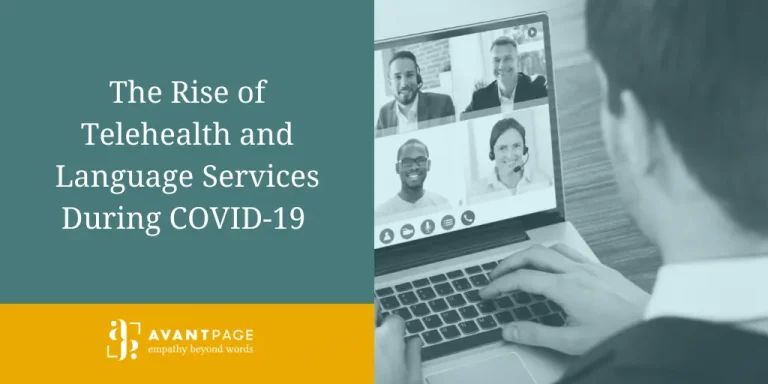
The Rise of Telehealth and Language Services After COVID-19
The COVID-19 pandemic has changed many aspects of healthcare. One of those aspects is routine doctor visits. While many health issues still need to be handled in person, others can be done online through telehealth services (also known as telemedicine). Telehealth lets you talk to your healthcare provider live over the phone or video chat, send and receive messages using a secure online system, and use remote monitoring for updates. But if patients can’t speak English and the provider isn’t bilingual, what happens then? Telehealth services have grown exponentially since the pandemic. A study by the Office of the Assistant Secretary for Planning and Evaluation (ASPE) found that the number of Medicare visits conducted through telehealth appointments increased 63-fold, from 840,000 in 2019 to 52.7 million in 2020. Also, the number of behavioral telehealth appointments increased 32-fold. Telehealth is here to stay. Telehealth remains an important part of the modern healthcare system, but how can providers navigate the complexities of offering patient care if they cannot understand the patient? Table of Contents Advantages and Disadvantages of Telehealth Services Offering Telehealth Interpretation: Compliant Support for Patients What Are the Different Types of Interpretation? Improve Healthcare Literacy Through Language Along the Patient Journey Determine the Best Solution for Your Patient's Need(s) Technology Considerations Appointment Types Language Considerations Frequently Asked Questions About Telehealth Interpretation The Importance of Language Access Needs for Telehealth Services Telehealth offers many advantages, but it also highlights the gaps in language access, digital literacy, and Wifi accessibility, and thus health disparities, that can impact the health of those with limited English proficiency (LEP). While healthcare organizations may not be able to address some technology issues, they can implement language access solutions in telehealth and the patient journey overall. Telehealth has advantages and disadvantages for healthcare organizations and patients. Advantages include: Disadvantages include:
Let’s look at one of these language barriers: digital accessibility for those with language needs. Unfortunately, this barrier can exacerbate disparities in the healthcare system. For example, one primary care clinic that usually had 14% non-English speaking patients noted that the numbers dropped to 7 percent when operating only as telehealth during the pandemic. Healthcare organizations won’t be able to make internet access more accessible, but they do have options for improving language services. So how can healthcare organizations close equity gaps when addressing barriers in telehealth and digital access? For healthcare appointments, providers need to meet language access laws. This includes telehealth, which poses some changes to the new landscape such as accessing remote interpreters, digital literacy, technology, and (Personal Health Information) PHI security. Providing interpretation services, whether they’re through video remote interpretation (VRI) or over-the-phone (OPI), is critical for improving language access. Healthcare providers should have established language agencies with the setup for appointments and last-minute needs. A language service provider (LSP) can help strategize your needs to efficiently meet video appointments and larger volume calls. Learn about OPI vs. VRI interpretation, and why you may need to provide both types of telehealth interpreting to patients. To improve healthcare literacy through language, consider patient touchpoints with your organization. The patient journey starts with searching for providers, having an initial appointment, and aftercare, including self-administration of care, and all the touchpoints in between. When you think about the patient experience, ask yourself these questions: If you identify areas that need improvement with language, consider strategizing with your LSP. For example, perhaps you should localize your website or create language voice options on your phone system, and your LSP can help you with that.
One language scenario may not be enough to fulfill your patients’ needs. Given the disadvantages that we described earlier, and as COVID-19 continues to challenge traditional healthcare solutions, healthcare organizations may have to more than one language strategy for given scenarios. For example, telehealth appointments may not be the best solution in some cases. With VRI, consider the following factors to have a successful meeting:
Consider other telehealth options where video conferencing technology won’t be as much of a challenge. For example, some LEP patients may be more comfortable over the phone than on video. The AHA 2022 Environmental Landscape showed that of the 27% of Medicare beneficiaries who participated in telehealth visits, 56% were over the phone, 28% were video, and 16% were both. Of course, some types of topics are better for telehealth than others. Here are some examples. Lastly, consider language factors, such as requests by the individual for a specific language and method, complexity of the meeting such as multiple participants which can be confusing on video or phone with interpretation, the digital literacy of all participants, limited hearing by participant(s), sign language users (meaning OPI isn’t a possibility), and more. Clinicians can determine the need for a healthcare interpreter by reviewing patient records in the EHR system, noting the patient’s preferred language, or asking patients directly when scheduling an appointment. On-demand interpreting solutions and medical interpretation services are available to ensure equal access and health equity, so clinicians can plan ahead and provide professional interpreters for both in-person and telehealth visits. Telehealth interpreters will join appointments via secure links hosted on the AvantInterpret on-demand interpreting platform. Professional interpreters are trained to provide real-time interpreting, supporting patients who are hard of hearing, speak a different language, or need ASL services, all while maintaining accuracy in medical terminology. Yes. All professional interpreters engaged through Avantpage’s medical interpretation services adhere to HIPAA standards, maintaining patient confidentiality at all times. Whether interpreting face-to-face, via video interpretation, or in real-time telehealth sessions, interpreters are trained in medical terminology and confidentiality protocols to protect sensitive health information. Absolutely. Our interpreting platform integrates seamlessly with EHR systems, allowing clinicians to schedule appointments, track patient data, and request medical interpreters directly within the platform. This integration supports real-time, on-demand interpreting solutions and helps ensure that patients receive care in their preferred language without workflow disruption. Yes. ASL interpreters are available for telehealth appointments to provide equal access and support health equity for patients who are deaf or hard of hearing. Interpreters join in real-time via video interpretation, ensuring clear communication and seamless integration with clinicians’ telehealth workflows.Learn how to work with a sign language interpreter for better health outcomes for patients. Telehealth services are going to continue to grow. To reduce health disparities in language, healthcare companies can provide interpreters, address language needs along the patient journey, and evaluate the best solutions for their patients. We provide VRI and OPI services for healthcare organizations and other industries. To learn more about how we can help you, get a free quote, contact us with a general inquiry, or call (530) 750-2040.

Don’t Wait for Churn: How to Build a Multilingual Medicaid Redetermination Strategy That Works
The post-pandemic Medicaid unwinding has created one of the largest coverage shifts in recent history. For Medicaid Managed Care Organizations (MCOs), the stakes are high: millions of members risk losing coverage, not because they’re no longer eligible, but because of procedural disenrollment. According to the KFF Medicaid Enrollment and Unwinding Tracker, 70% of Medicaid disenrollments in early 2024 were due to missed paperwork or incomplete renewals, not actual eligibility loss. Many of these members face a common and solvable barrier: language access. When renewal notices, forms, and instructions aren’t available in a member’s preferred language, deadlines are missed, documents are misunderstood, and coverage slips away. The result? Avoidable churn that disrupts care continuity and drives up costs for plans. The good news: this is a fixable problem. The solution: a proactive, multilingual Medicaid redetermination strategy. Table of Contents What Is Medicaid Redetermination? What is a Multilingual Medicaid Redetermination Strategy? Why a Proactive Approach Matters The Core of a Multilingual Redetermination Strategy - Start Early - Deliver Culturally and Linguistically Appropriate Communications - Leverage Multiple Outreach Channels - Train Staff and Partners on Language Access Measure, Learn, and Adjust - Renewal Rates Among LEP Populations - Call Center Volume and Language Line Usage - Reduction in Procedural Terminations - Member Feedback and Retention ROI Marketing Redetermination Effectively Common Pitfalls to Avoid Frequently Asked Questions About Building a Redetermination Strategy The Bottom Line Medicaid redetermination is the process by which the state reviews beneficiary information to ensure they still qualify for Medicaid benefits. This typically involves verifying details such as income, household size, and place of residence. It’s a routine step that helps ensure Medicaid is providing coverage to people who meet the program’s rules. Ensuring that communication is clear and accessible in multiple languages is essential to help all beneficiaries maintain their benefits. Learn more about LEP patients and what it means to be limited English proficient. A multilingual redetermination strategy is a proactive, structured approach designed to help Medicaid enrollees renew their coverage, regardless of their language proficiency. It’s about more than just translating a few forms. It means ensuring that every touchpoint in the renewal process, communications, support channels, and workflows, is designed to work seamlessly across languages and cultural contexts. With the right approach, members who are eligible won’t fall through the cracks simply because they couldn’t access renewal instructions in a language they understand. Too often, plans address disenrollment reactively; contacting members only after their coverage lapses. At that point, re-engagement becomes an uphill climb, requiring additional outreach, administrative effort, and resources. Members may also have already gone without needed care or medications, compounding health risks. A proactive approach flips the script: For MCOs and health plan marketers, the renewal cycle isn’t just an operational requirement; it’s an opportunity to strengthen relationships and close health equity gaps. Learn more about how improved language access can make healthcare better. A strong multilingual redetermination strategy weaves together language access, cultural relevance, and well-timed outreach. Here are the essential components: Redetermination should begin months before a member’s renewal date. This means: Early contact gives you time to: Translation is only the starting point. True effectiveness comes from cultural adaptation - ensuring messages are understandable, relatable, and trustworthy.Work with healthcare translation experts to ensure every message: Why this matters: Some populations may distrust official-looking documents or may be unfamiliar with how public benefits work. Tailoring the tone and framing can make the difference between a member opening a letter versus ignoring it. Different communities have different communication preferences. A multi-channel approach ensures your message is seen and understood: Tip: Make each communication channel reinforce the others to create a seamless and consolidated experience for members. For example, a mailed renewal reminder can direct members to a multilingual hotline where language resources are centralized and available on demand, providing real-time support without the higher costs of last-minute interpretation. Meanwhile, a follow-up text can link directly to the renewal form, guiding members smoothly through the process. This strategic coordination helps reduce confusion, saves resources, and ensures consistent language access across touchpoints. Even the most perfectly translated materials will fall short if frontline staff don’t know how to connect members to language assistance. Training should cover: Language access consulting can help build a sustainable plan that ensures every frontline staff member, from call center agents to community health workers, not only knows how to support LEP (Limited English Proficient) members effectively, but also understands the process to accurately identify the required language before connecting to an interpreter. Tools like “I Speak” cards or call-routing systems can prevent wasted time and expense from reaching the wrong interpreter. Proper training on using phone systems is also crucial; many staff unintentionally hang up or fail to connect due to a lack of familiarity, which can be uncovered through methods like mystery calls. A multilingual redetermination strategy is only as strong as its measurable impact. Tracking the right indicators ensures that your efforts are driving meaningful retention, improving member experience, and meeting compliance requirements. Pro tip: Segment results by language and region to identify high- and low-performing areas for more targeted follow-up. Pro tip: Use this metric together with renewal rates to gain a fuller understanding. Some members might reach out for help but still fail to complete the process without extra support. Additionally, analyze drop-off points to identify where language barriers may be causing friction for Limited English Proficiency (LEP) members, and conduct quality assurance to uncover gaps in language coverage. Pro tip: Use this metric alongside renewal rates to get a complete picture. Some members may call for help but still not complete the process without additional support. Pro tip: Translate surveys and use trusted messengers to boost response rates from LEP members for more accurate sentiment analysis. When it comes to helping members renew their coverage, especially those with limited English proficiency, the way you market matters. Meet people where they already are. Run targeted ads on social media, place spots on local radio stations, share print flyers, and partner with community media outlets, all in the languages your members speak. Avoid spreading your resources too thin. Instead, concentrate your outreach efforts on neighborhoods and regions where your target language communities reside and work. This strategic focus ensures that your message reaches those who need it most. To identify these areas, you can utilize the U.S. Census Bureau's interactive mapping tools, which provide detailed demographic data by location. Skip the technical terms and bureaucratic tone. Use clear, friendly language that makes renewal feel simple, urgent, and worthwhile. The goal is to make the process less intimidating and more empowering. By combining these strategies, you can ensure your multilingual redetermination efforts truly connect and help more members keep their coverage. Medicaid redetermination is the process of reviewing a member’s eligibility for coverage. This involves confirming household size and income, among other factors such as residency and disability status. While some states may renew based on this information, beneficiaries may also need to complete a form, provide documentation, or attend an interview. Medicaid redetermination is crucial because missing deadlines or paperwork can cause members to lose health benefits. Members with limited English proficiency are more likely to miss renewal notices if they’re not in their preferred language. Multilingual materials ensure everyone understands how and when to renew. Clear communication in the right language helps members take timely action, reducing the risk of losing coverage due to misunderstandings or missed deadlines. It should include translated notices, culturally relevant outreach, geo-targeted campaigns, and partnerships with trusted community channels. Yes. Retaining members through better communication reduces churn, improves health outcomes, and strengthens long-term plan revenue. The Medicaid unwinding period is both a challenge and an opportunity. By embedding multilingual and culturally competent communication into your redetermination process, you can: Don’t wait until members disappear from your rolls. Start building your multilingual redetermination strategy today. Ready to take action? Explore our expertise in healthcare translations and language access consulting services. You can also learn more about multilingual outreach strategies or request a free quote to start designing your plan.
By acting early and leading with equity, your organization can turn renewal season from a compliance headache into a member engagement success story.

LEP Patients: What It Means to Be Limited English Proficient
A few years before Avantpage was founded, our CEO Luis Miguel’s friend had a bit of a health scare. This friend, a native Spanish speaker with limited English proficiency (LEP), went to the doctor one day to check up on a health concern he’d had. Though he often brought his daughter to doctor’s appointments to interpret for him, he decided not to this time around, in case it was something serious. But when he left the doctor’s office, he wasn’t sure what to make of the experience — he knew he had a growth in his chest, but he had no idea if it was malignant or not. So he asked Luis Miguel to help him out. Luckily, it was just a cyst, and not a tumor, as he had feared. It was this experience, among others, that inspired Luis Miguel to found Avantpage nearly three decades ago. Luis’s friend’s experience was lucky, but not entirely unique — millions of patients across the United States have LEP, making a routine trip to the doctor’s office a fairly complicated excursion. As we celebrate Avantpage’s 27th birthday on Oct. 31, we think it’s worthwhile to understand what it means to be an LEP patient navigating the all-too-complex healthcare system in the United States. In this blog post, we’ll explore the LEP meaning through the experience of LEP patients, while also providing a few key tips for healthcare providers to keep in mind as they attempt to support individuals with LEP. Table of Contents LEP Meaning: What it Means to Be an LEP Patient Why Language Access Matters for LEP Patients Legal Requirements for Supporting LEP Populations Practical Tips for Supporting LEP Patients Common Misconceptions About LEP Patients A Closer Look at Spanish-Speaking Populations Frequently Asked Questions About Supporting LEP Patients Conclusion Limited English Proficient (LEP) individuals are those who do not speak English as their primary language and have a limited ability to read, speak, write, or understand English. According to the U.S. Census Bureau, 25.7 million U.S. residents over the age of 5 were classified as LEP in 2021—that’s nearly 1 in 10 people. In a medical context, this language barrier can lead to: LEP patients frequently face challenges understanding complex medical terminology, interpreting insurance coverage options, and advocating for their own needs, especially when clinicians lack access to professional language assistance services. Healthcare already involves high-stakes decisions, complicated terminology, and critical written instructions. Even for native English speakers, research shows that 88% of adults have inadequate health literacy. Now, imagine navigating those same situations without full English language proficiency. This is where language access, bilingual staff, and culturally competent care make all the difference. Providers that fail to accommodate LEP individuals risk: Language access isn’t just a “nice-to-have,” it’s federally required when your organization receives federal funds. Here are the key laws and policies: Failing to comply with these policies can result in audits, complaints filed with the Department of Justice (DOJ) or Office for Civil Rights (OCR), and reputational harm. Here’s how healthcare providers can build stronger systems for inclusive care: 1. Identify the most common languages spoken in your service area and create a custom language access plan based on the demographics.
2. Speak with an experienced language access service provider to learn about creating a plan for different languages and healthcare settings, such as language access plans during emergencies for first responders. 1. Avoid relying on bilingual family members or friends.
2. Offer in-person, telephonic, and video remote interpreting services. 1. Teach staff to recognize LEP individuals.
2. Use tools like “I Speak” cards to identify language needs quickly.
3. Ensure language preferences are documented in the medical record. 1. Whenever possible, assign the same interpreter for follow-up visits.
2. Be mindful of gender preferences or cultural norms when matching interpreters. Spanish is the most common non-English language spoken in the U.S., with over 42 million native speakers. Ensuring access for Spanish-speaking LEP patients is often a first step toward broader health equity. Bilingual staff, translated discharge instructions, and community engagement all play a critical role in reaching this large, underserved population. LEP patients are people who have limited ability to read, speak, write, or understand English, and therefore may struggle to navigate healthcare without language assistance. In healthcare, LEP stands for Limited English Proficiency. The LEP definition, as used by the U.S. government, refers to individuals who do not speak English as their primary language and who have a limited ability to read, speak, write, or understand English. The LEP meaning in healthcare specifically highlights the communication challenges these individuals face when accessing medical services, making it essential for providers to offer qualified interpreters and translated materials to ensure safe, equitable, and high-quality care. Yes. Under federal laws like Title VI and the ACA, healthcare organizations receiving federal funds must provide qualified interpreters and translation services to ensure meaningful access. Use “I Speak” cards or ask direct questions about language preference. Document this in the patient’s record and act on it at every encounter. Yes. Studies show that errors are significantly more common when untrained bilinguals interpret versus certified medical interpreters. Implement a language access plan, use trained interpreters, offer translated materials, and train staff in cultural competence and health literacy. At Avantpage, we believe every patient deserves clear, compassionate, and informed care, no matter their first language. By implementing thoughtful strategies, training staff, and investing in trusted language access services, healthcare organizations can reduce disparities and deliver high-quality care to all. Need help building or improving your language access plan? Contact us today at (530) 750-2040 or contact us to learn more about our translation, interpreting, and localization services.
Medi-Cal Interpreter Services: Ensuring Accuracy in California Healthcare
California is one of the most linguistically diverse states in the country. As a major destination for immigrants to the United States, California is home to speakers of more than 200 different languages, many of whom have limited English proficiency (LEP). In fact, the state accounts for about a quarter of the nation’s LEP population, with seven million people reporting that they speak English “less than very well.” For healthcare providers in California, that means that interpreter services are absolutely critical. In particular, healthcare providers who work with patients on Medi-Cal, California’s implementation of the federal Medicaid program, must be prepared to provide thorough and extensive Medi-Cal interpreter services to their patients with LEP. In this blog post, we’ll take a look at the nuances of Medi-Cal interpreter services in California. We’ll explain what Medi-Cal is, how Medi-Cal interpreter services can improve health outcomes for your patients with LEP, and how to integrate interpreting services into your workflow. Table of Contents - The Landscape of California's Linguistic Diversity - What Is Medi-Cal? - Legal Requirements for Medi-Cal Interpreter Services - The Benefits of Professional Interpreting - Common Challenges Without and Interpreter - How to Implement Interpreter Services in Your Healthcare Practice - Options for Providing Medi-Cal Interpreter Services - Summary Whether you’re in a cosmopolitan megalopolis like Los Angeles or the rural farmlands of the Central Valley, you’re likely to hear of a wide range of different languages spoken throughout the state. That’s because about 40% of Californians speak a language other than English at home. The most widely spoken language in the state after English is—as in the rest of the country—Spanish, but there are more than 200 other languages and dialects spoken throughout California, making it one of the most linguistically diverse places in the country. To name just a few, other languages spoken widely throughout the state include: Many speakers of these languages are fluent in both English and their primary language. But not all of them are—as previously mentioned, about seven million people are classified as LEP. That’s around 17% of the state’s population. And although the state as a whole only makes up about 11% of the country’s population, its LEP residents make up a fairly significant portion of the country's entire LEP population: 19%. Additionally, individuals who speak a language other than English at home are particularly over-represented among Californians who depend on the state’s Medicaid program, Medi-Cal. More than 44% of the Medi-Cal beneficiaries speak a language other than English at home. This dynamic means Medi-Cal interpreter services are an absolute must-have for any healthcare provider working with Medi-Cal beneficiaries. Medi-Cal is California’s Medicaid program. Supported by both federal and state taxes, Medi-Cal covers healthcare services for individuals with limited income and resources, allowing them to access high-quality healthcare at low or no cost. Many Medi-Cal beneficiaries are able to receive healthcare without paying a premium, co-pay, or out-of-pocket costs. Since so many Medi-Cal beneficiaries speak a language other than English at home, it’s important for providers to be prepared to offer interpreting services to their patients. The presence of a medical interpreter can make or break a patient’s health outcome, as clear, seamless communication is key to making sure doctors are well-informed of their patients’ symptoms and that patients are able to advocate for themselves and understand their doctors’ instructions. By lowering the risk of miscommunication, research shows that medical interpreting services can help lower the risk of readmission for patients with LEP by 25%. And while many Medi-Cal beneficiaries do speak English, patients who speak another language at home may still prefer to receive healthcare in their primary language. By offering Medi-Cal interpreter services, you can build trust with your patients and ensure that they are comfortable receiving your care. Both federal and state laws require healthcare providers to offer language access services to patients with LEP. Title VI of the Civil Rights Act and Section 1557 of the Affordable Care Act mandate that providers receiving federal funding—like those serving Medi-Cal patients—must ensure meaningful access to care through qualified interpreters and translated materials, on the grounds that not doing so would qualify as discrimination against a patient on the basis of their national origin. In California, the Department of Health Care Services (DHCS) expands on these rules. Medi-Cal managed care plans must provide free interpretation, offer timely access to interpreters, translate essential documents like NOA/NAR letters, and more. Providers who fail to comply with these requirements risk legal penalties, funding loss, and lower patient satisfaction scores. Interpretation services aren’t optional—they’re essential and enforceable. Working with professional interpreters who specialize in medical interpreting will allow your doctors and other caretakers to worry less about communication struggles and focus on what actually matters: taking care of patients. Medi-Cal interpreter services ensure that care teams are able to seamlessly communicate with their patients in whatever language works for them. That means healthcare organizations and patients alike will experience the following benefits of interpreting services: Research shows that patients with LEP are more likely than their English-speaking counterparts to experience a severe medical error. Without an interpreter to help you communicate with your LEP patients, you run the risk of encountering the following obstacles, which could have serious consequences for you and your patients: It should be clear by now that Medi-Cal interpreter services are absolutely critical for any healthcare provider who works with Medi-Cal beneficiaries. Still, you may not be sure where to begin—let’s break it down step-by-step: When contracting Medi-Cal interpreter services, you’ll likely come across a lot of different forms of interpreting. Let’s break down some of the most common modalities for delivering interpreting services: When contracting Medi-Cal interpreter services, the reality is that you will likely need to use some sort of hybrid model—that is, a combination of all three modalities. Because of the complex nature of medical interpreting, your language service provider will work closely with you to identify when and how you’ll use each modality. It’s hard to overstate the importance of high-quality language access measures to providing effective, equitable healthcare to patients. A Medi-Cal interpreter enables healthcare providers to not only meet legal requirements, but also gives LEP patients the same level of care that their English-speaking counterparts receive. If you’re in need of Medi-Cal interpreter services, consider seeking out the services of a trusted language service provider who specializes in healthcare. Ready to improve communication and care for your Medi-Cal patients? Learn more about our professional interpreter services tailored for California healthcare agencies. Fill out this form to get a free quote or contact us at [email protected] or (530) 750-2040.
How Translation Services for Families Improve Access to Care
For so many of us—whether we’re caring for a child, a foster or adopted loved one, an aging grandparent, a live-in relative, a friend, or a trusted caregiver—getting medical care is rarely a solo experience. It often involves the people around us, and that means communication is a shared responsibility. Patients need to understand their care, of course—but when others are involved, they should be part of the conversation too. No matter what your family looks like, clear communication in healthcare is essential. And for families who speak a language other than English, that often means having access to translation services for families—not just during doctor’s appointments, but throughout the care journey. Imagine a parent bringing their child to a clinic, hospital, or emergency room. They deserve to feel confident they’ll understand the diagnosis, treatment plan, and next steps—and that they’ll be understood in return. But when English isn’t the family’s primary language, that experience can quickly become overwhelming. Miscommunication can lead to missed diagnoses, medication errors, and serious health risks. That’s where translation services for families make all the difference. These services ensure that everyone involved in a patient’s care can understand, ask questions, follow instructions, and make informed decisions. They don’t just support better communication—they build trust, safety, and inclusion. For millions of families across the U.S., this isn’t optional. It’s essential. Table of Contents
- Families Deserve More than Just Words
- What the Law Requires-and Why It Matters
- The Real-World Impact on Families
- Moving Forward: How Providers Can Improve Language Access
- Frequently Asked Questions
- Healthier Families, Stronger Communities Language barriers can make even the most routine medical visits stressful. Parents may struggle to understand what a provider is saying about their child’s condition. Grandparents might not follow after-care instructions after surgery. A caregiver could misinterpret medication dosages or fail to follow discharge instructions correctly. Without access to translation, families may struggle to make informed decisions. The result is often worse health outcomes and higher costs for both families and providers. But when families can clearly communicate with their care teams, they're more likely to pursue preventive care, follow treatment plans, communicate openly with providers, and make the confident, informed decisions about their health that ultimately improve health outcomes. You can learn more about how these services work by visiting our page on translation services and healthcare translation solutions. It’s not just good practice to offer language support—it’s the law. Under Title VI of the Civil Rights Act of 1964 and Section 1557 of the Affordable Care Act, healthcare organizations that receive federal funding are required to provide meaningful access to individuals who are limited English proficient (LEP). This includes offering professional translation and interpretation services free of charge. According to HHS Office for Civil Rights, organizations must take reasonable steps to ensure LEP individuals can understand and access the services they need. Failing to meet these standards can result in legal consequences—and more importantly, puts families at risk of not receiving effective care. For families, the absence of reliable language services creates a domino effect. A single misunderstanding can lead to a missed follow-up, which turns into a preventable emergency room visit. A caregiver who doesn’t understand a discharge plan may unknowingly worsen a loved one’s recovery. In contrast, translation services for families build trust. They ensure parents can confidently consent to treatment. They help patients adhere to care plans. They give families the voice and agency they need to be active participants in their health—not just passive recipients. Language access is also about dignity. Every family deserves to understand their own medical journey, regardless of the language they speak. Healthcare providers don’t have to overhaul everything overnight, but there are clear starting points. Working with a professional translation partner can help organizations assess where gaps exist and how to effectively close them. That could mean translating intake forms, providing access to on-demand interpreters during telehealth visits, or making sure discharge instructions are available in a patient’s preferred language. Digital technologies are playing an increasingly vital role in improving access to healthcare for diverse families. Remote interpreting technology platforms, AI-driven translation tools like machine translation post-editing (MTPE), multilingual client portals, and telemedicine services are all helping bridge the gap—especially for families in rural or underserved areas. These tools aren’t meant to replace human connection, but they serve as valuable extensions, ensuring more inclusive communication and care. At Avantpage, we offer global language services tailored specifically for healthcare providers, enabling them to reach families in meaningful, accurate, and culturally appropriate ways. Our solutions include access to usage data and language data, helping providers understand and track the needs of their patients, making it easier to deliver care that truly resonates. You may also like... Language and Trust: How Communication Shapes Health Outcomes Why a Spanish Medical Interpreter is Essential for Equitable Healthcare Access How to Make Telehealth Services More Accessible for All Patients Any individual with limited English proficiency (LEP) is eligible for translation or interpretation services when receiving care from healthcare organizations that receive federal funding. This includes families whose primary language is not English. These services are required under Title VI of the Civil Rights Act and Section 1557 of the Affordable Care Act, which protect patients from discrimination based on language barriers. No. Translation services for families in healthcare must be provided free of charge to patients with LEP when the organization receives federal funding. This includes in-person interpretation, phone or video interpretation, and translated written materials such as forms, prescriptions, and discharge instructions. According to the HHS Office for Civil Rights, these services must be readily available to ensure meaningful access. Families should inform the front desk, admissions team, or care providers that they need language support. Hospitals are expected to have protocols in place to provide interpreters on-site, over the phone, or via video. In many cases, translated materials—such as consent forms or discharge instructions—should also be available. If families are unsure, they can ask for “language assistance” or “interpreter services” at any time during their visit. Translation refers to converting written content (like forms or discharge instructions) from one language to another. Interpretation, on the other hand, is verbal or signed conversation and used during interactions—like doctor visits or telehealth appointments. Both services are critical components of effective language access for families. While accurate translation is critical, cultural competency helps ensure that healthcare communication is not only understood but also respectful and relevant. Providers can work with professional language service providers who offer culturally informed translations. Training staff on cross-cultural communication and hiring multilingual personnel also strengthens this effort. Together, cultural competency and translation services for families build trust, improve patient satisfaction, and lead to better health outcomes. Only if they’re trained and qualified as medical interpreters. Healthcare facilities must ensure interpreters meet competency standards in medical terminology, ethics, and confidentiality. While many bilingual staff want to help, relying on untrained personnel can lead to serious miscommunications and liability risks. Onsite interpreters are best suited for complex, sensitive, or lengthy medical conversations. When in-person support isn’t selected, video remote interpreting (VRI) or over-the-phone interpreting (OPI) can effectively support simple interactions. Ideally, all three options should be accessible, allowing patients with limited English proficiency to choose their preferred method. Providers should consider the patient’s needs, the context of care, and the complexity of the visit when selecting the appropriate modality. When healthcare is truly accessible—linguistically, culturally, emotionally—families thrive. Children receive timely, appropriate care. Parents feel supported in making medical decisions. Patients can manage chronic conditions with clarity and confidence. The long-term benefits are powerful: improved health outcomes, lower costs, reduced disparities, and stronger trust between communities and care providers. Simply put, translation services for families aren’t a bonus—they’re the foundation of equitable care. If your organization is ready to make language access a priority, get a free quote and start building a better experience for every family you serve. Contact us to learn how we can be a trusted partner in your language access efforts.
Why a Spanish Medical Interpreter Is Essential for Equitable Healthcare Access
Language access plays a key role in healthcare equity — research shows that individuals with limited English proficiency (LEP) are more likely to go without necessary medical care and face higher readmission rates than patients who speak English. By providing language access measures that reduce the risk of miscommunication between LEP patients and their care team, healthcare providers can ensure equitable healthcare access for patients who don’t speak English. One simple way to do this is to work with a Spanish medical interpreter to aid your Spanish-speaking patients. After English, Spanish is the most widely spoken language in the United States, with more than 40 million speakers nationwide. Among the population of individuals with LEP, about 63% are Spanish speakers — that means having a Spanish medical interpreter on your team is a critical first step toward improving healthcare equity and supporting LEP patients. Table of Contents
- The Impact of Language Barriers on Healthcare
- The Growing Need for Spanish Medical Interpreters
- The Role of a Spanish Medical Interpreter in Healthcare
- How Spanish Medical Interpreters Improve Patient Outcomes
- Legal and Ethical Considerations
- Frequently Asked Questions
- Conclusion Patients need to be able to communicate seamlessly with doctors, nurses, and other members of their care team — when LEP patients don’t have access to an interpreter, things can go terribly awry.
One often-cited example of the importance of qualified medical interpreters is the Willie Ramirez case. In 1980, Willie Ramirez, an 18-year-old Spanish speaker went to the hospital for pain in his head. Friends and family stepped in to provide impromptu interpretation for Willie and his doctors, but doctors were unable to diagnose him properly due to miscommunication. In the end, Willie lost his arms and legs as a result of the delay in diagnosis and care — had a qualified medical interpreter been present, it’s likely that a diagnosis could have been made much faster.
Willie’s case might seem extreme, but the truth is that LEP patients face a wide range of barriers to healthcare that exert an emotional toll on them as well. Struggling to understand one’s care team can be a frustrating experience at best and a dangerous one at worst. Spanish is by far the most widely spoken language in the United States after English — with around 42 million speakers, Spanish is spoken by about 12 times as many people as the third most widely spoken language, Chinese. Almost 40% of those Spanish speakers are considered to have LEP, meaning that they speak little to no English. And that population is growing: in the last 25 years, the Spanish-speaking population in the United States has risen drastically, from just under 30 million in 2000. According to Forbes, one in three people living in the United States is projected to speak Spanish by 2050.
With more and more Spanish speakers living in the United States, Spanish medical interpreters will play an even more important role in reducing gaps in healthcare equity and improving healthcare outcomes for Spanish speakers with LEP. Spanish medical interpreters enable seamless communication between patients and their caretakers, by translating speech in real-time between Spanish and English. As a patient explains their circumstances in Spanish, they relay that information to the care team in English; then, as the doctor or nurse speaks in English, the interpreter relays that information to the patient in Spanish.
Interpreter services for healthcare come in a few different forms:
No matter what kind of interpreter service you choose, an interpreter will help your patients express themselves freely in their native language. Whether you’re providing care to somebody in the emergency room or offering mental health services, a Spanish language interpreter will allow you to rest assured that your Spanish-speaking patients with LEP understand what you’re saying to them. Are you ready to provide better care for your patients through clear communication? Interpreter services for healthcare ensure that LEP patients have access to the same crucial information about their care that English-speaking patients do. In turn, this improves the patient’s sense of trust in their healthcare provider.
Studies show that language gaps and miscommunication lead to higher readmission rates among patients with LEP. By working with a qualified medical interpreter, your organization can build trust with LEP patients and reduce their likelihood of needing to be readmitted to the hospital. You may also like... Language and Trust: How Communication Shapes Health Outcomes 10 Common Misconceptions about Interpreting How to Provide Language Access for Indigenous Languages Besides enabling patients to receive adequate care, interpreter services for healthcare are also required under Title VI of the Civil Rights Act and Section 1557 of the Affordable Care Act. These laws ensure that patients with LEP have a right to access interpreting services when seeking medical care from institutions that receive federal funding.
There are several other legal and ethical considerations to make. The interpreters themselves must comply with HIPAA regulations, ensuring patient confidentiality and privacy during all interpreted interactions. Additionally, a qualified medical interpreter must remain neutral and accurate, conveying information faithfully without adding their personal opinion or omitting any details. Explore our on-demand interpreting services. Here are some answers to common questions about Spanish medical interpreters. A Spanish medical interpreter is needed whenever a Spanish-speaking patient has trouble understanding or communicating in English during routine appointments, emergency care, mental health sessions, and follow-up appointments. A Spanish medical interpreter is a professional who is proficient in Spanish and another language (in this case, primarily English). Medical interpreters are trained on specialized medical terminology that allows them to act as a sort of linguistic intermediary between healthcare providers and patients with LEP, ensuring seamless and confidential communication in a healthcare setting. Healthcare facilities work with language service providers to offer a wide range of Spanish medical interpreter services, including over-the-phone interpreting, video remote interpreting, and on-site interpreting. They may also hire their own multilingual staff and interpreters. No. A medical interpreter works in real-time, enabling spoken communication between two parties that do not speak the same language. They often use consecutive interpreting methods, listening and translating speech in segments. Medical translators, on the other hand, translate written text from one language to another, such as member communications, member letters, evidence of coverage, brochures, medical marketing materials, and more. Although qualified medical interpreters may be trained in healthcare terminology, they may not necessarily be qualified to act as Spanish medical translators. The two roles require distinct skill sets. As such, it’s best to seek out a certified Spanish medical translator for any written documents you may need translated. Yes. Healthcare facilities that receive federal funding are required under Title VI of the Civil Rights act to provide language assistance, including a Spanish language interpreter, to patients with LEP. Although the actual conversation matter must remain confidential, the Association of American Medical Colleges advises healthcare providers to document the use of a qualified medical interpreter. The medical office should keep record of the following details:
- Date, time, and duration of the interpreter services
- Name or identification number of the interpreter
- The type of interpreter service used (over-the-phone, video remote, or onsite)
- Confirmation that the patient understood the medical information discussed
- Patient refusal of interpreter services (if applicable) Patients can request an interpreter at check-in, during appointments, or in emergencies. Most hospitals and healthcare providers have their own interpretation department to ensure the availability of interpretation services. This is not recommended. Some patients may rely on bilingual family members as informal or impromptu interpreters, but professional medical interpreters are a much safer option. Because professional interpreters are familiar with complex medical terminology, they’re better suited to help LEP patients than bilingual individuals who are untrained in interpreting or medical terminology. Spanish medical interpreters can save lives — by improving communication between Spanish-speaking patients and their doctors, interpreters empower patients to better understand and express their medical condition. By giving patients access to a qualified medical interpreter, healthcare facilities can do their part to improve equity in healthcare. Healthcare facilities looking to improve their language assistance services should invest in Spanish medical interpreters — get a free quote today, or contact us at [email protected] or (530) 750-2040 to learn more.
Listening First: How Health Plans Can Build Trust Through Feedback
It’s simple, but true: Patients need to be able to trust their healthcare providers. From routine doctor’s appointments to calling their insurance provider, it’s important that patients are confident in their provider’s ability to give them the highest quality of care possible. After all, the healthcare system can be daunting — fostering a sense of trust allows patients to open up and feel secure in doing so. And when patients feel open and secure, they’re able to advocate for themselves better, improving the outcome of their care. Building trust with your patients can be a challenge, though, especially for health insurance providers. This is doubly true when it comes to building trust with patients who have limited English proficiency (LEP) and other minorities that have historically been marginalized within the healthcare system. While programs like Medicare and Medicaid aim to improve healthcare outcomes for historically marginalized members of society, inequality in the healthcare system remains—research indicates that even today, racial and ethnic minorities tend to receive lower quality care than their white counterparts. As a result, it can be challenging for members of these groups to fully trust their providers. For individuals with LEP, language gaps can make it even more difficult to build trust. Measurements of equity in the healthcare system like the Centers for Medicare & Medicaid Services’ (CMS) Health Equity Index incentivize providers to emphasize equity in their practice—higher scores on these measures can help your patients trust you. In this blog post, we’ll take a look at the ways in which health insurance plans can improve their communication with LEP patients and feel more trusting—because at the end of the day, that trust leads to a better patient-provider relationship, ultimately boosting the quality of care and saving lives. Effective CMS Marketing for Multilingual Healthcare Materials Translating Member Letters for State-Managed Health Plans Listening is the foundation of trust — especially for LEP patients navigating the complexities of our healthcare system. By actively listening to LEP patients, health plan providers can gain insight into the unique challenges they face.
Listening isn’t just about gathering feedback from plan members — it’s about actually doing something with that feedback. To build a sense of trust in your patients, it’s critical that you take their input and co-create relevant solutions with community leaders, advisory groups, and other experts. This approach fosters a sense of inclusion and empowers LEP members to voice their concerns openly — here’s how you can take an active approach to listening to your LEP patients.
Surveys, focus groups, and one-on-one interviews can give you valuable information about the experiences and needs of your LEP plan members.
Working with a trusted language service provider, you can develop multilingual surveys that LEP plan members can complete. Likewise, you can partner with community-based organizations (CBOs) and other cultural experts to help coordinate focus groups and interviews in languages spoken prominently among the LEP communities you’re targeting.
These are just a few examples of ways to get feedback from your LEP patients — by leveraging them, health plans can identify gaps in service, improve communications, and create a more seamless and comprehensive experience that fosters long-term trust and satisfaction.
Feedback is a crucial tool for refining your services — by acting on the feedback you receive from LEP patients in surveys and focus groups, you can show patients you’re actually listening to them, thereby building a strong sense of trust.
The feedback you receive from LEP members will likely uncover gaps in communication, accessibility, and overall service delivery. By creating consistent feedback loops — i.e., regularly conducting surveys and focus groups — you can address these issues proactively. This process not only improves the user experience but also demonstrates a commitment to listening and adapting.
When you consider member feedback, you may find instances where you can make tangible improvements to the patient’s experience: you might find that you can simplify forms, develop better outreach strategies in certain languages, or improve interpreter access. These changes will all add up to build a sense of trust toward your organization.
Be sure to be transparent and open when conducting these outreach efforts. Make sure to inform members of why you’re reaching out to them and how you plan to use their feedback. This transparency is essential to building trust with LEP plan members, while also building goodwill and trust.
In some instances, it may be worthwhile to share the results of surveys and focus groups with plan members — this gives them a better idea of how you plan to act on their feedback. As you adjust your practices and act on feedback, patients can rest assured that you’re making changes that are rooted in their own ideas and insights. This incentivizes further participation and creates a foundation of trust that leads to stronger, more equitable healthcare relationships. When LEP patients trust their health insurance provider, they navigate the healthcare system with a sense of agency and security that allows them to be the best possible advocate for themselves. As a health plan provider, building trust means listening to your patients and being adaptable to their input. Here’s how you can do that: Foster and maintain confident relationships with your LEP patients and health plan members through translation, interpreting, and other language services. Contact us today at (530) 750-2040 or at [email protected] to learn more about how we can help you.