
Blogs
10 Common Translation Misconceptions
Translation and language services drive communication and business in the global marketplace and business world. The translation services industry was valued at over 39 billion in 2020 and is projected to reach over 46 billion by 2028. Despite the industry’s importance, you may have some preconceived notions about it if you haven’t done any or very little work with translations before. This leaves clients with knowledge gaps, leading to misunderstandings and uncertainty. The language service provider (LSP) should ensure everything is clear, and the client feels comfortable asking any questions they might have. In this blog, we’ll address 10 common misconceptions about translation. Here are basic definitions: Learn more about the differences between translators and interpreters. As we just described, a translator is about written communication, whereas an interpreter is about verbal communication. These two styles are very different, just as they are for all of us. Also, every individual has expertise, so a Spanish interpreter in the healthcare industry may not have the expertise to interpret in a legal setting. And marketing content requires a different type of translator than a technical manual. So many specializations exist, and a language expert can’t do everything.
Just because someone is a native speaker of a language doesn’t mean that they have the skills to be a linguist. Linguists are specially trained professionals with acutely developed skills. This comes by way of certifications, continuing education credits, professional development, learning, formal education, and professional memberships to hold everyone accountable to high levels of professional standards and code of ethics. Having a bilingual employee do translation work is not a sufficient way to deliver translation projects since: Learn more about the hidden costs of using bilingual employees for translation. “I need a sign language interpreter” is too vague to provide any meaning. A sign language interpreter is not just one type of interpreter. Between 138 and 300 different sign languages are used worldwide. In the US, the most common types are American Sign Language (ASL), Signed Exact, and Tactile. While many people who are deaf do know sign language, there are also many who know different varieties or home signs, or who have different levels of proficiency in a sign language. In order to provide meaningful access, certain questions need to be asked to find the best suited interpreter match. Learn more about deaf or hard-of-hearing interpreter requirements. You may get a directive to “translate this into Spanish.” Yet Spanish isn’t a universal language; it’s the same idea as “needing a sign language interpreter.” So while the target language may sound simple—Spanish, French, Portuguese, Arabic or Chinese—many languages are regionally targeted. Some translations, especially in the US, need to use Universal Spanish to target multiple varieties and most common Spanish understandings. For regional language varieties, such as smaller, established communities, a Community reviewer might be necessary. A Community reviewer can help with these specialized language variations. Another misconception about languages is if a child is willing to interpret for a parent or guardian, and the adult says it’s OK, then it’s OK. This isn’t a good idea for several reasons: Using an experienced interpreter is the best way to go—not have a child do the work. If you received multiple bids on an RFP, know that the lowest bid charges aren’t necessarily the only charges you may incur. Hidden fees may pop up or the quality is poor, which results in more time to manage the project, re-do the work or worst case—errors go unnoticed and turn into a liability or lawsuit. In addition, over time, these costs and more might actually add up to a higher price than the best-value bids. Some agencies that appear to cost more outright might have technologies for built-in cost savings (e.g., re-using already translated terms, project management tools) that enable you to save money over time. While the most obvious thing that an LSP does is provide translation and interpreting, they do so much more, such as: Depending on the type of organization, you may be eligible for additional funding for language services. Sometimes grants are available that help fund language services. Find them and apply to grow your language access programs. For example, grants that promote equity in Social Determinants of Health among immigrant populations, improve student learning, and others are available. Having misconceptions about the translation industry is understandable, especially if you’re new to working with it. We’re here to help answer any of your questions. For more information, contact us at [email protected] or (530) 750-2040. Let us help you provide the best language services.
Hispanic Heritage Month with CEO Luis Miguel
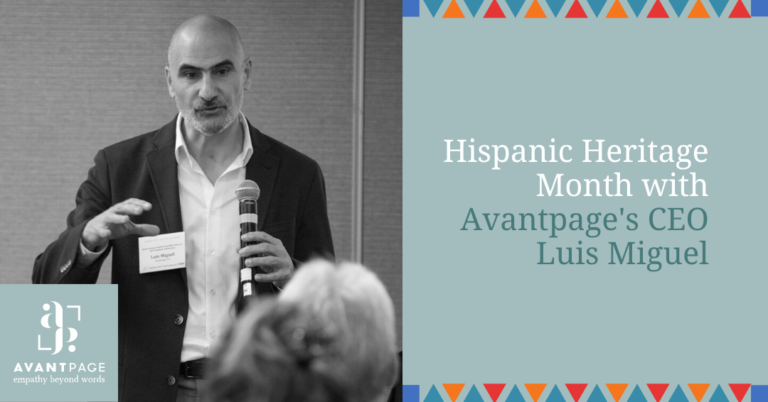
For this year’s Hispanic Heritage Month we wanted to celebrate the contributions and achievements of those who play such a large part in our U.S. identity. We decided to talk with Avantpage CEO & founder, Luis Miguel, a bit about Hispanic Heritage Month, his own background, and a few of the many ways these individuals have and continue to play such a big part of the U.S. In some ways I am a typical immigrant to the US, coming from Mexico attracted by the American Dream and looking for opportunity and a better life. Yet my ancestors on both sides emigrated to Mexico from Lebanon in the 1920s, again looking for opportunity and a better life. And once in Mexico in the 1930s, both my paternal and maternal grandparents migrated from Teziutlan, Puebla, a small town to the grand metropolis, Mexico City. So, I come from a family of immigrants with middle eastern roots, born and raised in Mexico, a country with a complex mixture of indigenous and Spanish peoples creating a pluralistic and rich culture. The United States also has a rich and complex history and Spain, the Viceroyalty of New Spain and Mexico have prominent parts in that history. A huge part of the South and Western U.S. belonged to the Viceroyalty of New Spain, a Spanish colony, until 1821 when Mexico won its independence from Spain and became an internationally recognized new country. At that time, Mexico included modern day California, New Mexico, Utah, Nevada, Arizona, Colorado and Texas among others. Over the next 50 years the U.S. annexed about 50% of Mexico’s territory, in the process leaving millions of Mexican citizens as U.S. citizens. In addition, the border between both countries has always been very porous, with millions of people moving back and forth to this day. Hispanic heritage month reminds me of this rich cultural, economic and ethnic mix of both countries, something that the dominant European immigrant groups suppressed for many years until very recently. Spanish is the second most spoken language in the U.S., and several of the old Mexico states, like California and Texas, will soon have more Hispanics than any other ethnic group. As I mentioned before, I was born and raised in Mexico. It is where most of my family still resides, and I have a deep love and respect for the country. Since English to Spanish is about 50% of our translation work at Avantpage and we were getting most translations from Argentina [based linguists], in 2008 I decided to open an office in Mexico City to do our Spanish translation work. The translation industry in Mexico at the time was 100% focused on the internal market and had low levels of technology and modern business practices. So I saw the opportunity to create a new translation agency niche in Mexico, modeled after the agencies in Argentina, that served the Spanish needs of the U.S. market. This provided new opportunities for work to both project managers and translators in Mexico. So much substance and complexity! Not only do we have people from many Mexico regions, but also from many other former Spanish colonies including Venezuela, Argentina, El Salvador, Brazil, etc. So the ethnic, cultural and linguistic diversity within the hispanic population is enormous and very rich. The Cuban and Puerto Rican immigrants in Florida and New York have different dialects and cultures from the Mexican immigrants in Texas. The linguistic scope of Spanish has steadily increased over the years, as the Hispanic populations continue to grow, integrate and become more varied. In many locations you have Spanish immersion programs in public schools, websites, signage and notices in Spanish, and even ES/EN bilingual people serving the public. I have no doubt that the penetration and influence of Spanish will continue to grow in the U.S. given the higher birth rates among the Hispanic population, and the continuing renewal through our porous Southern border. Luis Miguel, CEO of Avantpage Translations, joins SlatorPod to talk about the LSP’s mission over the past 25 years of helping immigrants and other limited-English-proficient (LEP) populations. Check out this list of resources from National Council of Hispanic Employment Program Managers National Park Service’s Telling All Americans’ Stories: Introduction to American Latino Heritage
Reducing Language Barriers in Healthcare
Language barriers can come in many forms, and reducing language barriers in healthcare needs to be innovative and detailed. Immigrants and limited English proficient (LEP) individuals have historically been marginalized and discriminated against due to accents or language capabilities, despite being integral members of our society. Healthcare is one of the many areas where LEP individuals face communication challenges, sometimes resulting in negative experiences, care, and outcomes. These types of experiences may lead to avoiding care as a whole, resulting in more severe impacts on health when faced with things like: Not providing full and meaningful language access creates uncertainty and complexity for the patient. To work towards an equity-based healthcare system that reduces health disparities, it’s important to make strides that create the opposite environment, working to eliminate harsh histories of discrimination. Healthcare organizations can do this by focusing on innovative ways to support and encourage the LEP voice in healthcare experiences. To work towards a healthcare system that promotes equity for all, we need to actively work to reduce longstanding disparities in innovative ways. After all, improving access to care benefits LEP and underrepresented communities, and it improves the healthcare organization as a whole. Organizations can start by creating a framework to advocate for and advance health equity. To create a culture of health equity, language should be written into internal procedures and processes, and training should be provided for staff. In addition, the messaging should be written into any content that involves patient quality and safety, and have a plan with measurable goals for improving care. Here are some of the benefits that organizations can see. If language preference isn’t addressed during a clinical encounter, the patient may receive lower quality and costlier care. LEP patients have an increased chance of readmission, risk of surgical delays, and longer hospital stays if an interpreter wasn’t available during admission and/or discharge. In looking at readmissions, a study showed that over a 3-year period, readmissions were significantly fewer when telephone interpreters were available. Per the report, “language access represents an important service that all medical centers should provide to achieve equitable, high quality health care.” One study found that only nine percent of people understand their health insurance. And that’s for people who speak English. For LEP patients, the complexity rises. However, when members understand their plan, it results in taking more action and receiving better care. Healthcare companies can help make their content easier for LEP members by translating their content, providing language access during the enrollment assistance program, and creating an outreach program to educate LEP communities. When members understand their health insurance, financial incentives to seek higher quality doctors and hospitals can work. As a result, plan members can receive better care and plan performance can improve. Improving patient satisfaction is a win-win for individuals and organizations alike. For patients, a better experience is directly tied to the process and providers of the care they receive, leading to better health outcomes. On the business side, better patient experiences are tied to services provider loyalty, greater employee satisfaction and reduced turnover, financial incentives, and lower medical malpractice risks. Staff can do a lot for LEP patients and their families if the environment is supportive and has the necessary resources for reducing language barriers in healthcare. Organizations can support and encourage their staff to provide meaningful language access by using interpreters and sharing translated materials. Having a strategic and cohesive language access plan including training can help staff be better prepared and ready to help patients. Patient handoffs are one of the most dangerous times of a patient’s care. And adding a language difference on top of that makes a situation even more complex. To minimize the difficulties during these times, standardize the process of language access during handoffs. For example, have an interpreter available during handoffs. A study by JAMA Pediatrics found that children and their parents who face language barriers are two times less likely to say they’re unafraid of “asking questions when something does not seem right” and five times less likely to say they “feel free to question the decisions or actions of health care providers. Providers should do more to make patients feel safe to speak up and ask questions. One way to help with this is to train staff to talk to LEP patients and their families about their care. Consider how questions are phrased. Simple yes or no questions are less encouraging for speaking up about questions or doubts. Providers can use questioning-tactics like asking the family to repeat their understanding, or what they can help further clarify are a few ways to encourage question-asking in a safe environment. Even if patients speak some English, encourage them and their families to use an interpreter. Federal law requires that hospitals provide interpreters free of charge to those with LEP, so it’s their right to ask for this service. While a family member can pitch in if there isn’t another option, this can risk an increase of misunderstandings and create unnecessary complications. Therefore, it’s best to have a professional medical interpreter help with LEP patients. Breaking through language barriers benefits LEP patients, their families, and healthcare organizations. Good care results in trust in providers, positive patient experiences, and better health outcomes. We provide interpreter services for healthcare organizations, and we translate member and marketing materials. We want to help healthcare organizations reduce health inequities. For more information about our healthcare services, contact us at [email protected] or (530) 750-2040.
How to Create Equitable Healthcare through Telehealth
Telehealth services can increase equitable healthcare or exacerbate disparities. Telehealth services needs grew exponentially during the pandemic: the number of Medicare visits handled through telehealth increased 63-fold, from 840,000 in 2019 to 52.7 million in 2020. Behavioral telehealth visits also increased 32-fold. And while telehealth provides many advantages, it also exemplifies health disparities. Those who are limited English proficient (LEP), have lower rates of digital literacy or don’t have Wifi are at a disadvantage when it comes to telehealth. In order to create more equitable healthcare, health plans need to create intentional strategies to address the gaps in telehealth to make it a more equitable healthcare option. Addressing these gaps can benefit for healthcare organizations and their members: Telehealth is here to stay, so how can healthcare companies increase telehealth equity? The National Committee for Quality Assurance (NCQA) produced a white paper called The Future of Telehealth Roundtable, which covers opportunities and solutions to reduce health disparities in telehealth. One of the three areas they cover is “tailoring telehealth use and access to individual preferences and needs.” This area includes things like language barriers, digital literacy, and comfort level, and it provides a big opportunity to increase equity for LEP patients and their families. The roundtable participants emphasized the importance of putting the patient first and prioritizing their preferences. Here are eight ways healthcare organizations can address telehealth inequities regarding preferences. For a more equitable telehealth experience, use a patient’s preferred language. This means translating content such as technology instructions and support materials, and providing an interpreter during the telehealth visit. Provide language access along the entire patient journey, including the: Language access should also include ensuring that content is culturally and linguistically appropriate. To guide health and healthcare organizations in advancing health equity, the U.S. Department of Health & Human Services created Culturally and Linguistically Appropriate Services (CLAS). CLAS is a set of 15 action steps that organizations can use as a blueprint to reduce health care disparities. Content that isn’t just translated, but also takes into account one’s culture, helps provide an equitable healthcare experience. It can include targeted information like statistics on the specific culture instead of general information or providing pictures of people who look like the culture you’re targeting. Read the CLAS guidelines for more information. Equitable healthcare can also stem from making the process easy for anyone regardless of their current capabilities. A patient’s decision to participate in a telehealth appointment is connected with their level of confidence in using technology. From basic tasks like downloading an application and opening a browser to more advanced needs, a patient has to know a variety of ways to use technology. Provide the best and most equitable possible telehealth experience by translating any digital literacy instructions, such as: If you plan to provide an interpreter, make sure any guidelines are also translated and communicated with the patient before the telehealth appointment. Also, if video resources are part of the pre- or post-visit, include voice-overs in the preferred language and translated captions. Consider running a multilingual self-audit once all these resources are in place to find and address any issues before implementing the resources. Those with disabilities face different challenges with telehealth. For example, a person with vision impairment may not be able to view the website clearly or a person who is deaf or hard-of-hearing may require sign language capabilities or closed captioning. Making equitable telehealth technology functional and accessible to those with disabilities increases the quality and functionality for everyone. Having features like closed captioning; a website that follows web accessibility guidelines to include white space, plain language, etc.; and providing written guidance on telehealth accessibility will make a telehealth experience better for everyone. Know the limited English proficient (LEP) community organizations and resources available to patients in their preferred language, and direct them to those resources when appropriate. Resources could include in-person services where patients can learn more or get support, online recorded videos, print materials, government services, and other supportive initiatives. Pre-visit paperwork can be confusing and time-consuming for anyone. Then imagine struggling with a language barrier. Providing accurate and complete information is a must for any patient. Analyze your pre-visit paperwork to make sure the language is clear. You can follow the U.S. plain language guidelines for language support. Also, consider if intake questions are culturally appropriate, so it doesn’t dissuade someone from answering or getting health services. Questions that ask about ID numbers or other questions that might involve legality status should be avoided if possible. Ensure patients understand their privacy rights by providing translated HIPAA statements and privacy policies. Make sure your platforms are also HIPAA-compliant, as technology changes have sparked needs for adjustments. For example, the Office of Civil Rights (OCR) issued a Telehealth Notification in 2020 in response to the COVID-19 pandemic. This notification helped the health care industry quickly expand the use of telehealth services. Continuously monitor and adjust the process to positively impact patient-centered care for equitable healthcare. One way to do this is to provide a survey after a telehealth experience. Just like product and service reviews online, reviews can enable you to improve the process and adjust as things like technology evolve. Telehealth services have many advantages, but they also face health inequities. However, healthcare organizations can implement strategic initiatives to reduce these inequities. One of the areas is putting the patient first and prioritizing their preferences. We provide translation and interpretation services in more than 150 languages. We’ve helped numerous healthcare companies, including some of the largest providers in the nation, provide meaningful and equitable healthcare access for immigrants, provide HIPAA-compliant services for language access and accessibility compliance, and improve their communications. For more information about our language services, contact us at [email protected] or (530) 750-2040.
Ways to Use Language Access to Reduce Disparities in Education
While students whose first language is English can focus on learning school materials, Limited English proficient (LEP) students have to learn the school materials and the language simultaneously, which can be a big challenge for students. And the COVID-19 pandemic further exacerbated disparities for these students and their families. “Roughly 5 million public school students are ELs (English Learners), accounting for about 10 percent of the K-12 population.” Source To reach these students and reduce educational disparities, educators may need to re-evaluate how they are meeting language access for LEP students and their families. In this blog, we’ll look at how the pandemic affected LEP students, the value of families on a students’ education, and ways to use language access to improve student outcomes. Many children and families struggled when the COVID-19 pandemic brought schools to a halt in 2020. Technology, digital literacy, and language differences affected children across the US. Those with a language barrier faced additional challenges. Here are just some of the many challenges LEP children and families faced during the pandemic. Approximately 19 million Americans, which is 6% of the population, don’t have access to broadband internet service at threshold speeds. People living in rural areas make up one-fourth of this group. And although broadband service is better in densely populated areas, these areas have a high concentration of poor students whose families can’t afford it. In addition to internet connectivity issues, when the 2020-2021 school year began, schools and families scrambled to find computer devices for children, and the supply chain couldn’t keep up. Besides the technology challenges, language barriers were evident with digital literacy. While children across the US were impacted by the learning challenges caused by the pandemic, English learners were disproportionately impacted. When the instructions for parents to help their children were in English only “Language access for parents to help them was also an issue…parents didn’t necessarily have the digital savvy, or the instructions in languages they understood, to be able to help students.” Furthermore, according to a report by the Department of Justice: Research has shown that when families take an active role in their children’s education, children “have better academic performance than children with less engaged families.” However, one of the many barriers to family engagement is “Language and cultural differences that make communication with schools intimidating or challenging.” “Children whose families take an active role in their children’s education—even if that merely means communicating that school matters—have better academic performance than children with less engaged families.” Source + Toolkit Another way to achieve successful family engagement is to make the school welcoming and friendly to families. In the next section, we’ll describe ways that schools can accomplish this through language services. Schools can encourage family involvement in many ways and help reduce the barriers that might be preventing engagement. that has important information about LEP services, such as available resources and how to get language support. Translate the slide deck into the local threshold languages, publish it digitally and print it, and then share it with those families who need it. that describes how language services are free and encouraged. Post these around the school. Make sure to include basic instructions on how to connect to live classes through zoom or other ways, how to get into whatever school program you might use, and other standard technologies. meaning that the messaging makes sense for each target culture. And avoid tools like Google Translate – these tools don’t account for cultural context, local language nuances, and specialized terminology. at school events, parent engagements, and other live events. Including parents in important events is key to instilling trust and participation by the students. Promote these services when communicating about the event. into the process for highly localized and contextual translations. Someone who speaks the language and lives in the community will be to validate localized content. —whether it’s via multilingual emails, texts, social media, phone calls or otherwise. If they use their phones or computers to get information, consider creating and localizing a separate website with easy access and visibility to translations for resources and information like this one. If they regularly consult social media, such as the school’s Facebook page, then ensure that you provide multilingual versions of the posts. for check-ins with the student and/or family to ask if they need help with anything. By being proactive and opening the door to questions, you might be surprised at how it encourages the relationship and participation between the families and the school, ultimately improving the student’s outcome. Have a template translated in each needed language that asks if the parent/student can take a call with an interpreter at a specific date and time, and provide instructions on how the process will work. You can schedule an interpreter for blocks of time by language to maximize process efficiency. from limited English proficient communities. The survey information will help you learn from your efforts and improve over time. Every person, location, language, country, culture, and interaction will all be different. Use feedback and firsthand knowledge to create innovative solutions that will promote equity in education and improve the chance of each students’ success. LEP students face plenty of barriers in education. Having family support and encouragement leads to better outcomes. Families should feel welcomed, and providing high-quality translated content and interpreters is important in welcoming families. However, using translation tools like Google Translate won’t cut it—these translations may come across as confusing or even rude in some languages. That’s why it’s important to partner with an experienced translation agency. How can we help you with language access? Contact us at [email protected] or (530) 750-2040.
The Positive Impact of Diversity and Immigrants
Diversity, which includes differences in race, ethnicity, sexual orientation, religion, language, geography, gender, and more, is crucial to the US, as the US was founded on the idea that all people are created equal. In addition, diversity provides new ideas, experiences, and perspectives, and people can learn from each other. From a business and organizational perspective, diversity leads to better problem-solving due to having different ideas, resulting in better business decisions and higher-performing outcomes. Josh Bersin of Forbes states, “Companies that embrace diversity and inclusion in all aspects of their business statistically outperform their peers.” In addition, companies with a diverse workforce are 35% more likely to achieve more financial gains than those without a diverse workforce. Immigrants are a big piece of the diversity pie. Supporting immigrants is important for humanity, supporting our economy, and foundational to our country. Immigrants contribute to our economy in many ways, including labor force, business, and population growth. Some cities in the US are making strides in making diversity, and immigration specifically, a part of the way they operate. We’ll look at some things that the city of Cleveland, Ohio is doing to promote diversity and ways in which organizations can expand and improve language access as support for immigrants. Immigrants contribute to local economies in a variety of ways; these are just some of the many ways. The city of Cleveland is working towards diversity through many actions. Here are some ways in which the city is working towards diversity. Cleveland, Ohio is one of the over 300 non-profits and local governments that have partnered with Welcoming Network, “a network and a movement driven by the conviction that communities make better decisions when residents of all backgrounds, identities, and perspectives are meaningfully engaged.” Have key influencers and stakeholders get involved with non-profits, committees, boards or other initiatives to inspire and encourage diversity. For example, three Cleveland representatives out of a nationwide board of 23 individuals are on the Board of Directors for non-profit Creating Healthier Communities: Kevin Clayton, the Vice President of Diversity, Inclusion and Engagement for the Cleveland Cavaliers; Alan Nevel, SVP of Metro Health System; and COO Teleange Thomas of JumpStart. Look for grants that promote equity in Social Determinants of Health (SDOH) among immigrant populations. For example, in Cuyahoga County, the Beulah Park-Euclid Beach Connector Trail will be built thanks to funds from the Outdoor Recreation Legacy Partnership (ORLP) program. The trail will be built along the lakefront of Lake Erie for nearly half a mile to provide a trail for underserved communities. This funding from the ORLP program will continue to expand our communities’ connections to urban green spaces, where children can play, families can connect, and a love and appreciation for the outdoors can be nurtured.” Cleveland has a program called Landed: Stories of Newcomers that captures the stories of immigrants, first-generation Americans, and other newcomers living in Northeast Ohio to try to mend the divide between people in the community. It showcases people from other countries through a podcast where they talk about their experiences. The Cleveland Language Access Service (LAP) Plan, which is a plan to ensure equal and effective access to city services for Limited English Proficient residents, followed other successful city LAPs. These LAPs included Minneapolis’ Minneapolis in Any Language guide, Chicago’s Bridge the Language Gap guide, and other resources such as www.lep.gov. These cities have invested a lot into language services and realized the benefits. Language access is one of the important things you can provide to immigrants to promote equity. And while language access is a cost, it’s also an investment in your local economy. In working with a language service provider, you can strategize how to maximize the process. To expand and improve language access, consider the following ideas. Supporting diversity benefits communities, businesses, and organizations. As observed through the example of Cleveland, diversity can be viewed and accomplished in many ways. To provide language access for immigrants and other limited English proficient individuals, work with a professional language service provider. For more information about language services, contact us at [email protected] or (530) 750-2040. We’re here to support efforts to increase diversity.
Language Services Work Towards Health Equity Strategies
Healthcare is one area where limited English proficient (LEP) individuals may face inequities in getting high-quality care due to language roadblocks. One federal agency, the Centers for Medicare & Medicaid Service (CMS), has made health equity the first pillar in their 2022 strategic plan. The plan has nine health equity goals and has charged their programs with integrating health equity into their core work. While the Centers for Medicare & Medicaid is a federal agency, they “call on private sector partners to engage with this health equity strategy to sustain long-term action.” While it may be challenging to conceptualize health equity and put it into action, the CMS strategic plan lays out nine specific goals with examples of how they’re putting these goals into action. Language access is a core component of providing equitable health care and can be a part of these goals. In this blog, we’ll look at five of the nine CMS goals, how language access supports these health equity goals, and ways you can implement language services.
All kinds of data exist to help companies better understand their demographics and patient KPIs that evaluate preferences, usage, satisfaction levels, health outcomes, etc. Data helps to understand where the needs are and where your organization currently is to then create a blueprint for action. Here are just some of the many available resources: Your language service provider (LSP) is another invaluable resource. An LSP has a broad range of data based on service type, region, language, and more. For example, our AvantPortal powered by AvantData gives our clients smart linguistic usage insights such as: The dashboards help capture historical data so our clients can predict needs and provide additional information for decision-making. Reach out to your LSP to see how they can help provide you with data. Language access is more than having translated content to support services—it also means making the content culturally and linguistically appropriate. The aim is to improve the end customer experience by providing language access to programs, services, and information targeted to specific groups, not just generic information. For example, suppose you’re trying to promote an educational piece about the danger of sun for skin cancer for the Latino community. In that case, you’d provide culturally relevant information such as statistics of skin cancer in Latinos—not Caucasians – as Latinos “do face rising melanoma rates, but still actually have a lower rate of developing melanomas than their white peers.” This measure isn’t just for CMS—the U.S. Department of Health & Human Services created a set of 15 action steps called Culturally and Linguistically Appropriate Services (CLAS) for health and healthcare organizations to advance health equity and reduce health care disparities. Although it may be tempting to use internal employees for translations to save money, that quite likely won’t be the highest-quality option for many reasons. For example, many healthcare organizations who even have dedicated staff linguists run into inconsistencies such as terminology that can slow down the translation process and reduce the quality. This organization enlisted Avantpage to partner on employee assessments for quarterly evaluations, creating recommendations, and helping with the increase of output production. “Does identity play a role in how we translate? The short answer is yes. As we go about the work of translation, we bring far more than the skills we’ve learned. We bring a lifetime of experiences along with attitudes that were formed in childhood and beyond. We come to our work with assumptions and biases embedded in the cultures of our families and communities beyond what we may realize. The way in which we render words in a target language is affected by our histories, perspectives, and biases, whether we’re aware of them or not.” Words Matter, Identity Matters The Hidden Costs of Using Bilingual Employees for Translation However, if you work with an LSP, you’ll gain access to their networks of highly qualified individuals, employees, and technologies, which will provide the best opportunities for high-quality translations. For example, if you require interpreter services, an LSP can use their resources to provide interpreters with a medical background, who have certifications, etc. As a result, an LEP patient in a hospital should communicate better, leading to a better healthcare outcome. LSPs can also provide quick turnarounds that internal employees may not be able to do. For example, Notice of Action (NOA) or Notice of Appeal Resolution (NAR) letters require a quick turnaround. An LSP will have the resources to meet these needs. Many communities have programs that offer connection through parks and recreation services, special events, daily services, etc. These types of programs provide community participation, equity, and social/networking opportunities, leading to more connection and fulfillment. Translating program materials that bring awareness to events and promoting these materials makes these opportunities available for everyone. An LSP can provide not just translators, but also community reviewers—local individuals to help micro-localize your content by targeting highly specific groups of people. Reviewers create content that is sure to resonate with the end user. Applying any CMS initiative to your organization should get you closer to closing the gaps in health care. To take it a step farther, one way to reach LEP communities is to do multilingual outreach with your language offerings. So instead of just translating your educational content and putting it on your website, you can give hard copies to local organizations for them to disperse, mail your hard copies to LEP communities or hire bilingual representatives to go out in the community. These kinds of proactive actions will help your target audiences learn about who you are and what services you offer, and in turn, help to raise awareness and health literacy. Much work is needed to advance health equity. We support our clients in advancing health equity by providing nuanced and linguistically appropriate translation and language services. We want to help all end customers improve their health literacy and experience by providing our clients with high-quality language services for health care programs, services, and information. To learn more about how we can help you with your language service needs, contact us at [email protected] or (530) 750-2040.
Common Components of a Language Access Plan
In the US, everyone has the right to language access. Having language access for those with Limited English Proficiency (LEP) or other communication challenges helps to reduce disparities within social determinants of health and provide equal opportunities for those who have historically been marginalized. Over time, laws have been put in place to address language access. Some of the federal laws that pertain to language access include: So where does a language access plan fit in? A language access plan is a policy that an organization creates to discuss how they intend to provide language services to those individuals who are: A language access plan is a blueprint for an organization to outline and share its strategic approach for meaningful communication with those who need additional language services. It can include creating materials in other languages, interpretation and/or other communication paths. Some organizations, such as schools, healthcare providers, and government agencies, must provide a language access plan. For other organizations that provide services for LEP communities or individuals with other communication challenges, having a language access plan is a benefit and guidance for these services. While there isn’t a single method to follow, we have identified common components. We’ll share those in this blog. Based on publicly available government agency plans, organizations typically include the following components. The first section is usually a needs assessment that explains how an organization will assess the language assistance needs of the communities it serves. An organization can analyze these needs in a variety of ways: Based on the findings, the organization will gain insights and predictions to help the quality and breadth of its necessary linguistic reach. A designated language access coordinator(s) is one who will be responsible for the language assistance needs, such as: In addition to the language needs section, this section lists community leaders, stakeholders, and groups that work with LEPs or LEP communities. These organizations can be useful to get feedback, assess quality, determine priorities, get data about experiences, and more. Provide names of advisory committees, working groups, forums, resource sharing, and partnerships with other agency networking options to gain insights, information, tactics, and pool resources. Add information dissemination methods that reach multiple channels in print, digitally, onsite or otherwise. Participate and partner with organizations, programs, events, public meetings, key community stakeholders, social media, and more to ensure the communities have the information. Provide ways in which you plan to clearly track the quality of the language assistance. This can be done in a variety of ways, including an internal audit with reports; reviewing data from the LSP regarding complaints, timeliness of the deliverables or other success metrics; having the community stakeholders review content; or interagency/working groups review content to make sure the translations are accurate. In addition, provide how to onboard, gather customer feedback, track data, establish partnerships, maintain linguistic assets, and more. Describe how you’ll track language service usage over time, primary and secondary languages, and initial data intake from LEP individuals. In addition, know what tracking systems are available to you through overarching or interagency organizations. Additional line items that we’ve seen but less frequently include: The contents of a language access plan vary, as it’s really an individualized document for an organization. However, the components that we’ve shared in this blog post are quite common. An LSP can be a partner and consultant in helping you develop and execute a language access plan. An LSP can help you strategize about making your plan more efficient, saving you money and time, reducing risks, and increasing service quality. So take advantage of what your LSP, plus your resources and network, can offer. To learn more about how we can help you with your language service plans, contact us at [email protected] or (530) 750-2040.
ADA and Section 508: What is it and What’s the Difference?
The Americans with Disabilities Act (ADA) and Section 508 of the Rehabilitation Act of 1973 are civil rights laws protecting those with divergent abilities. We’ll cover what these laws are and examples for accessibility and language access. The ADA is a civil rights law that prohibits discrimination against people with disabilities. The law, which President George H.W. Bush signed in 1990, provides guidelines for how organizations must communicate with those who have disabilities and covers several areas including: “requires access to electronic and information technology provided by the Federal government… Federal agencies must ensure that this technology is accessible to employees and members of the public with disabilities to the extent it does not pose an “undue burden.” Section 508 speaks to various means for disseminating information, including computers, software, and electronic office equipment. It applies to, but is not solely focused on, Federal pages on the Internet or the World Wide Web.” Source While there’s clear crossover between the two, as ADA requires accommodations in physical spaces, digital media, websites, and more, Section 508 specifically lays out regulations in the areas of: policy & management, acquisition, content creation, design & develop, testing, and training tools & events. Organizations who need to follow a stricter guideline like Section 508 can do so following exactly defined areas. If you need specific help identifying regulations within your organization, your HR department should assist. It may mean looking at your communications and how they relate to language access – English or other languages, large print, contrasted colors, captions, braille, reader-friendly screen, and more. Here are some examples of what organizations need to follow. Many organizations still take a reactive approach when it comes to accessibility and translations. Being reactive means not providing language or accessibility support and including a statement (or not) that a person can request this support. Proactive means making an effort before the request to provide accessibility. For example: Here’s an example of a website that’s reactive and one that’s proactive. This website has a page that talks about accessibility assistance and provides an email address where you can reach out for help. However, the webpage isn’t translated, there aren’t links to high contrast or large text, and there’s no apparent screen reader assistant or alt text. Whitehouse.gov is a good example of a proactive (and required) website: Every page includes high-contrast and large text options. The ADA and Section 508 were created to assist those with disabilities and cover a wide range of requirements. We provide accessibility and website localization services to help organizations be proactive and compliant. For example, we helped a California health plan provider localize their website into their threshold languages and ensure compliance with California government code section 508 and WCAG accessibility standards. Read more about it. Our accessibility services include providing a thorough report on areas that aren’t meeting compliance as well as fully or partially implementing our findings. In addition, we can provide website localization into more than 150 languages. For more information, contact us at [email protected] or (530) 750-2040.

Reducing Health Disparities with Multilingual Outreach
To reduce disparities within social determinants of health (SDOH), everyone needs equal access to opportunities and information. And for those with Limited English Proficiency (LEP), language challenges can contribute to many SDOHs. Healthcare is one of many areas where LEP individuals may face language roadblocks. For example, recent research pointed out that more language access to information dissemination could help to reduce healthcare inequities. The study found that communities that fell in the CDC’s social vulnerability index (SVI) were hit harder by COVID-19. The SVI measures demographic data such as English proficiency. The research showed that “counties with high populations of non-English speakers were found to have higher rates of both COVID-19 incidence and mortality.” More timely health information for LEP communities could help to reduce health inequities. Yet while “having” language access is without a doubt very valuable to diverse communities, organizations need to promote that it’s available and accessible before the need arises. For example, if you’re hosting a community event, and you translate the invite, but then don’t share it in places where your audience can see it, how are LEP community members going to know about it? Anticipating language access via outreach can lead to higher participation of diverse community members ultimately resulting in a more accurate representation of our American people. Let’s look at different levels of language assistance and ways to be proactive with multilingual outreach. As a language service provider, we see various ways that companies and organizations provide language assistance. They don’t translate content unless someone asks them. For example, their website and documentation are in English only, and there’s no mention that translations could be available. They don’t proactively translate content, but they do offer a place where you can ask for translations. For example, they might have a page that says if you’d like to request language access or accommodations, do so here. This type of company has translated content plus ways to request translations. For example, their website is localized, so a person can select the Spanish version. As a result, this audience will get a better understanding of the available services. This group has translated content, and they also spread awareness that they’re a source of information for diverse communities. For example, a company may contact a local Latin American Association to share a flyer containing information about their services or an upcoming event in Spanish. Having proactive translations with multilingual outreach: For example, climate change affects how we live our lives and the quality of our lives by way of pollution and more. But if climate change information isn’t actively shared in all languages, how are all people expected to know, understand, and contribute to change? And since the impacts of climate change are long-lasting and steps to revert it aren’t immediate, it’s more important than ever for people to know about it and pass down information to future generations. Sophia Kianna, a 19-year-old climate activist, is fighting the accessibility gap in climate change resources in the U.N. Kianna is a founder of Climate Cardinals, an international nonprofit that translates documents related to global warming. When Kianna visited her parents’ homeland of Iran, she saw how people knew little about climate change and decided to do something about it. “Climate change is disproportionately affecting the middle east and temperatures there are rising more than twice the global average,” she explained. “I decided to translate climate information to teach them because I realized there was very little information in Farsi which is their native language.” source Here are 8 ways to be proactive with your translation strategy to reach others. It goes without saying that you must translate your website! Many people first look for information online, so make sure you translate your website into your threshold languages. Create bilingual or multilingual emails. Or take it one step further and segment your emails to go out in the language your audience prefers. Like emails, create bilingual or multilingual social media posts. You can also create translations of the English version. Translate your outreach mail, flyers, brochures, and other print materials into your threshold languages to have available or pass out in tandem with English versions. Create multilingual invites with the clearly marked type(s) of language assistance that you’ll provide for the event. If you have bilingual individuals in the field who can talk one-on-one, you can strategically place them and hire those with skills that match local threshold languages. If you have multilingual content, whether that content is in the form of email newsletters, bulletin boards, groups, forums, etc., find opportunities to share it with local communities. For example, see if you can put flyers about your upcoming gathering in a place where your audience frequently gathers. If you produce critical and timely information, such as hurricane evacuation procedures, translate this content for your LEP communities. If this information is only accessible in English, LEP individuals are at a safety risk. Make sure that translations are available and provide translated instructions for where they can find them. Here’s a resource on how to best connect with your Spanish-speaking audience during an emergency. Translating content is undoubtedly a step in the right direction in helping LEPs reduce health disparities. Taking it to the next level by proactively seeking ways to get that information in front of the right audience will have an even greater impact. After all, taking an approach to language access that’s proactive will better serve everyone and contribute to a more inclusive society. To learn more, here’s a resource for strategies for outreach to families with LEP. Translating everything at once or every time something new comes up can be overwhelming. A language service provider (LSP) can help strategize ways to help you with your translation plan–things like identifying your threshold languages and reducing costs and workload while still maintaining best practices. At Avantpage, we provide translation and localization services, interpreting, accessibility services, and more. To learn more about our services, contact us at [email protected] or (530) 750-2040.
How Health Literacy and Language Impact Health
When you have a health decision to make, do you feel fully informed and armed with the knowledge to make a decision? Do you understand what the doctor told you? Interpreting basic health information, especially when it’s a serious issue or you’re feeling pressured for time, can be incredibly difficult and have a direct impact on your health outcome. Having knowledge and understanding of a health issue is part of health literacy. Other factors include education level, language, health behaviors, and the health systems that are accessible. Health literacy varies greatly across the U.S. In a study by UnitedHealth Group, even in counties with the highest health literacy, 15-27 percent of the population has limited health literacy. In the counties with the lowest health literacy, 36-59 percent have limited health literacy. Higher health literacy leads to better health outcomes, since people can make informed, educated decisions. Better health outcomes and informed decision-making lead to lower costs for healthcare organizations over time as people can catch problems early, use preventative care, follow post-care properly, and more. In fact, according to the UnitedHealth Group study, improving health literacy could save over $25 billion a year and prevent nearly one million hospital visits. For example, Medicare beneficiaries with higher health literacy had: Healthcare organizations must consider health literacy as health costs rise, demand in healthcare is overloaded, and a labor shortage means limited resources to match the demand. One of the factors of personal health literacy is language. If someone is limited English proficient (LEP), healthcare organizations need to consider the gap caused by language barriers and lack of language access. While we all might face health literacy issues, the LEP population may be impacted twofold by the same health literacy issues because they have an added struggle of language understanding and access. For example, a study from BMC Women’s Health found that Spanish-speaking Latinas recovering from breast cancer reported less shared decision-making compared to English-speaking Latina or white patients. In addition, their health-related quality of life and quality of care was worse because of the language barrier. So what can healthcare organizations do? LEP individuals have historically been marginalized, directly impacting health outcomes and leading to part of the health disparity gap that we now face. Stronger relationships between providers and patients and better communication can improve health outcomes. Here are some things that healthcare providers can do. Have qualified interpreters set up and ready to avoid using ad hoc interpreters. Research has shown that ad hoc interpreters are associated with lower health outcomes and quality of care, as well as higher costs. As shown in these articles and studies, set up professional interpreters, so you don’t end up in an ad hoc interpretation or no interpretation situation. Also, include in-person, video, and phone options, as you may have situations that work for each and others that might not be appropriate. In one hospital, the mortality rate for Latinx children in the pediatric intensive care unit (PICU) had a 3.7-fold higher mortality risk than White and African American children. The research controlled covariates such as illness severity, age, sex, insurance status, and diagnosis. The hospital was able to drop the mortality rate to a comparable level through a comprehensive effort of: A patient family educator (or Community Benefits Manager, Outreach Manager, and other similar titles) is a professional appointed to a patient who helps walk the patient (and family) through treatments, options, etc. in plain language and focuses on that relationship from a relatable educational standpoint. That person advocates for the patient’s needs and helps the patient overcome obstacles. A bilingual patient family educator can help a patient overcome the language barrier by translating medical information into easier-to-understand language, and can share helpful resources (such as Medicare Resource sheets that are already translated into a variety of languages). It can be easy to forget to break down your communication into plain language for general audiences as a medical professional. In addition to trying to understand what’s being said, a patient may be in a state of surprise or confusion, so a patient may not be thinking clearly. Therefore, speaking in plain language is a crucial aspect of communication to consider, especially when speaking to an LEP patient, who has an additional language barrier to overcome. Also, ask about a patient’s understanding, and offer additional ways of reaching out, asking questions, or getting more information through websites, booklets or pamphlets. Along with communicating in plain language, look at ways to drive patient satisfaction along each step of the entire patient journey. Ensure patients are nurtured from before the appointment to follow-up services to after-care through translated communications. Provide them with language services in the language they need before any interaction occurs. Having your website in threshold languages is very important for your LEP patients. To better understand your community’s language needs, look at your health data and Google Analytics. Your localized website will open doors for patients. Improving health literacy leads to better health outcomes and reduced costs for healthcare organizations. To help improve health literacy for the LEP population, health organizations can provide regular interpreters, hire patient family educators, explain concepts in plain language, provide patient-centered care, and localize their website. We can help you with your language needs, including building a language plan, interpretation, translation, and threshold languages. For example, we have a secure, on-demand, telehealth interpreting platform for short-term or multifaceted solutions. Contact us at [email protected] or (530) 750-2040 to learn more.
Using Data to Reduce Health Disparities
Patients and families with limited English proficiency (LEP) face disparities in healthcare treatment, resulting in lower-quality care and poorer health outcomes. Disparities in healthcare occur in LEP communities due to language barriers on all sides of interactions. Additionally, race and cultural difference contribute to healthcare disparities. Therefore, healthcare organizations need to provide meaningful services to their LEP members to help decrease health disparities. One of the ways healthcare organizations can begin to address disparities is by gathering data to help drive decisions. The National Committee for Quality Assurance (NCQA) is helping companies address and close inequities gaps in healthcare. They created the Healthcare Effectiveness Data and Information Set (HEDIS), a set of standardized performance measures that companies can use to identify areas to close gaps in quality. Ultimately, this information can be presented to LEP members so they can compare health plans. At Avantpage, we help companies bridge worlds through language, understanding, and compassion. One of the ways we do this is to provide language services for companies aiming to improve their HEDIS results. These services include interpretation, translation, accessibility, and more. For example, it’s been shown that using professional medical interpreters “is associated with decreased health disparities for patients with LEP, improved patient comprehension, fewer medical errors, and greater patient and clinician satisfaction compared to use of ad hoc interpreters, such as family members or bilingual staff.” We can provide companies with this type of interpretation via our OPI and VRI platform, and through comprehensive translation services meeting culturally and linguistically appropriate standards. Let’s take a deeper look at addressing disparities through HEDIS and how you can work with your language service provider (LSP) to gather data and strategize about improvements. NCQA was created to improve healthcare quality. Their three core ideas to drive work in health equity are: NCQA created HEDIS as a first step in a multi-year process for sustainable movement to reduce health disparities. HEDIS is an optional standard with 191 million people enrolled in plans that report HEDIS results. The standards include 90 measures of data tracking across the following six domains of healthcare: For example, the “effectiveness of care” domain includes measures such as prevention and screening, diabetes, behavioral health, and many more. For 2022, NCQA updated HEDIS to include race and ethnicity as a portion of the measures to gain additional data about inequities in race and ethnicity in healthcare. For example, Health Net, LLC, gathered data to improve cervical cancer screenings for Chinese members ages 24-64, as the historical data showed that this group experienced lower rates than other groups. The first step is to collect truthful data to shed light on areas needed for improvement and gain a transparent understanding. From there, you can cross-reference HEDIS to key health areas and identify outcomes for continual improvement. We’d recommend doing the following to learn more about HEDIS. You can purchase the HEDIS standards for internal use in your organization. These standards will help guide you in collecting data. By participating, you can improve your healthcare services to better meet your diverse target populations. Become a HEDIS Users Group (HUG) member to get the latest information and engage with other HEDIS members. NCQA generates various reports and research to help you identify ways to improve your healthcare offerings. NCQA has various certifications to validate accuracy and support your organization. Read more about how you can obtain one or more certifications. Your LSP can collect your data as a step towards meeting HEDIS standards. Your LSP will also have access to a lot of data based on locale, industry, service, and languages. You can use your LSP as a consultant to better understand and leverage that data for strategizing the best efforts to increase quality continuously. You can also leverage the strategy for your language access plans. For example, a health care provider wanted to understand employee success data for continuous quality improvement. Their goal was to work towards higher equity. We worked with them to create employee assessments as a continuous and proactive measure of language success. Learn how they used the quarterly employee assessments to ensure their staff translators’ improvement, consistency, and quality. Additionally, here are some other ways to work with your LSP. Ask your LSP to provide data about your past language services. Use this data to strategize about ways to work towards improvement in equity. Ensure your services and communications meet linguistic and cultural needs by reviewing the Culturally and Linguistically Appropriate Services (CLAS) standards. Your LSP can guide you. Consider customizing language services for added benefits for your organization. Your LSP is like a support system to lean on. For example, when All Plan Letter (APL) passed early in 2021, it required new languages for a variety of healthcare plans. We helped these companies address the new requirements. Your LSP can help you navigate your potential needs to prepare you for all language scenarios. For example, have remote interpreting available for last-minute needs so you’re not caught having to use an ad hoc interpreter and risking the quality of the communication. Learn about our secure, on-demand, telehealth interpreting platform. Take data into your own hands. With our new AvantPortal releasing in 2022, you will have access to a dashboard of valuable data that’s also customizable. Data can help you make business decisions and understand how you’re using language services. Consult with your LSP on customized needs to fit your organization. Contact us today to learn how you can optimize your language plans and ask questions. NCQA established HEDIS to help healthcare organizations close the gap in healthcare inequities. Standards like HEDIS enable LEP healthcare members to review what healthcare companies are doing to improve and experience higher quality care. Your LSP can provide resources, expertise, and language services to help you get started. To learn more about how we can help you with the HEDIS standards, contact us at [email protected] or (530) 750-2040.