
Blogs
Why You Shouldn't Use Google Translate for your Multilingual Website
Machine translation (MT) is just that—a machine (software) that translates content. For the most basic machine translation service, such as Google Translate, a human isn’t involved in the translation. Machine translation is good for some types of content such as non-critical internal content, getting the gist of something, and when you need a quick turnaround. That being said, machine translation is not good for many things, including multilingual website content, critical content, externally facing documents, and more. Let’s take a look at an example using Google Translate, which operates as a plugin on many websites or as a browser extension to bridge the gap for audiences who don’t speak or read the source language. If you were to go to China’s top search engine, www.baidu.com, the content is in Chinese. It would be exceptionally difficult for an English speaker who doesn’t know the language to navigate the website. However, you can use Google Translate’s Chrome Extension to update the content to English automatically. This will get you the general gist of the content, but very quickly you’ll notice some content that clearly isn’t native English and problems that affect website navigation. We’ll explain why machine translation isn’t a good solution for multilingual website content in particular and why you should follow a traditional human translation process in this scenario. While machine translation is good for some things, a multilingual website is not one of them. Although machine translation may be the cheapest and easiest solution in the short run, you may experience many downsides in the long run. Your website is your most important sales tool. It’s your first impression to customers. If a multilingual audience reads it and sees mistakes, they’re not going to trust your brand. You want to make the best impression on potential customers, just as you do for English, and that involves giving your audience accurate and high-quality material. Keep in mind that on your website, you’re communicating about the important products and services that you provide—this isn’t the time to skimp on costs by using a machine translation process. Did you know that Spanish has 10 major dialects around the world? And those are only the main dialects. Within regions, you can have multiple dialects. For example, although Spain is about 19 times smaller than the US, it has four major Spanish dialects and five co-official languages. As you can see, Spanish isn’t Spanish. So how do you know which language dialect you’re getting with machine translation? Machine translation can only consider one language version—it doesn’t consider register and linguistic variations. Therefore, you can’t tailor it to a specific audience. So will an established, US-based Hmong community understand the Hmong dialect from China? If not, you could create an inaccurate customer experience, and therefore, lose potential customers. If you’ve already translated some content, a machine translation may very well not match your company’s brand, voice, and terminology. While you can start “training” machine translation, Google Translate is general and won’t consider these things. So, how should you translate content for your multilingual website? Although we have many best practices, here are a few related to the process. How can you accomplish these things? Partner with a Language Service Provider (LSP) and follow a human website translation workflow. Although a human translation process will be more expensive in the short term, you’ll realize many advantages in the long run. LSPs use tools like a Terminology Management database to store and reuse approved terms in context. A database provides the translators with previously translated terms, so costs decrease, consistency increases, and turnaround time decreases in the long run. With higher-quality translations, you can engage and gain new customers, not lose potential customers. Part of that higher quality is using the correct language dialect for the regions that you’re targeting, and an LSP can do this for you. And finally, if customers complain about poor quality translations, you may have to retranslate assets, resulting in increased costs. You won’t have this issue with professional translators. In addition to tools like a Terminology Management database, human translations go through a multistep process, including QA, proofreading, and testing, to ensure high-quality translations and the final product’s integrity. In addition, by working with an LSP, you’ll get additional insights, recommendations, and a dedicated project manager to oversee the process and manage all the steps. An LSP will have proofreaders to ensure that the content is culturally relevant, accurate, and complete. In addition, you can have in-country reviewers review and test the multilingual website content before it gets released to the public. This is the ultimate stamp of approval for quality. While machine translation is good for some types of content, we don’t recommend using it for multilingual website content. There are too many risks with machine translation to produce high-quality content, and a website is too important to skimp on quality. At Avantpage, we follow a multistep process with tools and a team to generate high-quality website content. Having worked on numerous websites, we understand what it takes to produce high-quality content. For more information, contact us at [email protected] or (530) 750-2040.
Healthcare Organizations: Increase Member Engagement During Open Enrollment by Providing Language Support
By Avantpage
Open Enrollment for healthcare will soon be upon us, starting November 1, 2021, for 2022. Healthcare organizations have a big opportunity during this time to increase their membership in the Limited English Proficiency (LEP) population. Approximately 8% of the US population, both foreign and US-born, are considered Limited English Proficient. Providing culturally appropriate language services to this population in the form of educational materials, health plans, and support can be directly linked to increased member turnout.
Why Healthcare Is So Important to the LEP Population
Language barriers impact many aspects of healthcare. Data has shown that when language preference isn’t addressed in a clinical encounter, then low quality, unsafe, and costly care often occurs. Let’s look at healthcare in LEP communities. Here are just a few examples of how language affects healthcare: LEP communities are disproportionately represented among health inequities. In order to close these gaps, healthcare organizations can work towards equal language access while expanding their client base by providing culturally relevant translations and interpreting services. Healthcare organizations have the opportunity to increase their membership and provide better customer service for long-term retention by providing language services to LEP consumers. #1 Proactively Integrate Language Services into Your Processes and Partner with Your LSP Be proactive by integrating language services into your internal processes for streamlined and effective collaboration with your LSP. Partner with your LSP to customize materials and services to meet LEP needs. LSPs also have tools and dedicated project managers to manage translated content that will increase consistency, quality, and save organizations money in the long run. For example, LSPs can create a glossary of approved terminology that’s repeatedly used throughout your content. The translators can then reuse this content throughout each translation project. A glossary ensures better consistency across the board of materials, and it saves money over time since only new content needs to be translated. LSPs are equipped with tools and resources to make the process efficient. #2 Translate Materials Through Your LSP Asides from translating vital documents required by law, translate your education and outreach materials into the necessary languages to support your LEP communities. An LSP will ensure that all materials are culturally appropriate for your audience to better connect with your clients. People will most likely go to a website to learn about open enrollment options, so you’ll want to translate your website content. In addition, it’s most helpful to have all enrollment materials translated, including paper and online applications, taglines, welcome kits, Evidence of Coverage (EOC) booklets, notices of change documents, and any other necessary materials. Beyond open enrollment, consider other materials to translate along each step of the patient journey, from pre-visit to visit to post-visit. #3 Educate and Train Those Who Interact with LEP Members Another thing healthcare organizations can do for the LEP community is to provide bilingual customer service agents, reps, and other types of job positions to service LEP customers. When hiring your own bilingual employees to provide translations or interpretations, consider using your LSP for Employment Assessments to ensure the quality of your products and services. They can also train their employees on culture, processes for requesting language services, and other materials to best communicate with LEP customers. Culturally competent staff can make the experience in providing meaningful communications with LEP communities. Healthcare organizations have an opportunity at Open Enrollment time, and throughout the year, to support their LEP communities with culturally relevant language services. A lack of understanding shouldn’t be a cause of poor healthcare. Healthcare organizations can work with an LSP to provide these culturally appropriate language services. In the end, quality care is equitable care. Avantpage was founded on the idea of helping immigrants and other LEP populations through a variety of language services. We offer translation services, interpreters, and tools like a terminology database for healthcare organizations. To learn more, contact us at [email protected] or (530) 750-2040.
2020 Census Insights on Language Use in the U.S.
By Avantpage Our founding fathers wrote in the Constitution of the United States, Article 1, Section 2 that the U.S. must have a decennial census to count every person in the country and provide that information to the U.S. The census data is used to determine the number of seats for each state in the U.S. House of Representatives, how to distribute hundreds of billions of dollars in federal funds to communities, draw congressional and state legislative districts, plan businesses, and more. The census also tells us who we are as a country: our makeup of sex, race, age, and more. This data helps organizations plan and budget for services for the limited English proficiency (LEP) population. In this blog, we’ll look at some information about the 2020 census, results, and what this means for organizations and the LEP population. The 2020 census added new measures of collecting data that could show the growth and change across the U.S., and also paint a more accurate picture due to better census access and language support. For the first time, the 2020 census data was collected online, along with the traditional methods of paper and phone. While the online measure stemmed from budget cuts and staying current with how people live and work now, the online census was also expected to show a more comprehensive view due to accessibility and ease of participation. The Census Bureau anticipated that about six out of 10 households would fill out the online form instead of the paper version. The online version at my2020census.gov went live on March 12, 2020, and was open through July 31, 2020. People could also fill out the paper form or give their responses over the phone. In addition, the 2020 census was available in 13 languages, while the 2010 data collection was only in 6 languages. By expanding the number of languages, over 99% of all U.S. households were able to respond to the census in their language. The Census Bureau also provided video guides narrated in 59 non-English languages to help people take the English census. For more information about these languages, visit the U.S. Census Bureau website. Some preliminary data has been released, such as the size and distribution of the U.S. population and findings on race and ethnicity. One thing to note is that the Census Bureau modified two separate questions on race and ethnicity, which should lead to more accurate results than was previously possible. Here are some preliminary findings: In November 2021, the 2020 American Community Survey (ACS) should be releasing limited English data using experimental data sub-sets. The ACS is using experimental weights instead of annual data products since the COVID-19 pandemic affected the ability to reach people. The data can help add to an understanding of the linguistic landscape of the U.S., which drives federal funding distribution and understanding or predicting language needs within communities. Understanding these changes over time are critical aspects to help drive well-thought-out language access plans. As your company starts planning strategic initiatives, language plans, and budgeting for 2022, you’ll want to consider the 2020 census results. Understanding the growth and declines in languages over time can help for strategic planning and budgeting. You might be able to revisit some languages and/or add new ones to your list. Also, if you participate in more than 4b dollars of federal funding, this data is in part what helps to determine how those federal funds are distributed. As a language service provider who supports more than 150 languages, we can help you identify and anticipate your language needs, as well as help create strategized plans, so your services and/or products best match your community’s needs. We can also help provide you with our best budgeting recommendations. Our language services include translation, localization, interpreting, bilingual employee assessments, and many others. If you’d like to stay in the know and learn when the census data is released, sign up for our newsletter! We’ll share it and much more in our monthly newsletter. For more information, contact us at [email protected] or (530) 750-2040.
Language Services in Our Schools
By Avantpage School districts have very specific language service needs to support their Limited English Proficient (LEP) families. As a language service provider (LSP) with a mission to connect people linguistically, we’ve worked with several school districts to provide translation and interpretation services successfully. Here are some best practices and recommendations we have for language services in school districts. Each translation project will vary based on the type of content, the number of graphics, and other factors. However, in general, here’s a very brief overview of the translation process: Translation takes time to get through the different steps in the process. To make sure everyone involved in the process has as much time as possible, schedule translation projects in advance wherever it’s possible. Unplanned translation needs do come up, especially with health communications, so it’s not always possible to plan. However, when urgent projects come up, the tools that we mentioned previously will help the translators be as efficient as possible. Within districts, schools often have different language support needs based on the makeup of their neighborhood or local community. For consistency’s sake, it’s critical to identify the stakeholders at the school level who will be responsible for communicating your language access needs to your LSP. Whether those district resources are working directly with your LSP or funneling translation requests through a central point of contact to your LSP, it’s important to have standard practices in place to ensure the consistent quality your stakeholders expect. Translation tools, including translation memory, terminology management, and computer-aided translation tools, all work together to make the translation process more efficient and less costly. According to the U.S. Department of Justice and the U.S. Department of Education, one of the steps that school districts need to take is to ensure that interpreters and translators are knowledgeable about any specialized terms or concepts during the process. As with many industries, schools have specific terminology relating to individual education plans, policies, safety information, health and wellness information, evaluations, parent letters, and much more. When it comes to the translation process, standardizing these terms and storing them in a translation memory is vital for content reuse, which leads to a consistent user experience and a more efficient and less costly translation process. Here’s how these translation tools work together. A translation memory is a database that stores source text and the equivalent translated content. It’s organized in a way so that you can compare new content with content that’s already been translated to identify matches. As you add more translation projects, the TM continues to grow, thus building a library of content. Identifying and managing terminology is another important step in the localization process. As we mentioned earlier, education has specific terminology that can be reused across different communications. The key to maximizing terminology management is to identify the key terms before a project goes to translation. In this case, translators can get a step ahead by translating these terms in context, and then they’re added to the TM for use during the project and for future projects. CAT tools are software programs that pull everything together for translators. They work with a translation memory to automatically populate the translated terms. CAT tools then compare new text strings with existing text strings to determine the reuse potential. The translation tools are intertwined, so it’s best to do some work upfront to maximize the tools’ potentials. For school districts, we recommend having all the translation points of contact get together to compare and create a terminology list to develop one standard list to share with your LSP. This way, your audience will see the same translated terms regardless of where they are in the district. Once you have a standardized terminology list, share it with anyone who creates content. In working with Limited English Proficient stakeholders, providing a variety of written and verbal communication will give all involved the whole picture of a student’s progress. Oral interpretation is key to providing immediate answers and clarifying questions, and it helps to facilitate a deeper understanding than a written translation can sometimes provide. Emergencies, disciplinary or congratulatory conversations or simply discussing student progress are all cases where interpretation is preferred. While many LEP families may wish to use bilingual family members to interpret these conversations, but it’s best to have a neutral interpreter. Avantpage’s Language Solutions for School Districts We are a language service provider that has been serving the LEP population for almost 20 years. We’ve worked with various school districts to establish a standardized process, create terminology, and deliver translation projects for both urgent and routine communications in multiple languages. Our language services include website copy, communications to families, individual education plans (IEPs), and many more. We also provide on-demand, immediate access to certified interpreters via phone to can enable real-time conversation with LEP partners.
For more information about language services for school districts, contact us at [email protected] or (530) 750-2040. We’re here to support the myriad of translation and interpretation needs.
Improve the Limited English Proficient Patient Journey through the Healthcare System
By Joanna Oseman Let’s face it–navigating our healthcare system can be a challenge for anyone. From finding a provider to searching for the right form, it’s almost never a simple activity. Now imagine that you don’t speak or read English as you try to navigate through our healthcare system. Think about what a challenge that would be. With 25 million Americans speaking English less than very well, this scenario is unfortunately all too common. So what can be done about it? Healthcare providers have the opportunity to explore what it’s like for a Limited English Proficient (LEP) patient and their family to navigate their way by mapping out a patient journey and then exploring options to make improvements. A patient journey is a process of looking at the patient experience with a healthcare provider during each touchpoint in the process. It begins when a patient starts searching for a provider (pre-visit) to the appointment (visit) through after-care (post-visit). Going through the exercise of mapping out this journey can help providers see where there are gaps or areas that could use improvement, leading to better overall experiences and reducing inefficiencies. A patient journey for someone who’s a native English speaker is one type of experience. For those who aren’t native English speakers, that patient journey can look quite different due to the language barrier, both written and verbal. Let’s take a look at the LEP patient experience. Doing research online to find, validate, and evaluate healthcare providers is the way of the future. Check out these interesting statistics about the pre-visit step: What does this mean for healthcare providers? Think about the online (including mobile) pre-visit experience. What is that experience like for the LEP population? Can they easily find your business? Are they able to read about it in their language or is it English only? To attract more members, consider the following actions: The actual visit includes everything from finding the office (maps and signage), the check-in process (electronic or paper plus any COVID-related instructions), the appointment itself, and any necessary paperwork (educational resources, follow-up instructions, referral information, and more). What does this mean for healthcare providers? Consider each step of the appointment process, and evaluate the experience for the LEP population. The experience doesn’t end with the appointment. There might be follow-up appointments to make, calls with test results, care instructions, updates in patient portals, and more. What does this mean for healthcare providers? While the post-visit process varies for each individual, the same concepts that we mentioned earlier also apply here. At Avantpage, we provide a full suite of translation and interpretation services aimed at meeting the needs of immigrants and other LEP populations. One of our core industries is healthcare; we believe in promoting health through quality translation. We understand the LEP member journey, and we’re here to support you. We offer all the core services to enhance the LEP member journey, including localization and translation as well as interpretation, in over 150 languages. Visit our website to learn more about how we can help healthcare providers improve their customers’ experiences while also realizing process efficiencies. Read more about how healthcare organizations can support their LEP members in providing multilanguage support. For more information, contact us at [email protected] or (530) 750-2040. We’re here to support your LEP patients’ journeys.
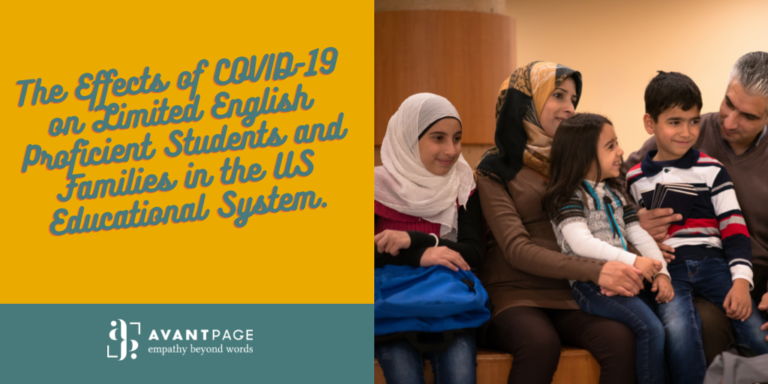
Effects of COVID-19 on Limited English Proficiency Students.
In 2019, who would’ve thought that schools would shut down and move online? Like many institutions and businesses, the coronavirus gravely impacted the US educational system. School districts scrambled to make decisions with no precedent for the situation. Teachers, students, administrators, and parents scrambled to adjust to the evolving processes and methods of online school while balancing work, family needs, and health issues. It was enough of a challenge for those with access to broadband internet services, additional child support, and flexible working schedules. But for those with Limited English Proficiency (LEP), many families struggled with additional and fundamental challenges, including lack of technology, access challenges to healthcare and mental health resources, lack of accurately translated content for COVID-related topics, reduced or eliminated school food, and many others. Let’s look at just some of how the lack of language understanding has affected LEP students and their families during this unprecedented time. COVID-19 put technology at the forefront of education across the globe. From classes to meetings to after-school clubs, the internet played a critical part in communication. Yet many struggled with accessing the internet or having slow connections. According to an FCC report, approximately 19 million Americans, which is 6% of the population, lack access to broadband service at threshold speeds. People who live in rural areas are the most affected, with nearly one-fourth of the population lacking access. And although the numbers fare much better in densely populated areas, many people in urban districts have a high concentration of poor students that can’t afford a subscription service. The internet aside, many students didn’t have reliable or newer machines to access the internet. So when schools shut down, they scrambled to help students by providing Chromebooks or other devices. Unfortunately, as schools everywhere dealt with the same issue, manufacturers weren’t able to keep up with orders. Combined with trade restrictions, many schools weren’t able to provide devices in time for the school year to start in 2020. Five million laptops were in jeopardy of being delivered at the beginning of the 2020 school year. Many devices couldn’t support the newer technologies required for online learning. In addition, school-issued Chromebooks needed to be updated when connected to the building Wi-Fi in the school building. Since Chromebooks weren’t in the building, students experienced glitches due to the lack of updates. Knowing how to fix device problems wasn’t common, as just 12% of US residents who are foreign-born and speak a language besides English were found to be at higher levels of proficiency in solving problems in digital problems. In addition, almost 21% of US adults who speak a language other than English have no computer experience. Needless to say, all of the technological obstacles made online learning a challenge. Many LEP students have taken on additional responsibilities and faced new challenges during the pandemic. In addition to the technical issues we described, students may have new family responsibilities such as helping their siblings with online school and caring for grandparents or extended family members while their parents work. During the height of the pandemic, most Latinx, immigrants, and refugee individuals were listed as essential workers, so they had to continue working during the pandemic, leading to more potential for exposure to COVID-19. In fact, although immigrants comprise 14% of the population, nearly 1 in 6 frontline workers were immigrants. If individuals tested positive for COVID-19, hospitals minimized interpreters and wouldn’t allow visitors, leading to a frightening experience for both patients and families, and causing financial hardships. As a result of all these challenges, more pressure was placed on the other family members to keep the family going. Kids are generally wired to be social—not social distance and learn online. Many immigrants and LEP students don’t have access to healthcare, including mental health resources. Although schools pushed counselors and therapists to watch and listen for signs of depression and other mental health issues, with the language barrier, it was more challenging to spot signs right away. Many felt ill-equipped with the language barrier and were also faced with offending students with cultural differences. Although a lot of work has been done in the last few years, there can still be a stigma around getting help for mental health, especially within different cultures. Clearly, many challenges still lay ahead. As a trusted language service company providing a full spectrum of translation services for LEP students and their families in the educational system, we’ve witnessed these challenges. During this time, we’ve also seen many positive things that organizations, governments, non-profits, and individuals are doing to reach LEP students, from all types of donations to community outreach programs to better access to information. We see several opportunities to help this population. For example, there’s much to be done on many levels to strengthen language access and parent engagement beyond the students’ rights to education, more training and education around the use of communication styles and channels that are culturally appropriate and accessible for reaching families, and education around US educational systems and expectations to support immigrant families. Avantpage’s mission is to help our clients create a linguistic bridge connecting people, cultures, and communities through mutual understanding. Although we come from diverse backgrounds and cultures, we’re joined together by a common goal of empowering immigrant populations in the pursuit of the American dream. We provide language services for the education needs of LEP populations. Our language services include written translations of educational materials and remote interpreter services at both the state and local level. During the pandemic, our translation of the California COVID-19 website (https://covid19.ca.gov/) has provided served millions of Californians, and we’re proud to be bringing our expertise to a new partnership with the nation’s largest school district – Los Angeles USD. For more information, contact us at [email protected] or (530) 750-2040. Let us help you provide the best language services for your students.
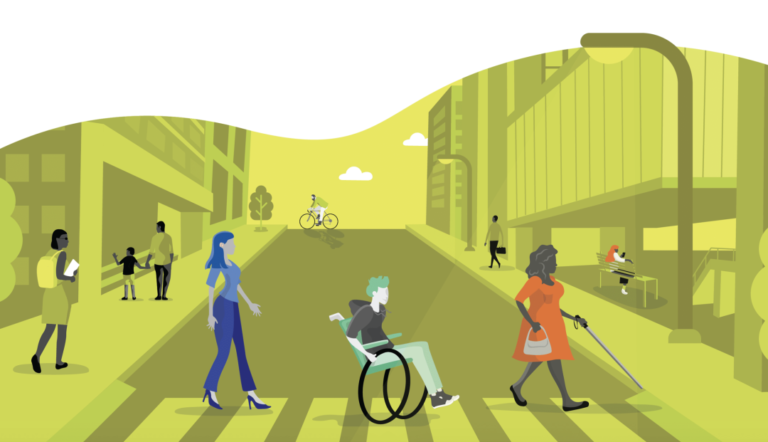
Accessibility outside the digital world: examples of ADA compliance
By Mariana Salamanca Vázquez
The Americans with Disabilities Act (ADA) is meant to protect people with disabilities from discrimination while providing them with the necessary accommodations to live with equal opportunities. The law covers employment, public services and accommodations, private entity services, and telecommunications, among others. But what does an accessible street, workplace, or transport actually look like?
In a practical sense, the ADA asks for employers, governments, and other entities to provide reasonable accommodation for individuals with disabilities. Here are some examples:
Sometimes, physical accommodations aren’t enough, so the following could be needed: Are you an employer looking to improve accessibility for your team? Check out the Job Accommodation Network and their very useful list of different accommodations, categorized by disability, by limitation, by work-related function, or by topic. If you work in local government, healthcare, education, or another public or private entity, you might want to look into accessibility for your publications and web content. At Avantpage, we can provide you with guidance and ADA-compliance services. Contact us for a quote or more information. And remember, it’s not just about complying with the law: building a more accessible world will turn us into a more democratic and empathetic society. #digitalaccessibility #accessibilitymatters #accessibilityforall #localgovernment #advocacymatters Sources and helpful links: What Are Some Examples of Accommodations Under the ADA? | Murphy Law Group, LLC (phillyemploymentlawyer.com) Americans with Disabilities Act of 1990,AS AMENDED with ADA Amendments Act of 2008 25 years after the ADA, sidewalks still speak louder than words | MinnPost Are Your Curb Ramps ADA Compliant? – raSmith Accommodations | U.S. Department of Labor (dol.gov) The ADA and City Governments: Common Problems

Avantpage celebrates the Asian American Pacific Islander Heritage Month
The recognition of the Asian American Pacific Islander Heritage was introduced in 1977 but it was in 1992 that Congress passed Public Law 102-450 which designated May as Asian/Pacific American Heritage Month. Why the month of May? It was chosen by the Congress to commemorate the immigration of the first Japanese to the United States, and to mark the anniversary of the completion of the transcontinental railroad ad both events occurred in May. First Japanese immigrant in the U.S Manjiro is said to be the first Japanese immigrant, arriving in the U.S on May 7, 1843. According to the National Endowment of the Humanities, the 14 year-old boy and his crew were caught in a violent storm, then stranded on a desert island. Manjiro was rescued and adopted by American Capt. William Whitfield, who renamed him John Mung and brought him back to Massachusetts. First Transcontinental Railroad Is Completed The Western population boom following the California Gold Rush of 1849 drove the need for the transcontinental railroad. Its completion on May 10, 1869 helped the development of the American trade, business, and population. Most of the workers who laid the tracks were Chinese immigrants. It was said that the railroad also had psychological effect of bringing the country together. Why celebrating the Asian Pacific American community is important? The Asian population in U.S, which nearly doubled between 2000 and 2019, and is projected to surpass 46 million by 2060, making it the largest immigrant group in the country. The estimated number of Native Hawaiian and Other Pacific Islander residents in the U.S is smaller with 1.6 million. Together, they form a considerable group of individuals from the East, the Southeast, the Indian subcontinent and the Pacific Islands, the reality is they have distinct cultures, nationalities, languages, and histories. Asian Americans, Native Hawaiian, and Pacific Islanders (AA&NHOPIs) represent more than 56 ethnic groups and 100 languages and are extremely diverse in culture, language, and health needs. Despite being are one of the fastest growing groups in the U.S, 30.9 percent of Asian Americans are not fluent in English. In addition, AA&NHOPIs are socio-economically disadvantaged; they also experience health disparities, and language barriers that sometimes limit healthcare access. Our role as a language service provider (LSP) As a language service provider (LSP), we help our clients better serve their communities through our language services. We believe that by empowering immigrants and limited English proficient (LEP) speakers, they will make better educated decisions and will thrive as Americans. For over 25 years and to meet our clients’ unique needs, our language capabilities continue to grow, exceeding 150 languages. Below are Asian American Pacific Islander languages that we provide translation, localization, and interpreting services for based on their consistent demand.
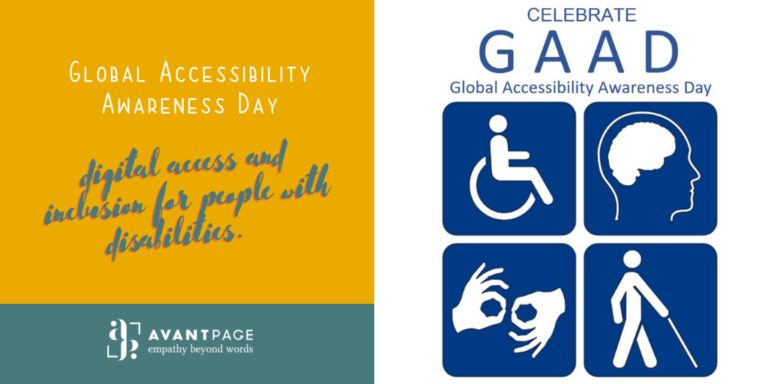
Get involved! Today is the Global Accessibility Awareness Day
By María Fernanda Aguilera Villegas Nowadays we cannot deny that technology is an essential part of our lives. Sometimes we may take for granted our ability to make a quick Google search and get the information we want. But what happens when that information is there, but something is keeping us from efficiently getting it? More than 1 billion people worldwide have a disability, or an impairment and they are the ones who struggle the most with today’s digital products. But that shouldn’t be that way. Someone with a disability must be able to experience the same first-rate digital experiences, services, and content as any other user without disabilities. This is the key theme of the Global Accessibility Awareness Day (GAAD), a global event that puts the focus on digital access and inclusion for people with disabilities. The #GlobalAccessibilityAwarenessDay takes place every year on the third Thursday of May, and, according to the official website, the purpose “is to get everyone talking, thinking and learning about digital access and inclusion”. On this day, accessibility professionals, advocates, and people with disabilities encourage everyone to think about the impact of digital accessibility (or lack thereof). From Ottawa to Bangalore, local events are hosted, and professionals share their knowledge about digital accessibility. Sometimes, people with disabilities showcase how they use the web and digital products using assistive technologies. In other events, designers, developers, and usability professionals assist people in creating technology products, such as websites, software, or mobile apps, taking into consideration the needs of certain disabilities. The Global Accessibility Awareness Day came to be thanks to a blog post written by Los Angeles-based web developer Joe Devon on his WordPress blog MySQLTalk. Titled “CHALLENGE: Accessibility know-how needs to go mainstream with developers. NOW.”, the blog post talked about how accessibility is low on the priority list when creating a website and how there needed to be a shift on how it was being addressed. After seeing the post, Jennison Asuncion, an accessibility professional from Toronto, commented on Twitter that he was “all over [his] idea of a Global Accessibility Day” and contacted Joe. Together, they joined forces, and their extensive networks, to launch the event in May 2012. Since then, they have become big names in making the internet more accessible for everyone. How to participate in GAAD Want to participate and raise awareness? Here are some ideas on how to do it! Whichever way you decide to participate, remember that the ultimate goal is to make all websites around the worldwide net easy to access and simple to use for everyone, regardless of conditions. By joining forces, sharing, and caring, we will surely be able to achieve this goal! Sources Day of the Year – Global Accessibility Awareness Day Global Accessibility Awareness Day official website Global Accessibility Awareness Day’s Wikipedia article

How Avantpage Stays in Compliance During Translation
At Avantpage, we partner with health organizations around the country to improve patient care and health outcomes through translation and language access. Our national, state, and community health plans rely on us for data security. Keeping them in compliance and protecting personal health information (PHI) is our priority. That’s why, in 2019, our Systems Team developed a custom data anonymization tool that we call AvantShield. Using AvantShield protects member PHI during translation and allows organizations to safely reap the numerous benefits of translation memory (TM). Using a TM for your translation work means that Avantpage saves every segment of approved translation delivered to your team. Next time you request a project, the file is run through our TM system and any repeated or similar text is instantly identified. Reusing previously-translated segments saves time, increases consistency, and reduces cost. What is Translation Memory? In accordance with HIPAA regulations, Avantpage does not store PHI in our systems. But the kinds of files that typically contain PHI, such as member letters, are highly repetitive. This makes them great candidates for leveraging a TM. To exclude these files from a translation memory database would be a lost opportunity for process and cost optimization. This is where AvantShield comes in. AvantShield identifies the PHI contained within a file before it goes to our translation teams. Identified text is replaced by a tag that shows linguists the type of data that has been hidden. For example, a medical record number is replaced by @MRN@, the name of the member by @patient_name@, and so on. This greatly aids a translator by ensuring context is not lost during the masking phase. Once the macro has completed its task, the file is sent to translators through AvantFlow. After translated segments are approved by our editors and proofreaders, the text is exported to its original format (Word, Excel, etc.) for delivery to the client. During this final stage, the previously-masked PHI is restored by AvantShield so that the translated document contains the information needed for member communication. While this is similar to the process above, PHI destruction happens after projects are closed and submitted to the client. This is the point at which translations are saved in the translation memory. Before being saved for reuse, AvantShield is applied to identify PHI, this time for permanent removal. To preserve context for future reference, tags are used in the same way as above. The personal data removed during this stage cannot be restored and the translation memory is considered “clean” and ready for use. If you are working with multiple translation vendors, chances are they each have a translation memory. In order to maximize the use of these tools, it is recommended to consolidate the translation memories at regular intervals. Avantpage provides this monthly service to our national health plans, and data anonymization is an important part of the process. During the consolidation, AvantShield verifies that no PHI remains in any of the vendors’ databases. A clean, secure TM is returned to all vendors for use in the coming month. The primary reason to use AvantShield is to protect PHI. Our linguists are able to perform in-context, culturally-appropriate translations without ever viewing personal data. Before we created AvantShield, some of our clients chose to manually remove PHI from files before sharing with us. This is time-consuming, error-prone, and unnecessary. AvantShield helps you stay HIPAA compliant without losing time on manual tasks. With a clean translation memory, you continue to increase consistency, shorten delivery cycles, and save money, safe in the knowledge that your member data is 100% secure.

Language access is a critical civil right!
Why law firms should consider offering over-the-phone interpreting (OPI) and video remote interpreting (VRI). While English is often the language of choice in business affairs across the globe, it is not always the case for legal proceedings. According to the most recent survey, 25 million U.S residents are considered limited English proficient (LEP) speakers. For these individuals, language access is a civil right in and outside of courts. As Vanita Gupta, Principal Deputy Assistant Attorney General expressed: “Barriers to language access can interfere with the capacity of state courts to accurately evaluate the facts and fairly administer justice. And they can also place unfair and unconstitutional burdens on individuals. Without language services such as over-the-phone interpreting (OPI) and video remote interpreting (VRI), all involved participants can’t fully take part in the proceedings. But before heading to courts, law firms must overcome their own language barriers in order to accurately represent their clients. When do law firms require the assistance of interpreters?
What to look for in a language service provider? You need to use subject matter experts as interpreters. Your legal interpreting needs must be handled by qualified and certified interpreters who have experience in the legal industry. With over 25 years of providing language services, Avantpage offers round-the-clock, over-the-phone interpreting (OPI) and video remote interpreting (VRI). With fast connection times, and over 250 languages, our interpreters meet the following requirements: We can help you with your next legal interpreting needs. Contact us at 530-750-2040, [email protected], or request a free quote to get started today.

Celebrating ASL Day
Today, April 15th we observe the National ASL Day which is a great opportunity to celebrate and learn more about American Sign Language. On this day in 1817, the American School for the Deaf (ASD) opened in Hartford, Connecticut. There, teachers and students worked together and, by intermingling Native American Signs, French Sign Language, and even Martha’s Vineyard Sign Language, American Sign Language (ASL) was born. With time, more schools for the deaf were founded and ASL spread not only to those schools but to the world. ASL is used in the majority of Canada, all throughout the American continent, and has even expanded to Central Africa, West Africa, and Southeast Asia.
Have more ideas? Share them with your network and local organizations with the hashtag #ASLday.
Sources:
Day of the Year: ASL Day
Wikipedia: American Sign Language
National ASL Day Official Website
At Avantpage our experienced team can help guide you through the translation process and make it fast and easy. To find out more about our services call us at 530-750-2040 x11, or request a free quote.
From the desk of María Fernanda Aguilera Villegas, Project Manager at Avantpage.