
Blogs
Making a Better World, One Word at a Time
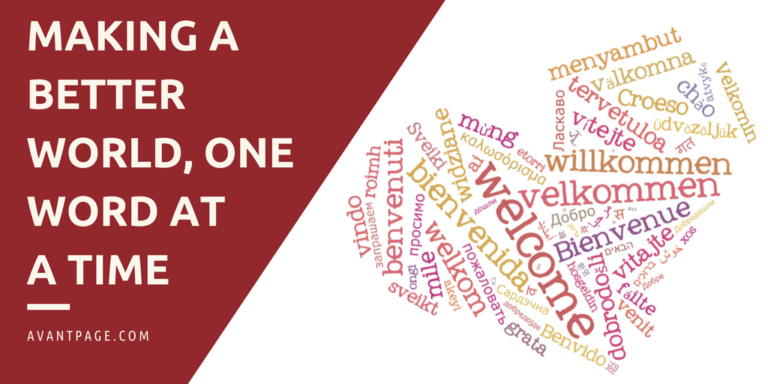
This year, Avantpage will celebrate 21 years of providing high-quality translations that help our clients reach out and communicate effectively in any language. But, our core mission goes much deeper than that: we believe in enabling immigrants to achieve their American dream through language services. When I founded Avantpage in 1996, our original mission was, “to provide translation for websites.” I wanted to make use of my technical know-how and background in computer science for the translation market in the new web medium. Over the years, the company’s mission and reasons have become deeper and more meaningful. What we do at a surface level is translate documents primarily between English and Spanish, Chinese, Vietnamese, and another 150 languages. But, at a deeper level, we make it possible for people from different cultures to communicate effectively. What we really do is provide opportunities for people to thrive and make contributions to society. So, you see, we go from just translating documents to giving people opportunities. For our clients, we do more than translate, edit and proofread. We find out what our client needs, convert those needs into actions, and then we fulfill those needs. At an even deeper level, we provide peace of mind to our clients. When the result is a document in an unfamiliar language, our clients need to know they can trust us. Through our interactions and the quality that we provide, we offer peace of mind to them. What gets me up in the morning and what motivates me to take on the responsibility of having clients and team members all over the world, is that we have a calling. And that calling comes back to why we do what we do. All our Avantpage employees and freelancers love language. But, at a deeper level, we care about helping people communicate across cultures. When we work with clients in the healthcare, elections, government and education fields, we make it possible for their audiences to participate in society. I think this is especially important with the work we do for elections. By translating documents into different languages, we enfranchize the voters of each place we work with. Our work enhances democracy and makes participation possible. It’s not really just paper pushing. It’s not really just exchanging emails with people or talking to contractors. It really is about making this a better world, one word at a time.

Same-Day Document Translation: Fast Print & Mail Translations for Health Plans
Health insurance providers have to work with extremely tight timelines to ensure that patients receive communications and letters about their plans in a timely fashion. To stay compliant with local and federal regulations, healthcare organizations need access to fast, reliable multilingual translations. That’s where specialized same-day document translation services come in. In this article, we’ll explore the critical role regulatory compliance plays in document translation for organizations in the medical field, along with a step-by-step look at how Avantpage delivers same-day document translation services. Table of Contents - Why Do Health Insurance Providers Need to Enhance Their Accessibility Standards? - Benefits of Same-Day Document Translation for Health Insurance Providers - Our Document Translation Process - Step 1: Receive the Project - Step 2: Pre-process the document and assign linguists - Step 3: Translation Process - Step 4: Printing and mailing - Step 5: Delivery - Frequently Asked Questions About Same-Day Document Translation in Healthcare - Summary Since California’s Department of Health Care Services issued APL 21-011 in 2022, California’s Medi-Cal managed health care plans have had to issue notice of action (NOA) letters and notice of appeal resolution (NAR) letters to patients in their preferred language (or preferred alternative format such as braille or large print) within a 72-hour timeframe. When mailing these communications to patients with limited English proficiency (LEP), this means the content must be translated, printed, mailed, and received within just three days. Now, due to changes by the Centers for Medicare & Medicaid Services, this requirement is expanding out of California and will be standard across the nation. The 72-hour requirement aims to reduce delays in patient care, which can be detrimental to a patient’s overall health outcome. Still, this is a pretty tight timeframe to work within, and it may seem like the translation process would slow things down. But it doesn’t have to be that way. At Avantpage, we’ve been working with California healthcare organizations since this regulation was first introduced in 2022 to develop a finely tuned process that ensures patients with LEP or disabilities receive translated/alternatively formatted letters well within the 72-hour timeframe. In the first year alone, we managed to translate 17,000 member letters. We can handle everything from translating letters to actually printing and mailing them — all while maintaining compliance with HIPAA and the requirements outlined in new regulations surrounding APLs. Same-day document translation services enable health insurance providers to meet urgent deadlines, maintain regulatory compliance, and communicate effectively with diverse member populations. By partnering with a professional translation service, health plans can streamline operations and improve member satisfaction. The main benefits of professional translation services include: Learn how one of the nation’s leading health plan providers committed to language accessibility with same-day translations. At Avantpage, we understand why same-day document translation is crucial for organizations and patients. Government regulations are constantly changing to help close health equity gaps, especially for individuals with limited English proficiency. Sometimes these changes happen abruptly, requiring your organization to quickly deliver new or updated materials, often in additional languages. If your organization is not compliant, you may face serious consequences. That’s why working with a professional language service provider is so important. Listed below are the steps we follow for our translation to print and mail services. The translation process outline shows how we translate member letters and other important healthcare communications in rushed timeframes without sacrificing the quality of your communication. Our clock starts ticking as soon as you send us the content you need translated. Along with the letter you need translated, you’ll also need to give us various project specifications for the project so that we can complete it in a timely fashion — that includes things like turnaround time, target language, etc. Once we receive a document and project specifications, we get right to work. The vast majority of our translations are printed and mailed out within seven to eight hours. Once we’ve got the content and project specifications, we run the document through AvantShield, our proprietary patient health information (PHI) masking software. This preprocessing step is absolutely ensuring that our translations are HIPAA compliant; during this step, we remove all PHI from the document so that this data remains safe and secure. After processing the document through AvantShield, we assign the project to a team of linguists to begin the translation process. In assigning linguists to a project, we take into account several factors—availability, linguist qualifications, location and HIPAA requirements. Once the team has been assigned to your project, we’ll begin with the translation steps. The linguist team will first translate the content into the target language, edit it to ensure accuracy and readability, and review it to make sure that there are no typographical errors. After the review step is done, we’ll make sure to put the PHI back into the document. We save this step for last in order to keep patient data secure and ensure HIPAA compliance. Our in-house quality assurance (QA) team, who runs further QA checks and gives the final stamp of approval on each translation. Our extensive QA procedures allow you to rest easy knowing that we’re delivering the most accurate and high-quality translation possible. By the eighth hour, your letter is translated and ready to go. At this stage, we’ll work closely with one of our highly vetted printers to ensure that your documents are printed and mailed in a timely fashion. We’ll send the document directly to the printer, so you don’t have to worry about handling the logistics of printing and mailing these letters yourself. Once the document is printed, the printer will package and mail the letter to the patient. By Hour 8, your letter should be in the mail carrier and ready for delivery. We allow the most time for this final period, since the delivery process is entirely manual. Because we complete the translation and quality steps so early on in the process, we have a little bit of leeway in case there are any delays in the postal system. Altogether, this process allows your patients to receive their communications in their preferred language in a timely fashion. This reduces the chance of delays in patient care, in turn, improving their health outcomes. It depends. With same-day document translation to print and mail, work begins the day your health plan materials are received. Certified translation services include essential steps such as human translation, proofreading, and formatting to ensure accuracy. After quality assurance checks are completed, the document is printed and mailed. This fast turnaround allows health insurance providers to stay compliant with regulatory deadlines without compromising the quality of care communications. For projects delivered digitally without print and mail, turnaround times can be even faster. In healthcare settings, especially for health insurance plans, notarized translations are generally not required unless explicitly requested by a legal or regulatory body. However, Avantpage offers a certificate of translation upon request, verifying the document was translated by expert translators and meets professional translation standards, sufficient for most compliance requirements. If you need to work with a notary or require official use documentation, let us know, and we will work with you to get you what you need. Same-day translation services are essential for health plans, managed care organizations, government health agencies, and providers that must meet urgent communication requirements. For example, under CMS guidelines, Medi-Cal, or state-specific mandates, insurance plans are required to provide timely, multilingual communication to members with limited English proficiency (LEP). These stakeholders rely on healthcare translation services to meet tight timelines and reduce delays in care. Health plans often need notice of action (NOA) letters, appeal resolution notices (NARs), eligibility letters, medical records, and compliance notices translated quickly. Each document must undergo accurate translation with quick turnaround to ensure timely delivery and member understanding. Avantpage uses human translators who specialize in healthcare translations, terminology, and regulatory language. Every document goes through multiple layers of proofreading and a strict quality assurance process. This ensures the final product is an accurate translation that meets HIPAA and CMS compliance standards. Yes. Avantpage offers hard copies through our integrated print-and-mail service. After translation, your documents are professionally printed and shipped directly to members. This is particularly important for health plans serving individuals who need physical copies in alternative formats such as large print, braille, or translated languages. Unlike general translation agencies, Avantpage specializes in health insurance and government healthcare programs. Our focus on urgent translation, HIPAA compliance, and multilingual accessibility ensures your organization stays aligned with evolving regulatory standards. You’ll also benefit from dedicated customer support at every step of the process—from initial intake to final delivery. Contact us at [email protected] or call (530) 750-2040. Share your translation needs, including the type of document, required turnaround, and target language, and we’ll respond promptly with pricing and timelines. We’re here to help you meet your deadlines with confidence. Yes. While primarily serving health insurance organizations, Avantpage also provides services for related legal documents, including birth certificates, marriage certificates, and other personal records that may be required for eligibility verification or dependent enrollment. These documents are handled with the same level of certified accuracy, subject to proofreading and compliance review, ensuring they meet both healthcare and legal standards. We do. Avantpage offers fast translation solutions for healthcare clients supporting members with USCIS applications or immigration-related health services. Whether it's medical records, identity verification, or coverage documents needed for immigration proceedings, our services ensure accurate, certified translations with a fast turnaround, so nothing delays access to care or legal processing. At Avantpage, we’ve been working with health insurance providers to make sure their clients receive information about their health plans in their preferred language as quick as possible, without sacrificing on translation quality. We’ve developed a fine-tuned process to ensure that translated letters reach patients’ mailboxes in 72 hours or less—here’s how it works: Looking to learn more about how we can help you deliver letters to patients in 72 hours or less? Contact us today at [email protected] or (530) 750-2040.
This Is Why You Need to Localize Your Medical Translation
With localization, your hospital, medical practice, health insurance provider, or other healthcare-related business can customize its products, services, and Internet presence to reflect differences in distinct markets. When you localize your medical translation it can be especially useful and beneficial when branching out to reach non-English-speaking or international markets. As the world gets smaller, it is becoming more and more necessary for companies to accommodate speakers of other languages and to understand the nuances of different cultural groups. Localization involves much more than just translation. Graphic design, use of color, currency, symbols, writing style, and cultural references are just a few examples of elements that come into play when preparing to localize. If your organization offers services that are of interest to non-English-speaking customers, either in the United States or the international marketplace, localizing your software, documentation, and website will help you connect with them on a whole new level. In today’s marketplace, localization represents the future of healthcare. Localizing your organization's online presence allows you to tap into previously inaccessible markets, shows that you are culturally and ethnically sensitive to customer needs, and gives you a leg up on your competitors. Localization polishes your corporate image and increases your visibility as a trusted provider of medical services. It helps to eliminate misunderstandings locally and internationally and can protect your company by making terms, conditions, and warranty information available in the target language. By localizing your website to reach non-English-speaking U.S. and international markets, you are providing vital information to Limited English Proficient communities about their health care choices. Almost 26 million people in the United States speak English “less than very well,” according to the U.S. Census Bureau's 2015 American Community Survey. These limited-English proficiency communities make up a vast market of potential patients that you can't afford to ignore. As more and more non-English-speaking people opt to use the internet to gather information to aid their decisions, ensuring that your website is presented in a way your local markets can understand and respond to becomes critical. Localization provides a dynamic, cost-effective way to connect with new patients. The localization process introduces you to cultural aspects that will give you new insights and broaden your market acceptance and success. When you show your online audience that you care enough to speak their language, you are taking the first step towards building long-term relationships that will keep them coming back to you. To make sure that your translated documents reflect the community you want to speak to, email us at [email protected] or call us at us at 1-530-750-2040, extension 6. We will give you a free translation quote and show you how our services can help you.

This Is How You Save Money and Time on an EOC Translation
Evidence of Coverage projects are usually hundreds of pages long and include hundreds of thousands of words. Translating these documents takes more time and a larger budget than a smaller translation project. However, even with a large project such as an EOC, there are still opportunities for your health insurance organization to save time and money on translation by using the proper tools. Here are three ways you and your language services provider can make your EOC translation project easier and more affordable. If you’ve worked with the same LSP in the past or if you’re trying a new company for your EOC this year, Translation Memory can help make your project more consistent and accurate with faster turn-around. Translation Memory software allows an LSP to build on previous work. When it’s time to complete a new translation, the software can analyze the new document against previously translated documents. The application helps decipher which words and phrases have been repeated and indicates how they were previously translated. This allows your LSP to maintain consistency and translate similar phrases the same way, controlling your voicing and brand consistency. It also creates some cost savings. For example, if the TM shows that 30% of the words in your EOC are matches, then you’ll pay less for those words. Translation Memory software also allows you to save specific terminology and style preferences for use on subsequent translations. With TM, multiple linguists can work with the same assets in real time, so your project can be completed faster. If you can’t provide a TM file, it’s helpful to provide your LSP with a previously translated document and the source document. This will allow your LSP to analyze both documents and find repeated words and phrases. Like Translation Memory, this will save your health insurance organization time and money, but it does require some time for preparation and planning. While it may require you to dedicate some time at the beginning of the project, you will reap the benefits later. Using an online project management system can make your EOC translation more efficient and affordable. At Avantpage, we use AvantFlow—an online translation project management system that delivers unlimited access and exceptional service at all times for all your health insurance translation projects. AvantFlow assigns you an individual account. Using this account, you can make new translation project requests, monitor and modify existing translation projects, retrieve past translation projects, and pick-up finalized translation projects. This one-stop comprehensive solution allows you to upload project files, request a quote, leave special instructions, and assign a due date. Our system is also equipped to handle large files, so your documents are centralized and accessible from any computer online. To keep communication clear, all your translation project details are automatically stored and organized for easy reference. When your LSP has tools to analyze your documents and keep your project on track, your EOC translation can be done more quickly and affordably. To find out more about how Avantpage can help you complete your EOC project under budget and before your deadline, email us at [email protected] or call us at 1-530-750-2040, extension 6.

Keep the American Dream Alive and Keep Dreamers in the USA
I emigrated from Mexico to the United States when I was 19 years old, a dream I held since I was a little boy. In my American dream, I became an engineer, got married, had children, and opened a successful business that provided other immigrants with opportunities to reach their American dream. President Trump’s recent repeal of DACA, an immigration policy that allows minors brought into the U.S. by their parents to stay without fear of arrest, goes against the essence of what makes America great: providing all people with the opportunity to develop and enrich this country. Immigrants make America great through their cultures, languages and new perspectives art. They create new businesses, NGOs and non-profit organizations that grow the economy and local communities. The young people sheltered from prosecution under DACA are called “Dreamers" — not only because they dream of living in the U.S., but also because they are poised to make significant contributions to the American Dream! These Dreamers are soldiers, nurses, doctors, gardeners, teachers, farm workers, landscapers, lawyers, business professionals, entrepreneurs and more. I work with Dreamers. I employ them. I see them enrich my community day in and day out. When my kids were young, I coached their soccer teams, and they played with Dreamers—some of whom did not even have birth certificates from either their birth country or the U.S. I negotiated on their behalf so soccer leagues would accept these Dreamers. I worked with their parents so these children could fully participate in all team activities, even if their parents could not speak English well or afford for their children to play. These young people already have enormous handicaps. Many of their parents do not speak English well and therefore cannot help with homework or provide access to extra-curricular activities that so many of us take for granted for our children. In the face of all that, Dreamers have persevered to pursue their American Dream of a better life. With President Trump's repeal, they live fear of deportation once again. How cruel and counterproductive. If any immigrants are poised to make strong contributions, the Dreamers are it. They have been here for most of their lives, they are young and strong, and they have demonstrated a deep sense of belonging. The Dreamers are Americans! This is the only country they have ever known and the only one they want to live in, fight for and contribute to. Both in my personal life and at Avantpage, we will continue to support and fight for the dreamers. To learn more about organizations that are helping immigrants achieve their American dream, click here.
Celebrate Immigrant Heritage Month and Tell Your Story
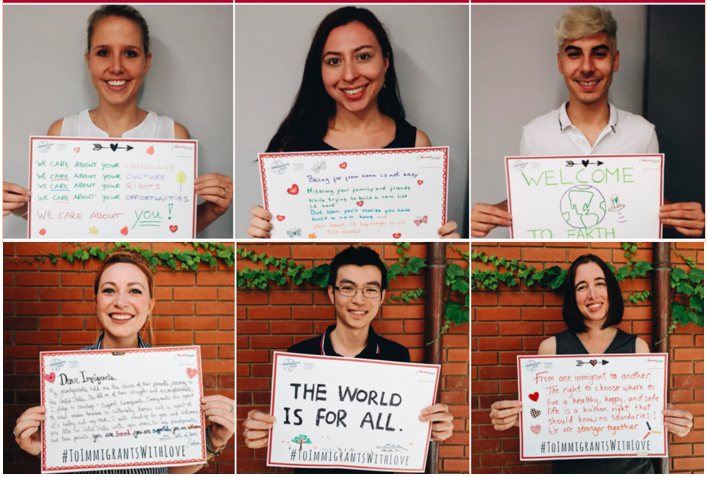
As an immigrant-founded and driven company that serves immigrant populations in the United States, Avantpage loves to celebrate National Immigrant Heritage Month. Founded in 2014, Immigrant Heritage Month honors the contributions of immigrants by highlighting business leaders, celebrities, elected officials and others in June. More than 250 companies and organizations across the country collaborate to create festivities and events to engage and encourage immigrants of all ages to share their stories on multiple platforms. New this year is the “I Stand With Immigrants” campaign, which encourages Americans to unite their communities to be immigrant allies and share their stories. As part of our Immigrant Heritage Month celebration, every Avantpage team member wrote a letter to #ToImmigrantsWithLove, which is a project by Define American and I Am An Immigrant. This letter writing campaign for immigrants and the allies who love them publicly acknowledges that we stand with immigrants no matter what. Here are some of our letters and stories. Each letter is different. Some people decided to share their stories while others chose words of affirmation and encouragement. No matter the letter, all of our core messages are the same: We stand with immigrants and celebrate their strength. “From one immigrant to another, the right to choose where to live a healthy, happy, and safe life is a known human right that should know no boundaries. We are stronger together.” - Joanna Oseman, Account Manager “My grandparents told me the stories of their parents coming to the United States. She told me of their struggles and accomplishments. Immigrants are a part of what makes America so culturally diverse and is a part of it's history and my own. I will stand up for you and welcome you into the United States with open arms. For my grandparents, and their parents, you are loved, you are supported, and you are welcomed with lots of love.” - Sabra Rubinstein, Marketing Manager. “My parents came to this country in the early ‘80s as anti-communist refugees from Poland. They came with nothing and built a family, community, and beautiful life of love! I know your struggles and your determination. I love you and hope your path to a new life is filled with joy!” - Nicole Spyt, office manager #ToImmigrantsWithLove Avantpage: Mexico City Office “An immigrant, above all, is a person. As such, it is equal to anyone. His temporary or definitive arrival to another country should not in any way imply a negative or contemptuous of his person. You must understand and accept that not all American citizens think exactly like their president. For immigrants, there will be many difficulties and barriers all of them have to overcome to achieve the dream of a better life. Language can be a difficulty, a barrier, so immigrants without losing your identity, embrace the new culture with force. Do your part to integrate and learn as best you can the new language that receives you.” – Rafael Rios, DTP specialist “We all come from everywhere and we are all equal. So go get married with someone from a different country. From Mexico and Poland with love.” – Dominika Woszczyk, Vendor Manager & Jorge Villafuerte, IT Support "We care about your language.We care about your culture.We care about your rights.We care about your opportunities.We care about YOU!" Sharing, hearing, and writing these stories can help connect Americans with immigrants in their communities. Rosa Gerra said it best: “America is a nation of immigrants. All of us are immigrants. The only ones that are not immigrants are the Native Americans. Everybody came from somewhere else and how quickly we forget.” So take the time now to share the stories of how you or your families made America their home. Another easy way to participate is to use the #IStandWithImmigrants hashtag or add a social media profile filter to show your support. Throughout the month there are a series of pop-up shops and events held across the country, especially in major cities like New York, Los Angeles, and San Francisco, highlights the contributions of immigrants. You can find an event near you at iamanimmigrant.com/events. We want to hear your voice! Tweet us at @Avantpage and share your story. Show us your support by using the #IStandWithImmigrants or changing your profile photo using the filter.

My Immigrant Story - A Letter From Luis Miguel, CEO at Avantpage
As an immigrant-founded and led company that serves LEP populations in the U.S. we want to stand up for Immigrants, Immigrant Rights and Refugees in the U.S. and around the world. As President Franklin D. Roosevelt once said, “Remember, remember always, that all of us, and you and I especially, are descended from immigrants and revolutionists.” This is our CEO’s immigration story, but Luis’s story is one of many immigrant stories that testify to the fact that this nation was built by immigrants and continues to grow because of the contributions of all Americans and Immigrants. If you would like to hear Luis speak about Avantpage’s mission-focused brand, listen to the podcast How Storytelling Helps Immigrants Realize their Dream. Dear Immigrants and World, I first came to the US as a teenager in 1973 to a Summer camp in the Ozark Mountains, and immediately fell in love with the modernity, the openness and the dynamism of the American culture. I wanted to emigrate and be part of the American dream! With imperfect language skills, I came from Mexico to the University of Colorado at Boulder as a freshman in January 1978. The University seemed cold and intimidating, and it was especially hard to start in the Winter semester without a room in the Dorms. These experiences made me sensitive to the plight of immigrants in the US, and especially those who need special language support to connect with the people and institutions of America. Avantpage supports the values that have made the United States a beacon to the rest of the world over the last 250 years for democracy, opportunity, meritocracy, open markets, and rule of law. In the face of the recent populist changes in the US Federal Government and places like the UK and Turkey, our work to advance the cause of freedom and opportunity for immigrants through translations is more important now than ever. Avantpage is committed to providing immigrants access to services that support and integrate them so they can enjoy the success of, and make contributions to, our society and economy. Let’s redouble our efforts to support immigrants with translations that connect them to their new homeland, regardless of language barriers. #ToImmigrantsWithLove , Luis Miguel
Your Guide to 4 Organizations Impacting Immigration in a Big Way
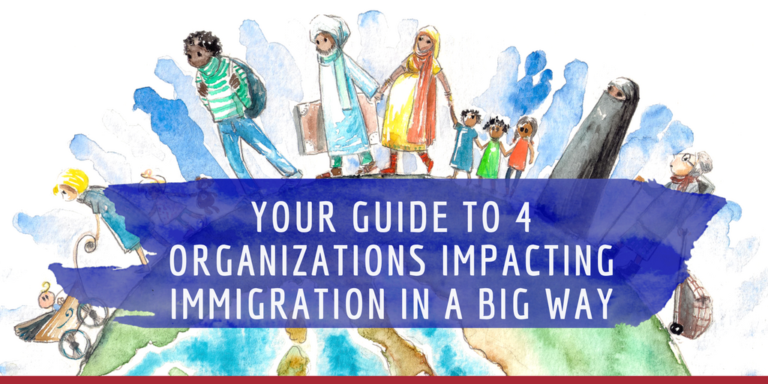
With so many changes ahead for American politics, many are asking big questions about immigrants and immigration. Under the new presidency, will legal statuses be revoked? Will DACA remain in place? These major shifts in politics impact over 42 million immigrants living in the U.S. The biggest question is how do we prepare for policies that could change our day-to-day lives? The population asking this question the most are America’s immigrants and those who work to support them. As an immigrant-founded and led company that serves LEP populations in the U.S., we want to connect our clients with these answers. To do so, here are some incredible immigrant rights and services groups that we want to spotlight and recommend: Location: Various in Washington State Mission: “Northwest Immigrant Rights Project promotes justice by defending and advancing the rights of immigrants through direct legal services, systemic advocacy, and community education.” Did you know: Immigration defendants are not granted right to an attorney? In cities like Tacoma, WA where the NW Detention Center is located, this means over 92% of cases go unrepresented because defendants cannot afford legal aid. This is where NWIRP steps in. The Northwest Immigrant Rights Project has offices in Seattle, Granger, Wenatchee, and Tacoma. Every year, NWIRP serves over 10,000 individuals from over 150 countries with pro bono free legal services and impact litigation. NWIRP’s community education helps to inform communities and immigrants facing legal concerns on topics like DACA, Notario Fraud, and basic rights. They also offer free Immigration 101 rights and policy trainings throughout the state for social service providers and other groups involved with helping immigrant populations. Immigration Impact: The only pro bono free legal service provider in the NW, providing direct legal assistance to over 10,000 people. For more information, visit nwirp.org, or connect with them on social media @NWIRP. Location: San Antonio, TX Mission: “RAICES promotes justice by providing free and low cost Legal Services to underserved immigrant children, families and refugees in central and South Texas” Did you know: At least 63% of refugee children qualify for protections under U.S. law? RAICES has developed their largest aid program and testified before congress on this very statistic. RAICES is a free and low cost legal service provider based out of San Antonio, TX. Over the last thirty or so years, this organization has stepped up in a big way to address the unaccompanied minor humanitarian crisis. Although their children’s program is their largest aid service, RAICES also works to help detained survivors of torture, asylees, adult victims of crime, and refugees of all ages. Located nearby to two major family detention centers (Karnes County Residential Center and South Texas Family Residential Center), RAICES works to provide legal aid, provisions, and reunification to families living in harsh, transitory conditions. Other unique programs include the opportunity to support and fill a refugee’s backpack for their bus journey across the states to reunite with family or RAICES’ refugee shelter provided at Casa de Raices. Immigration Impact: Six distinct programs to support refugees, unaccompanied minors, and many others. Our Favorite Resources from RAICES:
Know your Rights
For more information, visit raicestexas.org, or connect with them on social media @RAICESTEXAS. (#ProtectRefugees)
3. Coalition for Humane Immigrant Rights of Los Angeles (CHIRLA)
Location: Los Angeles, CA
Mission: CHIRLA’s mission is to achieve a just society fully inclusive of immigrants.
Did you know: As of 2013, nearly half of America’s immigrant population was Limited English Proficient (LEP)?
This makes it incredibly difficult to access needed information to answer pressing questions about immigration policy and rights. CHIRLA actively addresses this need by translating their website into over 100 languages! The Coalition for Humane Immigrant Rights of Los Angeles offers not just immigration legal aid and policy advocacy but also a variety of easily accessible community education and informational opportunities. Especially unique is CHIRLA’s immigration hotline.
The hotline, reachable at 1-888-6CHIRLA (1-888-624-4752), is open 24/7 and offers bilingual immigrant assistance. They also host a variety of community events, outreach campaigns, and education forums and coordinate a community organizing network for immigration reform. If there are not any “Know Your Rights” campaigns offered in your area (such as those through NWIRP in Washington), you can contact CHIRLA to request access to informational brochures and video workshops. Immigration Impact: Providing easily accessible information and advocacy to the immigrant community through their unique hotline, online, and in-person resources. For more information, visit chirla.org, or connect with them on social media @CHIRLA. Location: Miami, FL Mission: To promote and protect the basic human rights of immigrants through a unique combination of free direct services, impact litigation, policy reform, and public education at local, state, and national levels. Did you know: HuffPost recently released a list of organizations that are essential to support in a Trump presidency? Americans for Immigrant Justice made the list in a very big way. According to HuffPost, “This organization, and others like it, will prove crucial to advocacy under a Trump administration, particularly with the president-elect’s divisive rhetoric surrounding Syrian refugees.” Americans for Immigrant Justice is a non-profit law firm, serving individual cases in Miami, Florida and using this experience to advocate on a national level. With an especially high LEP and immigrant population, Florida is a “national testing ground for immigration policies.” In addition to its extensive and reputable legal aid programs, AI Justice regularly produces reports and research, Congressional testimony, and petitions to advocate for reform at a national level. Immigration Impact: A nationally recognized advocacy program providing direct legal immigration services, helping nearly 90,000 immigrants since its founding. Our Favorite Resources from AI Justice:
Reports and Research on Key Immigration Issues
For more information, visit aijustice.org, or connect with them on social media @Am4ImmJustice.
Moving Forward...
Right now, access to quality, reliable, translated materials about policy changes and rights is more important than ever; these four organizations are in your area to advocate for you and help you find this information.
However, as incredible as these four are, it’s tough to limit our list of amazing immigration advocacy and aid organizations to just a handful. As a bonus, here are two major national policy centers that can be easily accessed online for relevant resources and information.
Visit their websites to learn more and access trustworthy content on immigration policies and rights.
California Immigration Policy Center: caimmigrant.org
National Immigration Law Center: nilc.org
At Avantpage, we care deeply about immigrant rights and will work to promote equal access to necessary information in the upcoming months. If you are an immigrant yourself or are passionate about immigration issues in the U.S., we want to support you in accessing these services and information. Connect with us on social media or sign up for our newsletter to stay involved and on top of the latest immigration updates and happenings in the U.S.
You can also follow our Immigration Organizations list on Twitter that hosts the above 4 organizations and many others making contributions to immigration issues today.
Do you have any organization’s you’d like to add? Let us know by tweeting us or leaving a comment below!

The 4 Pillars to Implementing a Successful Internship Program
Did you know that Avantpage has hosted seven interns since 2015? Want to hear another little known fact? Localization is an industry made of freelance and contract work across many cities, countries, and time zones. This can make building successful internship program a daunting task. But not for Avantpage! Avantpage now offers internships every quarter thanks to the dedicated and thoughtful work of Dr. Serena Williams, our Linguistic Quality Manager. Our interns receive ownership over projects through intentional industry work. Dr. Williams and her internship program will be recognized for industry excellence in San Francisco at the American Translators Association’ (ATA) 57th Annual Conference. ATA, one of the top professional development and collaborative associations in the translation and localization field, honors Dr. Williams as a guest speaker. She will present “Role-Based Internships: A Model for Successful and Sustainable Student Partnerships” on November 3rd. Past internship projects have included a comparison between manual and automatic terminology extraction, developing training materials of readability for various languages, evaluating and recommending translation brief procedures, and developing vendor feedback communication systems. Internships are not about running around the city to get coffee and office supplies! Internships like this are neither cost effective nor useful to anybody. Instead, internships should be a positive, shared experience. Through relevant and responsible work, interns can give back to companies with fresh perspectives and real results. Interested in learning more about a career at Avantpage? Check out our Careers Page!

The Changing Game of Healthcare: Who Will Step Up to the Plate?
What do the 2016 presidential elections and the Affordable Care Act (ACA) have in common? They both have left American voters feeling neglected and misrepresented by the current choices. We’ve recently seen major health insurers like Aetna, Humana, and United Healthcare opting out of providing care through the ACA. By leaving the exchange, they are abandoning not only Obamacare but also the diverse individuals and communities throughout America that have found coverage through the exchange. Just like a presidential candidate today couldn’t sweep the polls with the Reagan Coalition of The 1980s, these mega-insurers opting out of health exchanges are destined to fall behind the times. However, such changes open the door for insurers who are ready and willing to embrace the cultural and linguistic needs of all Americans in want of coverage. Health insurers that choose to stay in the ACA, providing low-cost and efficient coverage, are serving the needs of Americans today while positioning themselves for the demographic changes of tomorrow. Well, this future belongs to the insurers who stay, the insurers who: There are many benefits for health insurers who pursue these values by staying in the exchange. Despite the early difficulties of the exchange, the long-term positive outcomes will greatly benefit the health of America’s people and policies. As we all know, Obamacare is not without its imperfections, but we can’t forget that the exchange is still developing. According to The Washington Times, Obama stated in a recent letter to health insurers, ‘“We know that this progress has not been without challenges. Most new enterprises have growing pains and opportunities for improvement…The Marketplace, while strong, is no exception. Time and experience will help drive that improvement, as will constructive policy changes.”’ These constructive changes can already be seen in three concrete ways: With the 4th open-enrollment period set to begin this fall, now is the time to discover these benefits for health insurers. Let’s start by taking a look at what Obamacare has achieved.The primary goal of Obamacare is to lower the rate of uninsured people in the United States. Obamacare achieves this in two ways The successful execution of this goal can be seen through how many Americans, especially from low-income populations, are getting access to health insurance. According to new federal data, 2015 was the first year that more than 90% of Americans had health insurance. Amidst the confusion of mega-insurers leaving, re-entering, and negotiating exchanges, many have predicted that the ACA is and will continue to be a positive investment. Nick Bagley, an assistant professor at the University of Michigan Law School whose work focuses on the Affordable Care Act, was quoted in a recent VOX article saying, “It's important to step back and think about what would be happening right now if there was no Affordable Care Act, premiums would be much higher now than they are under any kind of reasonable estimate." Despite the fluctuations of the marketplace, the ACA is positioned to be a lasting financial and medical win for the USA. In an article entitled, “The Surprising Way Obamacare Could Save the Healthcare System a Lot of Money," Madison.com writer Sean Williams explores a study published in JAMA Internal Medicine that demonstrates significant improvement in self-reported health for low-income adults in states that have benefited from Medicare expansion. Williams writes, “It may be costing the federal government money right now to cover preventive care visits and possible medications for low-income adults. However, over time, that preventive care will catch many chronic or even lethal medical conditions before they become a costly burden on the healthcare system.” Given that 5% of the population is accountable for half of healthcare costs, targeting specific populations and providing more expansive care through Obamacare is an investment in future savings. Just as health exchanges are a viable route to lasting, improved health benefits, customer-centric care will result in the most concrete benefits. Valuing individual needs is at the core of the ACA and Obamacare. At Avantpage, we strive to be a customer-centric company and believe that dedicated health insurers also support this business approach. According to Investopedia, Customer-centric can be defined as, "A specific approach to doing business that focuses on the customer. Client centric businesses ensure that the customer is at the center of a business's philosophy, operations or ideas. These businesses believe that their clients are the only reason that they exist and use every means at their disposal to keep the client happy and satisfied." Healthcare reform and the exit of mega-insurers is paving the way for health insurance providers who value individual attention and care. Moreover, health insurers that take this customer-centric approach see incredible results communicating with patients in each patient's own language. Communicating in patients’ native languages leads to better health, healthier patients, and lower medical costs for the patients and their insurers. When patients, doctors, and medical staff have the ability to communicate, either through well-translated documents or the use of an interpreter, patients receive better medical care. Yet, many healthcare professionals still are hesitant to invest in language services. With the LEP (Limited English Proficient) population at over 25 million and growing, it’s imperative that customer-centric health insurers offer accurate and clearly translated documents to patients. The overarching goal of Obamacare is to create more inclusive and affordable healthcare for all, and this approach gives health insurers the opportunity to take a stance as customer-centric, inclusive providers. Ultimately, this type of involvement and care will lead to healthier patients which leads to universally lower healthcare costs and results in a stronger, more loyal customer base in the marketplace. Health insurers looking responsibly to the future, centered on the interests and needs of the American people, can hope to provide the most value, financially and in regards to individual care, through the ACA exchanges. As a new enrollment period begins, the door will be opened to insurers looking to serve the new multi-ethnic, multilingual populations of the USA.

How Public Schools Limit Latino Students and Parents
As much as teachers and parents wish it were otherwise, Latino children are less likely than their peers to succeed in the public school setting. One factor behind this is that their parents are unable to access the predominantly English school environment. Quality translation and interpretation can help integrate families into the public school system and shrink the achievement gap for Latino children in public schools. In California, only 28% of Latinos meet all of the college readiness criteria of the ACT, compared with 70% of white students. Hispanic students are almost twice as likely as their white peers to drop out before completing high school. It’s not that Latinos value education less than other ethnic groups. As a matter of fact, 67% of Hispanic parents say a parent can never be too involved in a child’s education, compared with 47% of white parents. The fact is, the English-only model of the public school system severely limits Latino parents' ability to be involved with their children’s schooling. This, in turn, limits the potential for Latino students to succeed. In a world of increasingly important test scores, it can be nearly impossible for limited English proficient (LEP) Latino parents to help their children with homework or even make sure all of their children’s assignments are getting done. Worksheets, writing prompts, and assignment reminders can be incomprehensible, to say nothing of informational material sent home to parents about school events, field-trips, and parent conferences. While children from English speaking households may rely on their parents to keep their education on track, many Latino children are forced to grow up early and carry the full weight of their educations themselves. According to federal law, public schools must provide all sent-home materials in any language spoken by more than 15 children. However, this law is rarely enforced because tracking every piece of paper sent home in schools statewide is incredibly challenging. It is then up to each public school to make education accessible by translating these materials, regardless of federal law enforcement. It is up to public schools to provide translation services to students, not out of fear of punishment but because it is crucial to student success. In order to shrink the achievement gap between white students and Latino students, all school materials must be provided in Spanish as well as English. Schools should also take care to include other, less prominent languages that might be present in schools like Vietnamese, Arabic, and Mandarin. At Avantpage, we believe that quality K-12 public education is a right that should be equally accessible to all. Not only does this mean engaging LEP students, it also means engaging and translating for their parents. Parents are a key piece of student success, and including them in their child’s education allows for greater student engagement by increasing parents' ability to support their students. This means LEP and immigrant families must have access to translation and interpretation services at their children’s public schools. Avantpage is experienced in educational translation and ready with the tools to help school districts make the transition to a more language-friendly model. If you want to start the process of creating a more inclusive school or district, call us today at (530) 750-2040 or request a free quote.
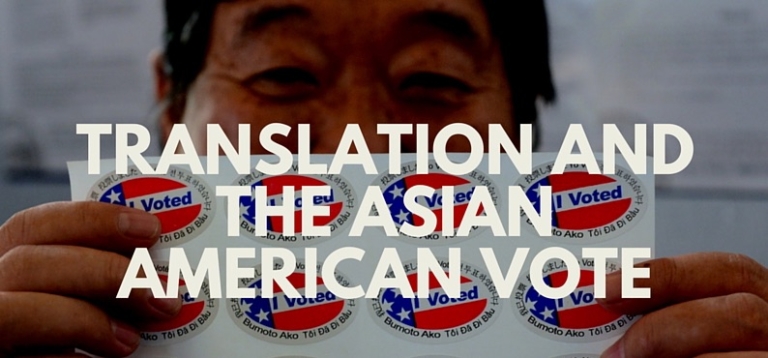
Reaching LEP Asian and Pacific Islanders this Election Season
This election season many campaigns for politicians and ballot measures are looking at Asian Americans as a key voter group. The number of Asian and Pacific Islander (AAPI) voters almost doubled from 2 million in 2000 to 3.9 million in 2012. What’s more, almost half (47%) of AAPIs are not associated with a political party. With a presidential race as well as senate seats and many important ballot measures to be voted on in November’s election, Democrats and Republicans are investigating the best ways to target this key ethnic minority. One important aspect of reaching Asian American and Pacific Islander voting groups is the complete translation of all campaign materials. More than 39% of AAPIs are limited-English proficient. Voters identified as limited-English proficient who receive information only in English will understand less than half of the written text. Clearly, English-only marketing materials on candidates and ballot measures leave a large population of voters entirely inaccessible. The importance of accessible voting materials for the AAPI population can't be overstated. According to a recent survey by Asian and Pacific Islander American Vote, voter enthusiasm is quite high and "is found across the board for Asian American voters, with no statistically significant differences by ethnicity, gender, age, nativity, and state of residence." Avantpage provides high-quality translation of campaign and ballot marketing materials from English to languages spoken by AAPIs. We are experienced in Cantonese, Mandarin, Tagalog, Vietnamese, Korean, Japanese, Hindi, Urdu, and Punjabi, among others. Our readability assessment tools are particularly important for elections materials because they broaden accessibility for voters. With them, we can adjust reading level of texts or make them match the English source to make sure that the information is accurately conveyed across languages. Avantpage stands for the right of Asian American and Pacific Islanders to clear and readable election materials in their preferred languages. We believe that democracy works best when everyone is included, and that high-quality translation is an important part of operationalizing those values.