
Blogs

Are Your Health Benefit LEP Materials Accessible and Compliant?
A comprehensive health and benefits package is key to attracting and retaining the best workers in your industry. However, employee benefits packages are fraught with some of the most complex and challenging compliance regulations Human Resources faces today. Are your materials accessible and compliant? Avantpage Client Manager Lucas Eaton will be on hand at this month’s Health and Benefits Leadership Conference in Las Vegas, NV to talk with companies about how to translate compliance-ready benefit package documentation to reach their limited-English proficient (LEP) workers. Smart executives know that promoting health and wellness initiatives raises productivity, improves performance, and increases job satisfaction at every level of the organizational chart. A wide variety of new apps, fitness trackers, and wearables give employees more control over their health than ever before and provide companies new ways of supporting worker health through benefit programs and opt-in opportunities. As the LEP population across the US continues to grow, it’s critical for companies to reach out to workers through communication in their own language. Once LEP employees fully understand the healthcare options available to them, they can utilize their benefits appropriately to become healthier, more productive workers. When translating health and benefits materials into other languages, there’s no margin for error. It’s critical that all your documentation is compliant with federal, state, and local regulations because poor translations can lead to misunderstandings and may even expose your company to legal action. Our proven healthcare and medical translation services ensure your benefits package materials meet all regulatory guidelines and can pass auditing inspections with flying colors. We have the expertise to examine the laws surrounding your translation projects and the resources to make sure you’re in compliance every step of the way. If you’re attending this year’s event, be sure to stop by our booth for a chance to win an Amazon Fire and to learn more about Avantpage’s translation expertise in the Human Resources and Healthcare space. Can’t make it this year? No problem! We’re always available by email or phone to provide you with a free quote on your next project. Image: Michael Havens
The Key to Combatting Disenfranchisement of Latino Voters
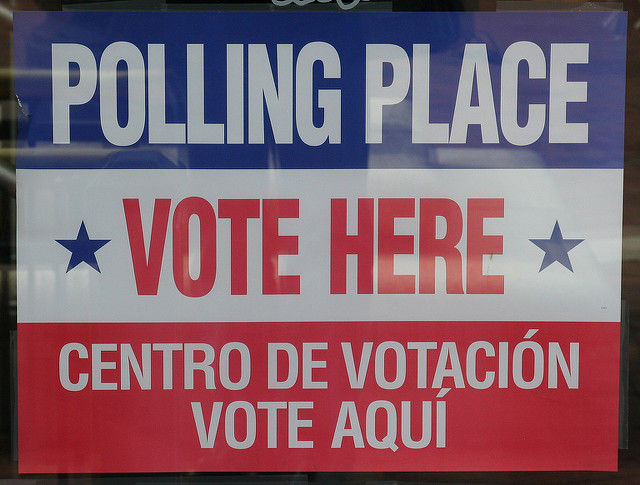
If fair and equal access to voting is a central tenet of a true democracy, then California’s democratic process is far from functional. The great state is home to 14.5 million Latino people, 73% of whom speak Spanish at home. California Latinos have a significantly higher chance of living in poverty than the population as a whole. Nearly half of Latinos do not complete high school, and only one in ten go on to get their bachelor’s degree. Although Latinos are more likely than the general population to receive aid from government programs, the average dollar amount of benefits they receive is significantly lower than that of other recipients. With the above factors stacked against Latino immigrants, it comes as no surprise that voter turnout is much lower in areas with high Hispanic populations than the California average. San Bernardino county, for example, is 51% Hispanic by population and had a total voter turnout of 11% of the population in 2014, compared to 42% in the state as a whole. Creating accessible voting materials is key to combating Latino disenfranchisement in California. In 2015, Avantpage worked with the County of San Bernardino on creating readable, effective English to Spanish translations of voter information including electioneering signs, ballot measures, and arguments for and against to give voters a fair idea of what a “yes” or “no” vote would mean. We also translated voter registration materials into Spanish, putting the ballot box within reach for those who cannot fill out a registration form in English. These translations, and all current and future Avantpage projects, focus on the core values of linguistic quality and communication with cultural sensitivity. To us, cultural sensitivity includes careful research of historically disadvantaged groups in order to make it possible for their voices to be heard. One way we achieve linguistic quality is by assessing the reading level of source texts and adjusting it for the target audience, whether they have had access to formal education or not. At Avantpage we believe in the power of the democratic process to transform inequitable social circumstance, and we believe that good translation is key to the right of every citizen to understand and participate in elections. Image: MoonShadows7

Georgia County Restricts Language Access, New York City Expands It
Two recent news stories highlight contrasting approaches to language access for recent immigrants with limited English proficiency. A local government agency in Georgia refuses to provide election documents in Spanish. Meanwhile a New York school district plans to beef up language services for thousands of LEP schoolchildren and will expand translation and interpretation services to include nine additional languages. In Gwinnett County, GA, Latino voters requested the county provide Spanish-language ballots so its Latino citizens would be able to understand their voting choices when participating in the upcoming primary and general election. The Gwinnett Board of Registration and Elections rejected the proposal by a 4-1 vote. According to the Atlanta Journal-Constitution, Alice O’Lenick, chair of the elections board, suggested Latinos sue the county or get an order from a higher state authority requiring Spanish-language ballots. “If a judge says do this, we’ll do it,” she said. O’Lenick might get her wish. Jerry Gonzalez, Executive Director of the Georgia Association of Latino Elected Officials, told Fox News Latino, "Unfortunately Gwinnett County chose to continue to be out of compliance with the Voting Rights Act and decided that the Puerto Rican community's voting rights should not be protected. We tried to work with the county to come up with an implementation plan to avoid litigation, but the county has refused to move forward in an amicable manner." In stark contrast, New York City Schools Chancellor Carmen Fariña announced the establishment of new translation and interpreting support programs for the city's immigrant population. The programs will include the expansion of its translation and interpreting services and the hiring of nine new language access coordinators. Providing services to immigrant communities is an important priority for New York City officials, as the city’s economy thrives when immigrants do well. Most major employers in the US, along with cities and states with the most dynamic economies, all support language access and encourage immigration. It’s puzzling to see that some groups still see them as a burden and a threat.

Building Bridges for LEP Voters During Texas Elections
Nearly 35 percent of Texas residents speak a primary language other than English at home and the number of non-English speakers across the state continues to rise. Election officials are required to provide bilingual election materials to limited English proficient (LEP) voters, including ballots, applications for early voting, voter affidavit forms, and some types of instructional posters. That’s a lot to tackle but it’s critical to provide LEP residents with election materials they can read in their own language in order to make informed decisions during the 2016 election season. Let’s take a look at what’s involved. Before an election translation project can get underway, it’s important to understand the landscape. As the second largest state in the US, Texas is home to: Texas relies on three different voting methods during election season: paper ballots, optical scan, and a Direct Record Electronic system that allows voters to select their choices on a touch screen or dial-driven device. In addition to translated voting materials, LEP voters may also use an interpreter to communicate with election officials. Services for limited English speaking voters don’t stop there. “Election judges must make reasonable efforts to hire bilingual election clerks, depending on the language needs of the precinct.” notes the State Bar of Texas. It takes a lot of planning and preparation to build a bridge between a county and its LEP voters. Election translation projects can take up to three months to complete, depending on the volume and number of languages involved. Adding to the challenge, each county has their own unique requirements and needs so care must be taken to provide translations in accordance with the target audience the materials are meant to reach. Be sure to download an informative case study to learn how Avantpage delivered 100 Spanish-translation files to three California counties in just 48 hours. Although the election season is in full swing, there’s still time to line up a qualified and certified language services provider for your election translation project. Get in touch with Avantpage today. Image of bridge: diveofficer
New Immigrants Coming of Age Require Elections Documents in More Languages
Elections season is upon us! The upcoming Iowa Caucuses and the New Hampshire primary launch the run up to the US presidential election on Tuesday, November 8, 2016. As our immigrant population of voting age becomes more diverse, the requirements for election officers to provide election materials in languages beyond English continue to increase. China and India are now the top sources of new immigrants, replacing Mexico which held the first slot for decades. Election translation requirements stretch across nearly all 50 states, from California, Oregon and Washington in the west, through Nevada, New Mexico and Texas, all the way to New York, Florida and Massachusetts in the East. While Spanish continues to be the most common language spoken in the US after English, California translates its election documents into nine languages including Chinese. Alaska has native language requirements as well as a growing Filipino population that speaks Tagalog. Meanwhile, several Texas counties have significant Vietnamese populations, and New York has a large base of Haitian Creole-speaking voters. Although the election season is in full swing, you still have time to line up a qualified and certified language services provider for your election translation project. Get in touch with Avantpage today and we will provide the voters of your state with election materials they can read in their own language in order to make informed and responsible decisions during the 2016 elections. Image: Nicole Klauss

Avantpage Rolls Out Comprehensive Linguistic Evaluation Service to Reduce Errors, Cut Costs
At Avantpage, we're always looking for ways to offer our clients more bang for their buck. Our goal is to provide services that enhance our clients’ translation efforts, offer greater accuracy, and reduce errors to save you time, effort and money. That's why we're excited to introduce a new service for our customers, Comprehensive Linguistic Evaluation. This service meticulously evaluates translations for accuracy, fluency, and target audience comprehension. Using Multidimensional Quality Metrics to evaluate over 40 criteria in translation accuracy and fluency, this new review process picks up errors like the unintentional duplication of a syllable or word. For instance, a source text referring to a “girl” that's translated with a word that applies only to teenage girls is an error in accuracy. Avantpage’s Linguistic Quality Editors possess the metalinguistic knowledge needed to assess and categorize translation errors. They are responsible for creating a report providing the client with an overall recommendation for what to do with the translation. Translators make recommendations on whether a translation file may need a few minor changes or further editing and rework. Comprehensive Linguistic Evaluation clients receive: We’ve found that the types of projects best suited to Comprehensive Linguistic Evaluation are those in which the translation quality has been questioned or for which no assessment has been done before. Files that will be read widely by end users pose a higher risk for the client and Comprehensive Linguistic Evaluation helps mitigate that risk. If you're interested in using Comprehensive Linguistic Evaluation, contact your Account Manager or Project Manager to request this service. For more information about how the service works, please contact us. Image: Got Credit
Election Translation Tip: "Let’s Vote" Is Not the Same As "El voto de Let"
During election season, it’s important to make sure your messaging and documentation reaches all potential voters and supporters and it all begins with encouraging voters to come to the polls. The title of this post uses a Google Translate Spanish translation of the word “let” that would be correct if we were referring to the voting actions of our friends. However, in most situations the correct translation would be “Vamos a voter." This example shows why an advanced technology like Machine Translation (MT) is not suitable for highly-regulated, visible, and specialized content like what’s used during US Elections. Both my and Google’s translations are grammatically correct, yet Google Translate fails to recognize the context and usage of the expression, producing a translation that is not even close to the real meaning. This is just one of many issues that arise when using MT to translate election content. For instance, did you know it’s illegal in most states to use machine translation for official elections documentation? Fortunately, computer-aided translation (CAT) tools are an option and are used extensively to translate official election documents, providing larger volume, faster turnaround, and better quality at lower costs. What's the difference between using CAT tools and MT to translate official US election documents? Human intervention. Humans are still superior to computers when it comes to translation because we can recognize things like context, nuance, common usage, and culturally appropriate details. Professional translators regularly produce more accurate, readable, and compliant election material translations on time by using CAT tools, style guides and other assets, and follow a 3-step translation process that includes, editing and proofreading. Don’t let potential votes go to waste because of language barriers and communication gaps. Let us know if you have any questions about how we can help you translate your official election documents.

Beauty and the Beast: San Francisco’s Angel Island Immigration Station
I celebrated my birthday and Thanksgiving with a visit to the gorgeous Angel Island in the San Francisco Bay Area. The weather was cold and sunny, with beautiful views of San Francisco, Marin County and Berkeley. We also visited the US Immigration Station (USIS), which is also known as the Ellis Island of the West. Unfortunately, its natural beauty is tempered by the ugly history of the USIS which mirrors the immigration politics and xenophobia playing out in our current political season. As European immigrants arrived by the thousands in the 1800s, Asians already here were seen as a threat and deprived of the most basic rights. In 1882, the Chinese Exclusion Act (CEA) was enacted by the federal government, to prevent any new Asians — primarily Chinese — from coming in to the USA. Sadly, the USIS primarily became nothing more than a detention center to enforce the CEA. When Angel Island became a California State Park in the late 20th century, park rangers discovered beautiful carvings on the walls of the main building. Detainees had written poems and messages on the walls as they waited for their cases to be processed. Many of these poems have been restored and translated, and are chronicled in several books. The US’s racist laws and policies were not repealed until the Immigration Act of 1965, which gave every nationality the same immigration foothold. Today we know, of course, that immigrants are a huge asset to the American economy and society. The Chinese are considered a “model minority” who achieve higher levels of success than many other Americans. The linguistic and racial diversity from immigration continues to propel the US economy ahead of the rest of the world. Keep this in mind as you hear the heated rhetoric during this election season.

The Open Government Partnership and Worldwide Language Access
The Open Government Partnership (OGP) was launched in 2011 to provide an international platform for domestic reformers committed to making their governments more open, accountable, and responsive to citizens. The US is a founding member and today the OGP has 69 participating countries. In all these countries, government and civil society work together to develop and implement ambitious open government reforms. One of the requirements for participation in the OGP is to release an Open Government National Action Plan every two years detailing steps the US is taking to advance open government initiatives. The third version of the plan was released in October, 2015, and includes directives for federal agencies to provide meaningful access for Limited English Proficient (LEP) individuals. “The United States will ensure that public- facing programs and activities, including recipients of Federal financial assistance through the General Services Administration, have policies and practices in place to provide meaningful access to limited English proficient individuals. The General Services Administration will conduct outreach and training efforts with its employees and recipients of Federal assistance to inform these policies and programs,” reads the report. Clearly, the US government recognizes that an essential part of access is providing information in language that the public understands. For the first time, the US includes mandates to reach out to its LEP population through Language Access plans, as well as to use “plain language” in how it describes its objectives and goals. Under the recent initiatives, the US federal government will use the General Services Administration to channel its efforts to ensure that public facing programs and activities, including recipients of federal financial assistance, provide meaningful access to LEP individuals. We welcome the continuing efforts of the US Government to empower its LEP population! Image: The White House

California patients now get prescription drug information translated to their own language
Great news for Californians! Governor Jerry Brown signed a bill last month ensuring all patients will get prescription drugs with labels and instructions in their own language. As we’ve mentioned before, providing comprehensive medical care every step of the way in a patient’s own language is the right thing to do. It’s simply good business and in many cases, it’s the law. California has more immigrants than any other state in the US. More than 10 million immigrants -- one in four of all the foreign-born population nationwide -- call California their home. In 2011, a full 27 percent of California's population was born outside of the United States, which is about twice the percentage nationwide. According to the Migration Policy Institute, the Limited English Proficient (LEP) population of California reached 6.8 million by 2013, or 27 percent of the total state population. Immigration is clearly an important engine of growth for the United States, especially as our birth rate dips below the replacement level. Providing services that integrate immigrants into our society makes us a more welcoming and desirable place, as well as providing long-term economic gains for the country. New York passed the Safe Rx Act in 2012 and now California stands with them as a progressive and forward-looking state where immigrants will increasingly come to settle and integrate. It’s important that the remaining 48 states do all they can to ensure immigrants have access to safe and reliable information during every step of their healthcare journey. Image: Charles Williams
Translation Resources Services on the Rise as US Immigrant Population Doubles
According to recent census data, the number of immigrants in the US requiring translation services has doubled in the last 25 years. A full 22 million people in the United States now rely on translation resources in education, healthcare, business, and professional environments. The number climbs even higher when you take into account the country’s undocumented immigrants. This tremendous growth has enriched our culture and economy beyond major cities like Los Angeles and New York, spreading all the way into metropolitan and rural areas of the country. As a result, the United States is enjoying the most growth of any developed economy since 2008. Non-traditional immigrant states like Nevada and North Carolina need help providing translated documents that support these new arrivals. To assist local governments, lawmakers, and other organizations seeking opportunities to help local Limited English Proficient (LEP) populations access translation services, the Migration Policy Institute (MPI) has launched the Language Access: Translation and Interpretation Policies and Practices project. We especially recommend the use of MPI’s Language Portal, a searchable database filled with translated documents that are adaptable to several types of service areas, including education, health, and public safety. Dozens of languages are represented in the portal, as are materials and content from all 50 states. The influx of US immigrants shows no signs of slowing down so it’s more vital than ever that businesses and government organizations do all they can to help LEP populations get the translation assistance they want and need. MPI’s Translation and Interpretation Policies and Practices project is a great resource to get started.

Healthcare Translation: Not only good business, it’s the law!
As healthcare in the United States increasingly becomes available to lower income and immigrant populations via the Affordable Care Act, most health insurance plans are removing barriers to eligibility and increasing benefits. As a result, they’re gaining millions of new customers and many of the new enrollees are recent immigrants with Limited English Proficiency (LEP). In order to best serve the LEP population, health insurance plans are providing translated materials to new members to help them understand the terms, benefits, and details of their new health care plans. Forward looking plan providers are discovering that LEP members are loyal and profitable. Language access is a small expense that pays huge dividends. A series of upcoming bills in California makes it the law to provide even more translation support: We expect Governor Jerry Brown to sign these measures to provide even better and more accessible information to the newly insured LEP populations of California. Over the next few weeks and months we will discuss each of these bills in greater detail and explain the effect they will have on patients and healthcare providers alike. Image: Shawn Campbell